The most interesting facts about The Gambia, from washing in a sacred crocodile-infested pool to using marbles to vote in elections.

Fast facts
Official name: Republic of the Gambia
Capital city: Banjul
Population: 2.8 million
Area: 11,300 sq km
Major languages: English, Mandinka, Wolof, Fula
Major religions: Islam, Christianity
Time zone: UTC (Greenwich Mean Time)
Interesting facts about The Gambia
1. The Gambia is located in West Africa on the Atlantic coast and is entirely surrounded by Senegal.
2. The Gambia took its name from the Gambia River, which runs through the center of the country.
3. An unusual shape, The Gambia occupies a long narrow strip of land that surrounds the Gambia River. At its narrowest, the country is just 15 miles (25km) wide and at its widest, it is still only 30 miles (50km) wide. Its territory extends almost 300 miles (480km) from the Atlantic coast into the interior.

4. The Gambia is the smallest country in continental Africa. Only the island nations of Cape Verde, Comoros, Mauritius, São Tomé and Príncipe, and Seychelles are smaller.
5. The Gambia is one of only two countries in the world that officially have “The” attached to its name. The other country is The Bahamas.
6. In 1964, one year before gaining independence from the UK, then-Prime Minister Dawda Jawara wrote to the Permanent Committee on Geographical Names and requested The Gambia keep “The” in their name so as to avoid confusion with Zambia which was also about to gain independence.
7. The Gambia’s flag has red, blue, and green stripes separated by two thinner stripes of white. The blue represents the Gambia River; red represents the sun and the savanna landscape; green stripe represents the agriculture and forests; white stands for peace and unity.
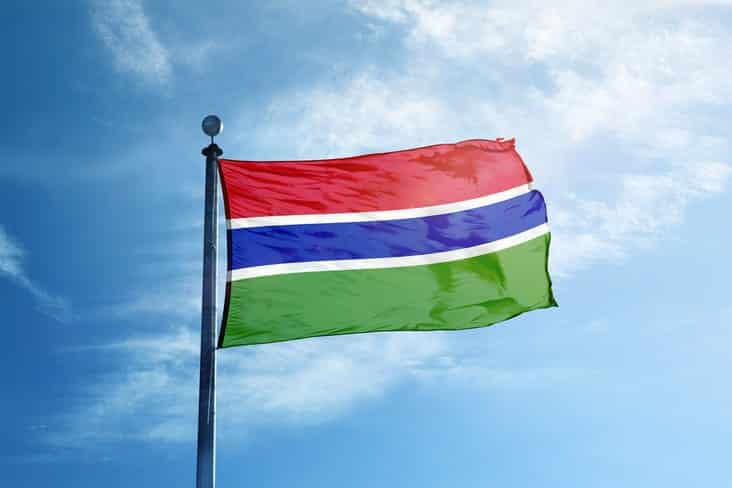
See how the Gambia’s flag compares to other African flags.
8. The Gambia was once part of the Empire of Ghana from the 5th to 8th century and then later the Empire of Mali from the 13th century.
9. The first known European to visit the Gambia was when Venetian explorer Alvise Ca’ da Mosto – in the service of Portugal’s Prince Henry the Navigator – arrived in 1455.
10. Banjul, the capital city of The Gambia, is located on Saint Mary’s Island at the mouth of the Gambia River. Historically, the Mandinka people collected fibrous plants on the island to make ropes. The Mandinka phrase “Bang julo,” meaning “rope fibre,” was gradually mispronounced over time and eventually became Banjul.

11. The Gambia became one of the few countries to leave the Commonwealth when in 2013, the then-president Yahya Jammeh called it a “neo-colonial institution”. However, in 2018, the country rejoined.
12. Yahya Jammeh, former president of Gambia, was known for his eccentricity and ruthlessness. In 2013, he vowed to stay in power for “a billion years” if God wills; he ordered the execution of criminals and political opponents on death row, and in 2008, he warned that gay people would be beheaded.

13. In 2007, Jammeh falsely claimed he had found a cure for Aids. The treatment involved months of confinement, during which his victims were forced to drink herbal concoctions.
14. In 2015, President Jammeh announced his full title was “His Excellency Sheikh Professor Alhaji Dr Yahya AJJ Jammeh Babili Mansa”. Babili Mansa can be translated as “chief bridge builder” or “conqueror of rivers” in the Mandinka language.
15. The UNESCO-listed Kunta Kinteh Island, a small island in the Gambia River that was formerly known as James Island. The island played a pivotal role in the slave trade when captives were transported downriver from the 1500s to the early 1800s.

16. The Gambia River is famous for its diverse wildlife which includes almost 600 species of bird as well as manatees, hippos, crocodiles and troops of wily colobus monkeys.
17. For decades, Gambians used to cast votes in elections with marbles instead of ballot papers. The system was introduced in the early 1960s to address high levels of illiteracy in the country. The system was last used in the 2021-2022 election.
18. The Gambia is co-host to the UNESCO-listed Stone Circles of Senegambia. The site comprises four groups of stone circles which include over 1,000 monuments spread over a 100km wide band along around 350km of the River Gambia. The monuments were created over 1,500 years ago.

19. The Gambia is known as “the smiling coast of Africa” due to the warm-hearted Gambian people.
20. The highest point in The Gambia is only 51m above sea level. The unnamed location is unofficially known as Red Rock and is the lowest high-point of any African nation.
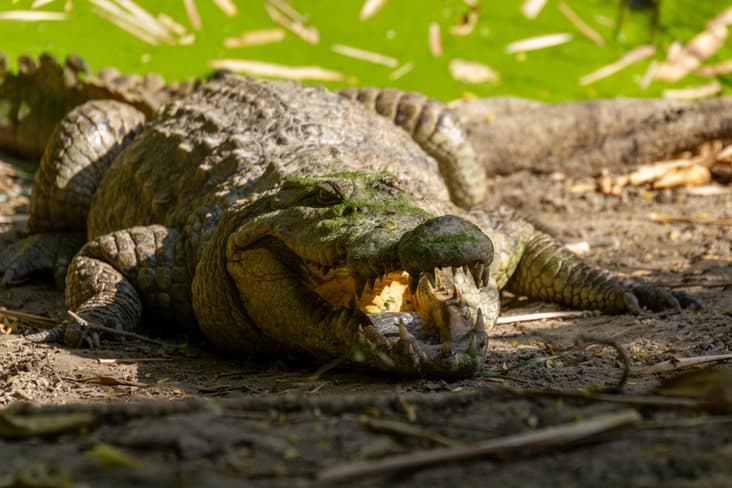
21. The Kachikally Crocodile Pool is considered a sacred site by Gambians. In The Gambia, crocodiles symbolize fertility, so women who have difficulty conceiving often visit the crocodile-infested pool to pray and bathe.
22. The Gambia was where Lucy, a celebrity chimpanzee who was raised as a human by American psychotherapists, lived for several years. Lucy learned to dress herself, serve tea, and use sign language before she was re-wilded under the care of psychology student Janis Carter in The Gambia in 1979. Carter lived with Lucy for nearly seven years.
23. Carter still runs the Chimpanzee Rehabilitation Project in The Gambia on Baboon Island which is home to over 100 of the primates. Today, humans are not allowed to set foot on the island so “chimp-viewing experiences” are run from boat tours.

Explore more: Test your knowledge with our Africa map quiz.
We strive to verify all facts using authoritative and primary sources where possible. However, if you find an error or have any questions, please contact us.

Caitriona Maria is an education writer and owner of The Facts Institute. With seven years of teaching experience and a background in educational content, she specialises in creating clear reference resources about countries, geography and global topics.