From the impressive hydroelectric power production to its young working population, these are the most interesting facts about Paraguay.

Fast facts
Official name: Republic of Paraguay
Population: 6,460,159
Area: 406,752 sq km
Capital city: Asunción
Major languages: Spanish (official) and Guarani (official)
Major religions: Roman Catholic 80.4%, Protestant 7%
Time zone: UTC-3
Fun facts about Paraguay
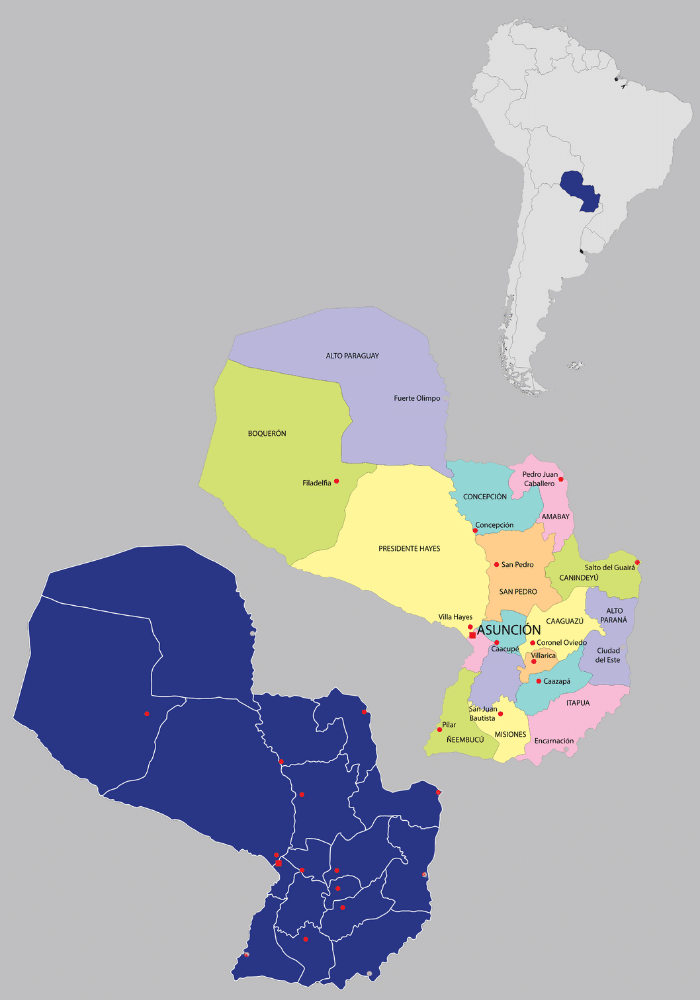
1. Paraguay is a landlocked country in South America. Landlocked countries are countries that are surrounded by land and do not have open access to the sea.
2. Approximately 95% of Paraguayans are of mixed Spanish and Guaran Indian descent.
3. The first Europeans to explore the region were Alejo García and Sebastian Cabot, who arrived in the 1520s.
4. The first Spanish colonists settled in Asunción, the present capital of Paraguay.
5. For more than 150 years, the Jesuits governed the lives of more than 150,000 Indigenous people but were eventually overthrown in 1767.

6. Paraguay comes from the Guaraní language, which means “river that gives birth to the sea”.
7. Despite being a landlocked country with no coastlines, Paraguay has a water navy to stop illicit goods on its 5,000 miles of waterway.
8. Paraguay lost about half of its population during the War of the Triple Alliance from 1864 to 1870, when it fought Brazil, Argentina and Uruguay. It was said to be the bloodiest war in Latin American history.

9. Paraguay is the only country in Latin America where the majority of people speak the indigenous language, Guaraní.
10. The Paraguayan flag consists of three distinct horizontal bands – red at the top, white in the middle, and blue at the bottom. In between these bands lies an emblem that is unique on each side of the flag. On one side, we see the national coat of arms, which features a yellow five-pointed star surrounded by a branches with the words “REPUBLICA DEL PARAGUAY” written inside two circles. On the other side, there is a circular seal representing the treasury with a yellow lion under a red Cap of Liberty and the words “PAZ Y JUSTICIA” (Peace and Justice).
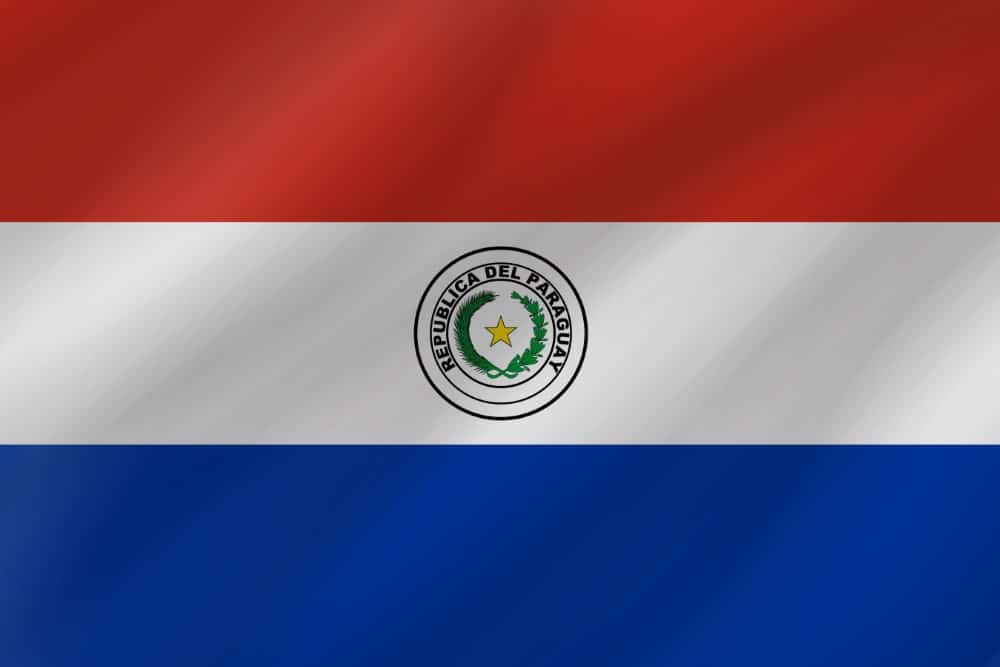
See how Paraguay’s flag compares to other South American flags.
11. The two principal rivers of the region, the Paraguay River and the Paraná River, flow through Brazil, Bolivia, Paraguay, Argentina, and Uruguay.
12. The Paraná River is the second-longest river after the Amazon and the eighth longest in the world.
13. The Jesuit Missions of La Santísima Trinidad de Paraná and Jesús de Tavarangue is the only site in Paraguay that has been recognized as a World Heritage site. The Jesuits first arrived in Guayrá in 1588, with the approval of King Philip II of Spain. Their main mission was to convert the indigenous population to Christianity and also to provide them protection from the oppressive colonial labor system known as encomienda.

14. Paraguay is among Latin America’s most sparsely populated countries, with a population density of around 17 people per square kilometer. Much of its population are concentrated in the eastern part of the country, while the vast Gran Chaco in the west remains relatively lightly populated.
15. Paraguay has 167 mammal species, 670 bird species, 230 fish species, 117 reptile species, 63 amphibian species, and more than 100,000 invertebrates.
16. Paraguay almost solely relies on hydropower to generate electricity, making it the biggest net exporter of electricity in Latin America.
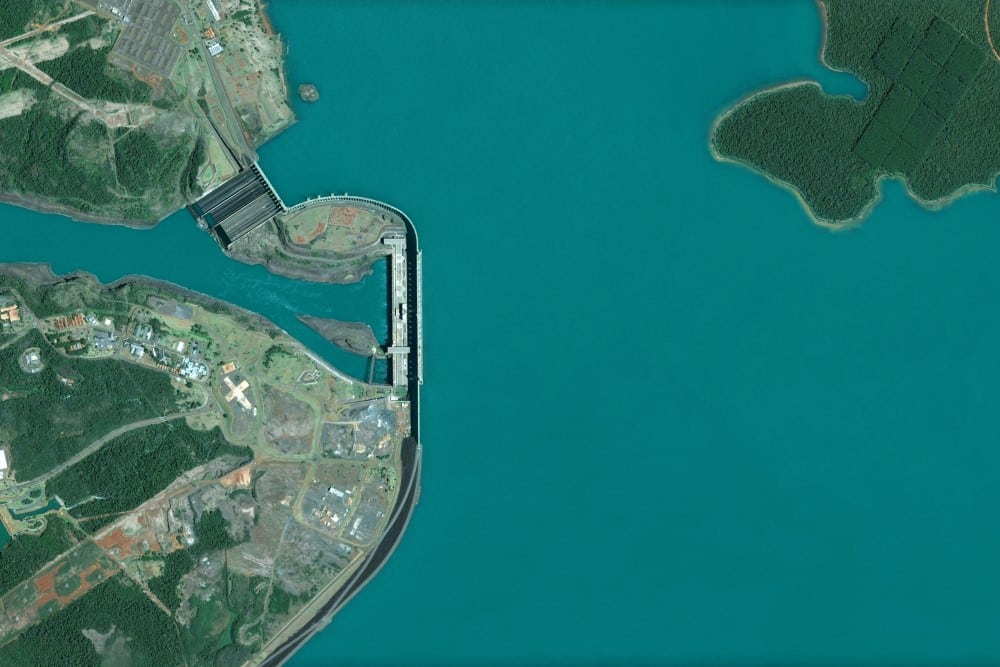
17. Paraguay’s main exports are electricity, soybeans, corn and bovine meat.
18. Paraguay ranks as the world’s second-largest producer of marijuana after Mexico.
19. Paraguay is a young country. More than half of Paraguayans are under the age of 30.
20. Although it is a global leader in hydropower electricity, its citizens have one of the lowest per capita energy consumption rates, averaging just 28.47 MMBtu per person in 2022. In contrast, the global average is about 75 MMBtu.
Explore more: Test your knowledge with our South America map quiz.
We strive to verify all facts using authoritative and primary sources where possible. However, if you find an error or have any questions, please contact us.

Caitriona Maria is an education writer and owner of The Facts Institute. With seven years of teaching experience and a background in educational content, she specialises in creating clear reference resources about countries, geography and global topics.