A brief overview of the meaning, history, and key facts about the national flag of Libya.

Flag of Libya
The national flag of Libya consists of three horizontal stripes of red, black, and green, with the central black stripe being twice the height of the other two. In the center of the black band is a white crescent and five-pointed star. The colors represent Libya’s three historic regions—Fezzan (red), Cyrenaica (black), and Tripolitania (green). The crescent and star are traditional symbols of Islam and were inspired by the banner of the Senussi dynasty, which played an important role in Libya’s path to independence.
Printable Libya Flag (PNG Download)
Interesting facts about Libya’s flag
1. The modern Libyan flag was first adopted on 24 December 1951, the day Libya gained independence from foreign administration and became the United Kingdom of Libya.
2. The flag was designed by Omar Faiek Shennib, Vice-President of the Libyan National Assembly and a member of the delegation involved in creating the Libyan state.
3. From 1977 to 2011, Libya used a plain green flag, making it the only national flag in the world at the time with a single color and no symbols.
4. After the fall of Muammar Gaddafi in 2011, Libya reinstated the original independence flag that had been used between 1951 and 1969.
Explore more about Libya:
Evolution of Libya’s flag
Flag of the Kingdom of Libya (1951–1969)
Libya adopted this flag when it gained independence in 1951. The design was later restored in 2011 and remains the national flag today.
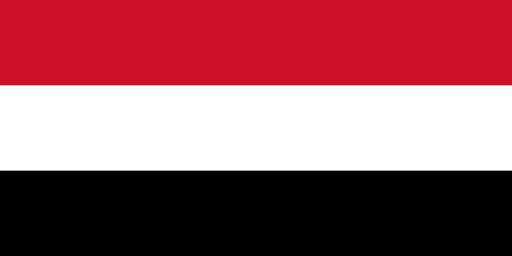
Arab Liberation tricolor (1969–1977)
Libya adopted a red–white–black tricolor associated with Arab nationalist movements. In 1972, when Libya joined the Federation of Arab Republics, the flag was modified by adding a golden hawk emblem to the center of the same tricolor.

Green flag of Libya (1977–2011)
In 1977 Libya adopted a plain green flag representing Gaddafi’s political ideology. The green color also traditionally symbolizes Islam.
History of Libya’s flag
Early regional symbols
Before independence, Libya consisted of three historical regions: Tripolitania, Cyrenaica, and Fezzan.
The Senussi dynasty, which ruled Cyrenaica, used a black banner with a white crescent and star. This symbol later influenced the design of Libya’s national flag.
Independence and adoption of the national flag (1951)
Libya gained independence on 24 December 1951 under King Idris I after a period of British and French administration.
The new national flag combined the colors of the three historic regions and incorporated the crescent and star from the Senussi banner. The design was formally defined in Article 7 of the 1951 Libyan Constitution.
Changes during the Gaddafi era
After the military coup of 1969, the monarchy was abolished and the national flag was replaced by the red–white–black tricolor associated with Arab nationalist movements.
In 1977, Libya adopted a completely green flag representing Muammar Gaddafi’s political philosophy outlined in his Green Book. This design remained in use for more than three decades.
Restoration of the national flag (2011)
During the 2011 Libyan Civil War, the independence-era flag reappeared as a symbol of opposition to Gaddafi’s government.
After the collapse of the regime, the National Transitional Council officially reinstated the 1951 flag, which remains Libya’s national flag today.

Caitriona Maria is an education writer and owner of The Facts Institute. With seven years of teaching experience and a background in educational content, she specialises in creating clear reference resources about countries, geography and global topics.