A brief overview of the meaning, history, and key facts about the national flag of Belize.
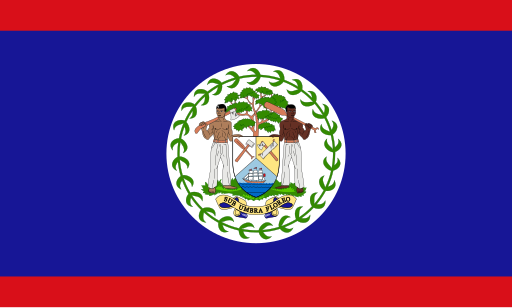
Flag of Belize
Adopted in 1981, the flag of Belize features the national coat of arms centered on a blue field with red stripes at the top and bottom. The coat of arms reflects the country’s historical logging industry, with two workers holding tools beside a mahogany tree. The Latin motto Sub umbra floreo (“Under the shade I flourish”) refers to the forests that shaped Belize’s early economy.
Printable Belize Flag (PNG Download)
Interesting facts about Belize’s flag
1. Belize’s flag was adopted on 21 September 1981, the day the country gained independence from the United Kingdom.
2. Belize’s flag is one of the only national flags in the world that depicts human figures as a central design element.
3. The two men on the coat of arms represent the country’s diverse population: one is of African descent and the other is a mestizo. A mestizo is a person of mixed European and Indigenous American ancestry.
4. The red stripes were added to represent the United Democratic Party, while the blue background reflects the People’s United Party, so the national flag would not represent only one political party.
5. Belize’s flag contains many colors within its coat of arms, making it one of the most complex national flags in the world.
Explore more about Belize:
Evolution of Belize’s flag
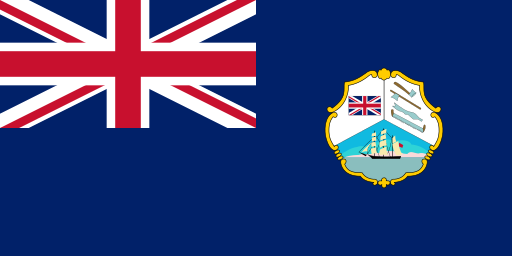
Flag of British Honduras (1919–1981)
During British colonial rule, Belize, then known as British Honduras, used a blue ensign featuring the Union Jack and a colonial badge.
Heraldry, CC BY-SA 3.0, via Wikimedia Commons
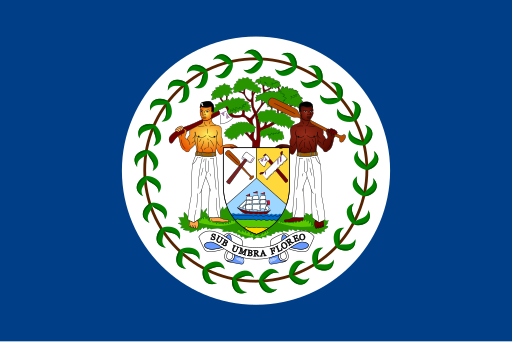
Unofficial Belize flag (1950–1981)
Beginning in 1950, the People’s United Party used a blue flag with the coat of arms on a white disk. This design later served as the basis for the national flag.
History of Belize’s flag
Colonial symbols
Belize was known as British Honduras during the colonial period. The colony’s coat of arms, first granted in the nineteenth century and later revised in 1907, reflected the logging industry that formed the basis of the local economy.
The motto Sub umbra floreo (“Under the shade I flourish”) referred to the forests that supported the colony’s early development.
Nationalist flag movement
In 1950, the People’s United Party adopted a blue flag with the coat of arms on a white disk as a symbol of the independence movement. This design later served as the basis for the national flag adopted at independence.
After Belize gained internal self-government in 1964, this flag was often flown unofficially over public buildings.
Adoption of the modern flag (1981)
When Belize gained independence from the United Kingdom on 21 September 1981, the nationalist flag served as the basis for the new national flag.
To represent political unity, red stripes were added at the top and bottom of the blue field, reflecting the color of the opposition United Democratic Party.
The flag has remained the national flag of Belize since independence.

Caitriona Maria is an education writer and owner of The Facts Institute. With seven years of teaching experience and a background in educational content, she specialises in creating clear reference resources about countries, geography and global topics.