A brief overview of the meaning, history, and key facts about the national flag of the United Kingdom.
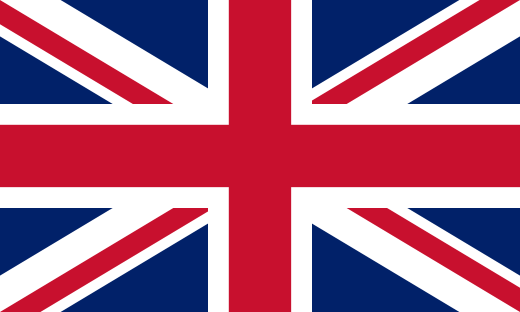
Union Jack flag
The national flag of the United Kingdom consists of three heraldic crosses: the red cross of Saint George, the patron saint of England; the white saltire of Saint Andrew, the patron saint of Scotland; and the red saltire of Saint Patrick, the patron saint of Ireland, combined into a single design.
Printable UK Flag (PNG Download)
Interesting facts about the United Kingdom’s flag
1. When the flag was first introduced in 1606, it was known simply as the “British flag” or the “flag of Britain.”
2. The term “Union Jack” came into use later and was originally used by the Royal Navy to describe the Union Flag when flown from a ship.
3. The flag combines the crosses of England, Scotland, and Ireland, although today only Northern Ireland remains part of the United Kingdom.
4. Wales does not appear separately on the Union Jack because it was united with England when the first version of the flag was created in 1606.
5. The current design of the Union Jack dates from 1801, when the cross of Saint Patrick was added following the union of Great Britain and Ireland.
6. The Union Jack was originally a royal flag rather than a general national flag.
7. At its height, the Union Jack flew over territories that together contained roughly a quarter of the world’s population and land area during the era of the British Empire.
Evolution of the United Kingdom’s flag
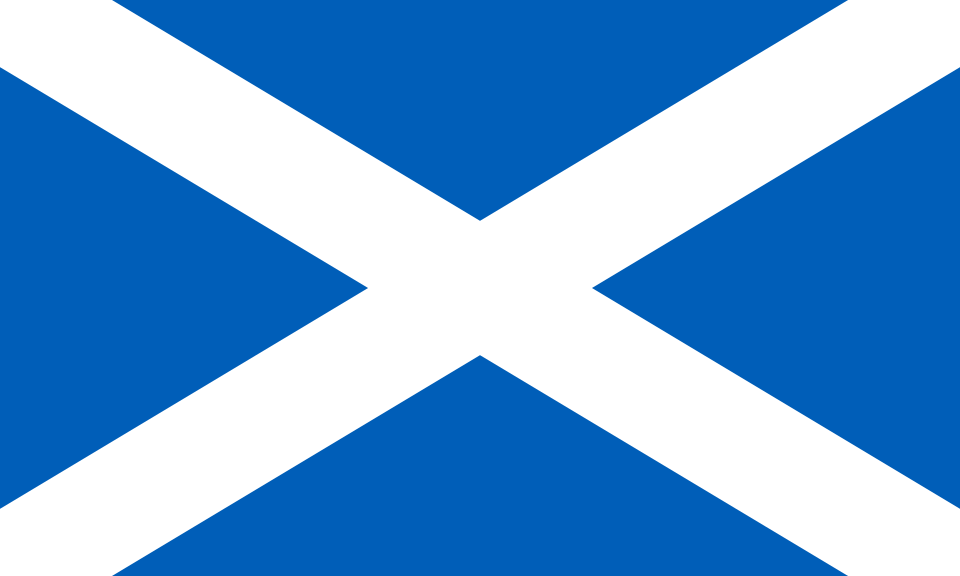
Saint Andrew’s Cross (Scotland)
The white saltire of Saint Andrew on a blue field.
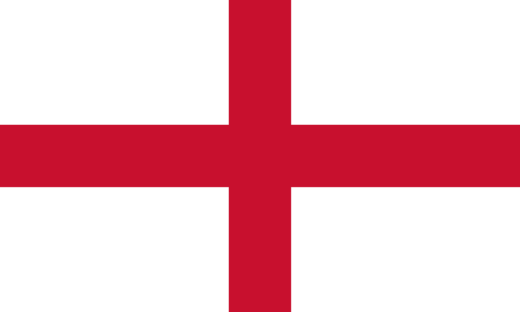
Saint George’s Cross (England)
The red cross of Saint George on a white field.
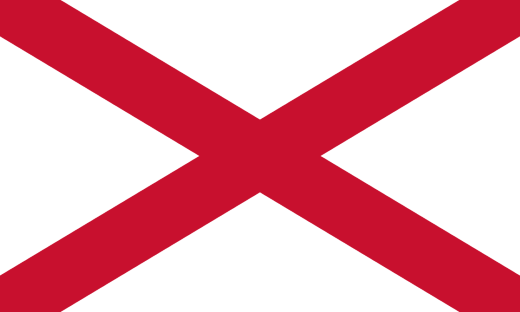
Saint Patrick’s Cross (Ireland)
The red saltire of Saint Patrick on a white field.
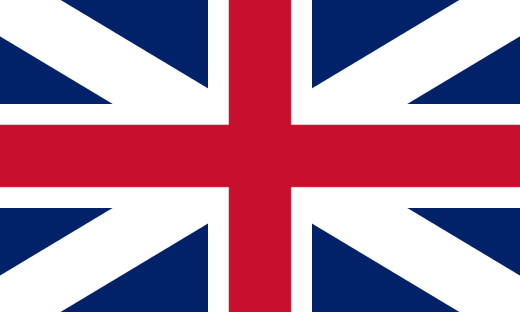
Union Flag (1606–1801)
The first Union flag combined the red cross of Saint George and the white saltire of Saint Andrew.
History of the United Kingdom’s flag
Early origins
The origins of the Union Flag date to 1603, when James VI of Scotland became James I of England and united the crowns of the two kingdoms under a single monarch.
At the time, English and Scottish ships flew different national flags, which sometimes created disputes over precedence at sea.
Creation of the first Union Flag
To symbolize the new union, a combined flag was introduced in 1606. It merged the red cross of Saint George with the white saltire of Saint Andrew.
The design was carefully arranged so that neither nation appeared subordinate to the other.
Addition of Ireland
In 1801, following the Act of Union with Ireland, the red saltire of Saint Patrick was added to the existing design.
This created the modern Union Flag still used today.
National symbol
Although originally a royal and naval flag, the Union Flag gradually became the national flag of the United Kingdom.
It remains one of the most recognizable flags in the world.

Caitriona Maria is an education writer and owner of The Facts Institute. With seven years of teaching experience and a background in educational content, she specialises in creating clear reference resources about countries, geography and global topics.