A brief overview of the meaning, history, and key facts about the national flag of Liechtenstein.
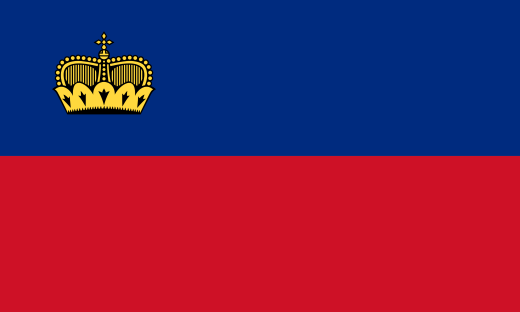
Liechtenstein flag
The national flag of Liechtenstein consists of two horizontal stripes of blue and red with a gold princely crown in the upper hoist corner. Blue and red are the national colors of Liechtenstein and have long been associated with the country’s ruling princely house.
Printable Liechtenstein Flag (PNG Download)
Interesting facts about Liechtenstein’s flag
1. The blue and red national colors may originate from the livery colors worn by servants of the Princely House of Liechtenstein as early as the eighteenth century.
2. Members of the Princely House also used blue and red as military colors on their uniforms.
3. When Liechtenstein participated in the 1936 Olympic Games in Berlin, it was discovered that Liechtenstein and Haiti used nearly identical blue-and-red national flags.
4. To avoid confusion with Haiti’s flag, Liechtenstein added a gold princely crown to its flag in 1937.
5. The colors gold and red are also associated with the Princely House of Liechtenstein and appear in the country’s coat of arms.
Explore more about Liechtenstein:
Evolution of Liechtenstein’s flag
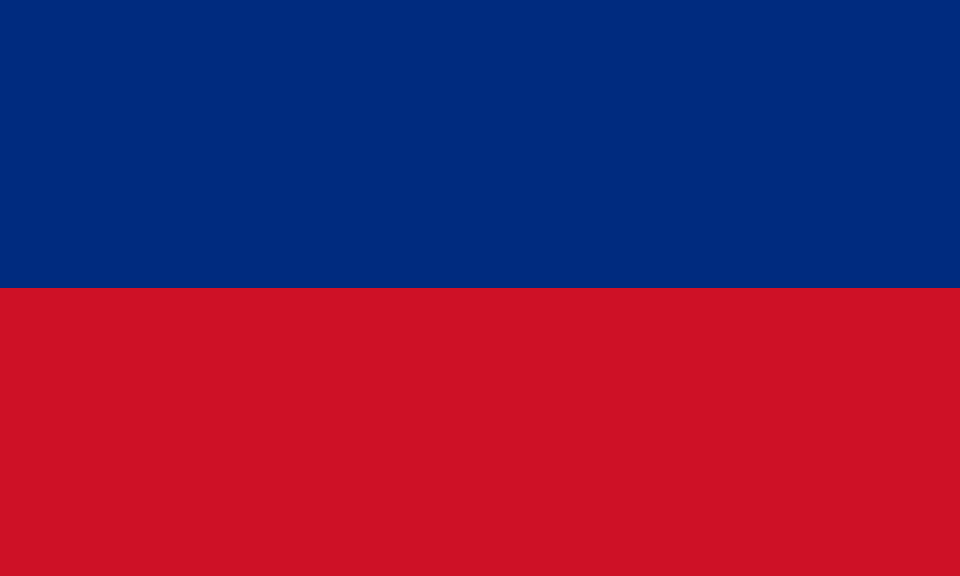
Flag of Liechtenstein (1921–1937)
A simple horizontal bicolor of blue and red without the crown.
History of Liechtenstein’s flag
Early origins
Liechtenstein became an independent state in the 19th century. In 1852, the principality adopted a blue-and-red flag likely based on the livery colors associated with the ruling House of Liechtenstein.
Constitutional recognition
A new constitution adopted in 1921 officially recognized the blue-and-red flag as the national flag of Liechtenstein.
Addition of the crown
During the 1936 Summer Olympics, it was discovered that Liechtenstein’s flag was identical to the civil flag of Haiti.
To distinguish the two flags and emphasize Liechtenstein’s status as a principality, a gold crown was added to the upper corner of the flag. The new design was officially adopted on 24 June 1937.
Modern modification
In 1982, the design of the crown was slightly modified. The overall appearance of the flag remained unchanged.
Explore more: European flags or test your knowledge with our Flags of Europe Quiz.

Caitriona Maria is an education writer and owner of The Facts Institute. With seven years of teaching experience and a background in educational content, she specialises in creating clear reference resources about countries, geography and global topics.