A brief overview of the meaning, history, and key facts about the national flag of Germany.
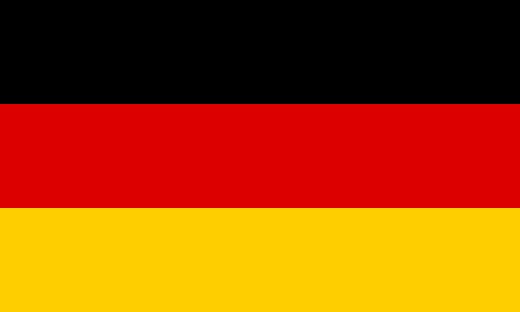
German flag
The national flag of Germany consists of three equal horizontal stripes of black, red, and gold. The colors are traditionally associated with the struggle for German unity and freedom and have been used as national symbols since the nineteenth century.
Printable German Flag (PNG Download)
Interesting facts about Germany’s flag
1. The colors black, red, and gold originated during the Wars of Liberation against Napoleon in the early nineteenth century. Cash-strapped students against Napoleon often wore black uniforms with red facings and gold buttons because they could not afford standardized military uniforms.
2. A popular interpretation described the colors as a journey “out of the blackness (black) of servitude through bloody (red) battles into the golden (gold) light of freedom.”
3. Between 1949 and 1990, East and West Germany used different versions of the German flag. East Germany added its state emblem, while West Germany used the plain black-red-gold tricolor.
4. Although the eagle is closely associated with Germany, it does not appear on the national flag. Instead, it is displayed on a separate official government flag used by federal authorities.
Evolution of Germany’s flag

German Empire flag (1867–1919)
A horizontal tricolor of black, white, and red associated with the German Empire.
Weimar Republic flag (1919–1933)
The first democratic German republic adopted the black, red, and gold tricolor used today.
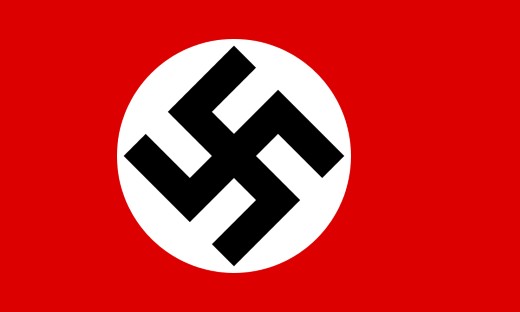
Nazi Germany flag (1935–1945)
During the Nazi period, Germany used a red flag featuring a white circle and a black swastika.
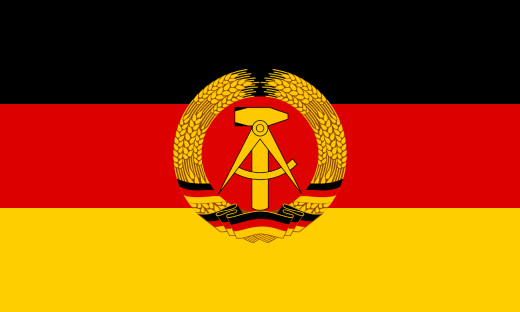
East Germany flag (1949–1990)
East Germany used the black-red-gold tricolor with a hammer, compass, and wreath emblem at the center.
History of Germany’s flag
Origins of the national colors
The origins of Germany’s national colors can be traced to the early nineteenth century during the Wars of Liberation against Napoleon.
Many German volunteers fought in units whose uniforms were black with red trim and gold-colored buttons. They waved a victory flag that resembled their uniforms.
Adoption of black, red, and gold
During the nineteenth century, black, red, and gold became symbols of the German national movement and aspirations for a united and democratic Germany.
The colors were later adopted by the Weimar Republic following the First World War.
Division of Germany
During the Nazi era, the black-red-gold flag was replaced by symbols associated with the National Socialist regime.
After the Second World War, Germany was divided into two states.
West Germany adopted the black-red-gold tricolor as its national flag in 1949.
East Germany initially used the same tricolor but later added its state emblem, consisting of a hammer and compass surrounded by a wreath of grain.
Reunification
Following the reunification of Germany in 1990, the plain black-red-gold tricolor became the sole national flag of the country.
Today the flag symbolizes both German unity and the restoration of democracy after the country’s periods of division.

Caitriona Maria is an education writer and owner of The Facts Institute. With seven years of teaching experience and a background in educational content, she specialises in creating clear reference resources about countries, geography and global topics.