A brief overview of the meaning, history, and key facts about the national flag of France.

Flag of France
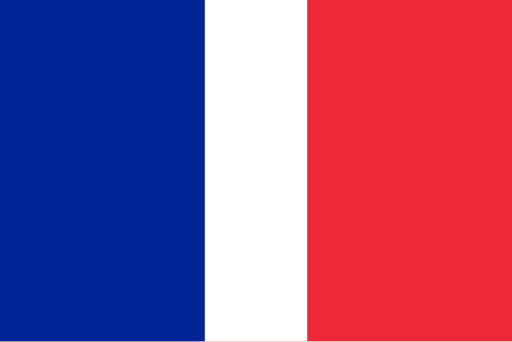
Officially adopted in 1794, the flag of France, known as the tricolore (three colors), features three vertical stripes in blue, white, and red from left to right. It is often said to represent the principles of liberty, equality, and fraternity, with blue and red symbolizing Paris and white representing the monarchy.
Printable Flag of France (PNG Download)
Interesting facts about the French flag
1. The design of the French flag was adopted during the French Revolution.
2. The French tricolor became highly influential and its three-color scheme was later adopted by many other nations.
3. Many people don’t realize that both a lighter and darker blue version exist. In 2020, President Emmanuel Macron reverted to the darker navy version at the Élysée Palace, closer to the revolutionary-era colors.
4. There is a special version of the French flag with a much narrower white stripe so that all colors are visible during official televised or photographed events with the French president or officials.
5. French naval flags don’t use equal stripes; they follow a 30:33:37 ratio so that when the flag flaps at sea, it looks visually balanced.
6. The blue and red colors of the French flag came from Paris and were worn by militia members during the storming of the Bastille in 1789. White was added to symbolize the nation, which helped create the tricolor seen today.
7. People may assume the French flag represents the motto “Liberty, Equality, Fraternity,” but the tricolor actually predates the official adoption of the motto and originally symbolized the union of Paris and the monarchy during the Revolution.
Explore more about France:
Variants of the French flag
A version of the French flag designed for photographic and televised backdrops.

A comparison of the lighter and darker blue shades used in the French flag.
SoondleBollonk, CC BY-SA 4.0, via Wikimedia Commons
History of the French flag
The French tricolor first appeared during the Revolution, when the blue and red colors of Paris were combined with white, a color long associated with France’s monarchy. This new design quickly became a symbol of a changing nation.
The flag did not remain uncontested. When the monarchy returned in the early nineteenth century, the tricolor was replaced by a plain white royal flag. It was restored in 1830 during the July Revolution, when the blue, white and red banner once again came to represent national unity.
In 1848, some revolutionaries wanted to replace the tricolor with a red flag, but supporters argued that the existing design already represented the country’s shared history and achievements. The tricolor was ultimately retained and has remained France’s national flag ever since.
Today, the flag is officially recognised in the Constitution of the Fifth Republic and is displayed on public buildings across France.

Caitriona Maria is an education writer and owner of The Facts Institute. With seven years of teaching experience and a background in educational content, she specialises in creating clear reference resources about countries, geography and global topics.