The most interesting facts about Azerbaijan, from unique geographical features to the origins of the Vikings?

Fast facts
Official name: Republic of Azerbaijan
Population: 10.44 million
Area: 86,600 sq km
Capital city: Baku
Major languages: Azerbaijani (Azeri), Russian, Armenian
Major religions: Islam (predominantly Shia)
Time zone: UTC+4 (Azerbaijan Time)
Interesting facts about Azerbaijan
1. Azerbaijan is a landlocked country in Southwestern Asia bordering Armenia, Georgia, Iran, Russia and Turkey.
2. Even though Azerbaijan is landlocked, and doesn’t have access to the open sea, it does have a 713km (443mi) coast along the Caspian Sea – the world’s largest inland body of water.
3. Azerbaijan is also home to the world’s largest landlocked exclave, the autonomous republic of Nakhchivan. Severed from Azerbaijan by an 80-130 km (50-80 mi) strip of Armenia, Nakhchivan borders Armenia, Iran and Turkey.

4. Azerbaijan is sometimes considered a transcontinental country as some of its northern districts are deemed to geographically be in Europe.
5. Azerbaijan’s flag is horizontally striped light blue, red and green with a crescent and star in its center. The eight-pointed star is often interpreted as representing the eight branches of the Turkic peoples: the Azerbaijanis, Jagatais, Kazakhs, Kipchaks, Ottomans, Seljuqs, Tatars and Turkmen.
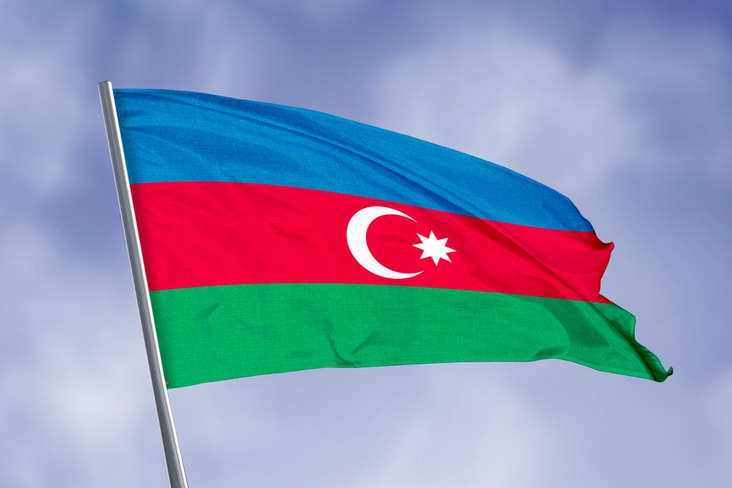
See how Azerbaijan’s flag compares to other Asian flags.
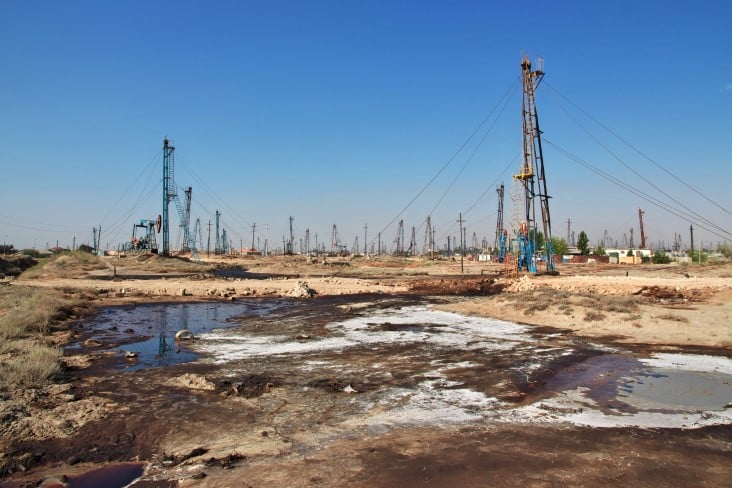
6. In 1848-49, the world’s first oil well was drilled in Azerbaijan to the south of Baku.
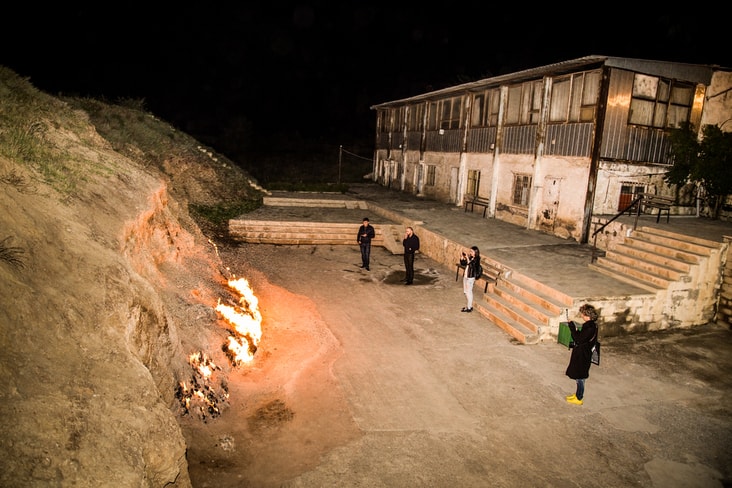
7. Azerbaijan is known as “The Land of Fire” due to Yanar Dag (which means “burning mountainside”), an area where natural gas sometimes leaks to the surface causing several spontaneously occurring fires to break out.
8. Archaeologists have found prehistoric tools and remains of early humans dating back 1.5 million years in Azokh Cave in Western Azerbaijan.
9. The historic Silk Road, the ancient trading route that connected China with Europe and the Middle East, ran through Azerbaijan.
10. The Azerbaijani city of Neft Daşları (meaning Oil Rocks) was built on stilts above the Caspian Sea and is the world’s oldest offshore oil platform. The city, located 55km (34mi) from the coast, was built by the Soviets in 1949 to drill for oil and is still in use today as a functioning town that includes hotels, hostels, a bakery, a power station and separate ‘islands’ connected by more than 200km (124mi) of trestle bridges, all supported on metal stilts.
11. Azerbaijan is part of Transcaucasia, a small mountainous region to the south of the Caucasus Mountains.
12. Chovqan, a traditional horse-riding game, is played in Azerbaijan. The game is interspersed with instrumental folk music called janghi.
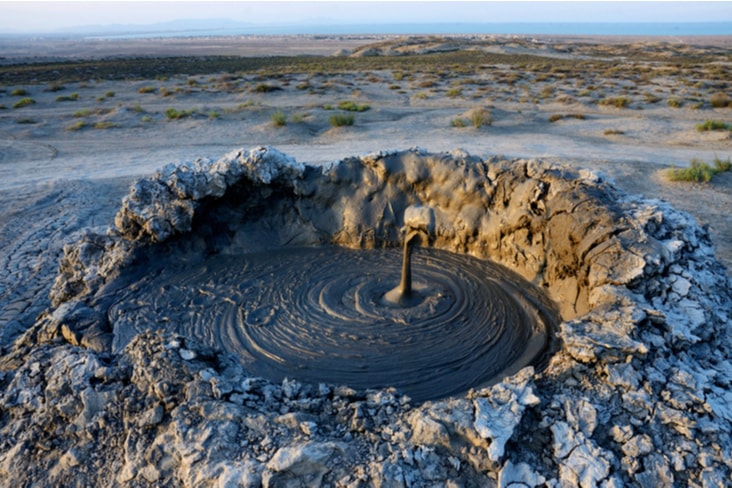
13. Azerbaijan is home to over 400 mud volcanoes – more than anywhere else in the world. Mud volcanoes are ‘geologically flatulent’ cone-like structures that belch out methane and a muddy mix of water and sometimes erupt with thick grey mud.
14. The name of the capital city, Baku, comes from the Persian name “bad-kube” meaning “wind-pounded city” referring to the severe winds and snowstorms that can strike the city.
15. Azerbaijan and Armenia have frequently engaged in conflicts over the contested Nagorno-Karabakh area. The most recent escalation occurred in 2020, resulting in thousands of casualties until a peace agreement was sought.
16. The UNESCO-listed Walled City of Baku in the capital features 12th-century defensive walls, the 12th-century Maiden Tower (Giz Galasy) as well as earlier structures dating from the 7th to 6th centuries BC.
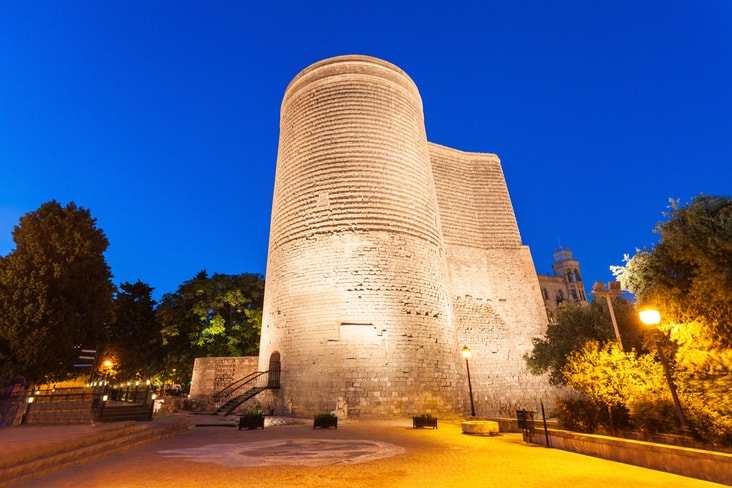
17. The UNESCO-listed Gobustan Rock Art Cultural Landscape is home to over 6,000 rock engravings dating back over 40,000 years.
18. One of the most striking landmarks in Baku is the Azerbaijan Carpet Museum. Designed like a stylised roll of carpet, the building houses an extensive collection of Azerbaijani carpets.
19. Another interesting museum in Baku is the Museum of Miniature Books. The museum houses a collection of around 8,000 books that are so small readers require a magnifying glass to make out the print. The smallest of which is just 2mm x 2mm!

20. There is a theory that suggests Vikings originated in Azerbaijan. The disputed theory stems from an 800-year-old Icelandic saga that mentions the Norse god Odin migrated to Scandinavia from an eastern land called “As-hov” or Aser” which has been interpreted as Azer-baijan. Local petroglyphs also depict ships similar to the longboats used by Vikings but it should be noted these pre-date Vikings.
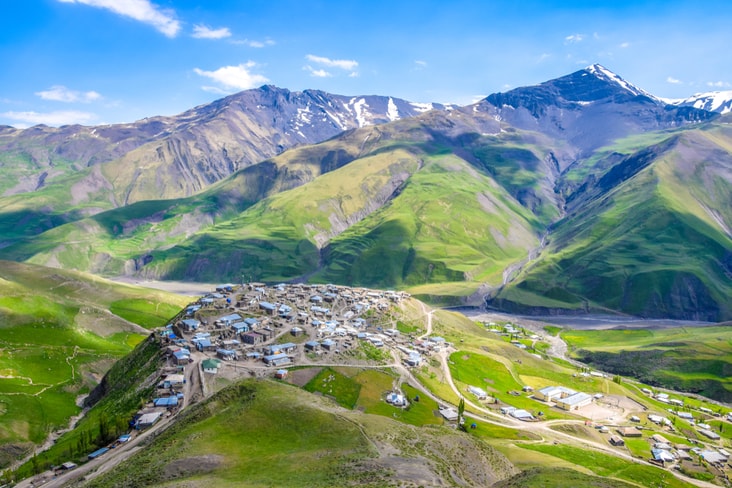
21. Azerbaijan is home to the last Soviet-style collective farm. The Caucasus village of Ivanovka is the last kolkhoz, a practice of socialised agriculture that is operated on state-owned land by peasants from a number of households who belonged to the collective.
22. Azerbaijan is oil-rich. Its main exports are overwhelmingly oil and gas accounting for over 91% of its total exports. Most of the oil is exported through the Baku-Tbilisi-Ceyhan (BTC) pipeline.
23. Azerbaijan has had one Nobel prize Winner. Lev Landau won the 1962 prize for physics when “he applied quantum theory to the movement of superfluid liquid helium.”
Explore more from Asia
We strive to verify all facts using authoritative and primary sources where possible. However, if you find an error or have any questions, please contact us.

Caitriona Maria is an education writer and owner of The Facts Institute. With seven years of teaching experience and a background in educational content, she specialises in creating clear reference resources about countries, geography and global topics.