The most interesting facts about Benin, from the “Venice of Africa” and reverence for snakes, to the largest intact eco-system in West Africa.

Fast facts
Official name: Republic of Benin
Capital city: Porto-Novo
Population: 14.8 million
Area: 112,622 sq km
Major languages: French, Fon, Bariba, Fulfulde and Aja
Major religions: Christianity, Islam, Vodun
Time zone: UTC+1 (West Africa Time)
Interesting facts about Benin
1. Benin was formerly known as Dahomey, a powerful kingdom in Western Africa that flourished during the 18th and 19th centuries.
2. Dahomey means “on the belly of Dan.” Dan was a rival king on whose grave Dahomey’s royal compound was built.
3. Benin’s southern coast used to be known as the Slave Coast, a departure point for slaves where for over 100 years, an average of 10,000 slaves a year were shipped to the Americas.

4. The Route des Esclaves (Route of Slaves) in Ouidah is a road leading from the original slave auction plaza down to the beach where over 12 million slaves were deported.
5. The route includes the Tree of Forgetfulness (where slaves were branded and forced to walk around the tree in circles), the Tree of Return where slaves frequently circled with the belief that their souls would return home after their death, and the Gate of No Return memorial.
6. The voodoo religion originated in Benin where National Voodoo Day is celebrated annually on the second Friday of January.
7. Followers of voodoo account for 11% of Benin’s population, according to latest figures.

8. The French became the colonial power in Dahomey towards the end of the 19th century. In 1946, Dahomey became an overseas territory of France and then in 1958, it became self-governing within the French Community.
9. The current name, Benin, derives from the Bight of Benin – a bay lying off Africa’s west coast within the Gulf of Guinea in the Atlantic Ocean. there is also a Benin City and Benin River in Nigeria.
10. In the early 1990s, Benin made history by becoming the first African country to transition from a dictatorship to democracy and one of the first African countries to hold multi-party elections.
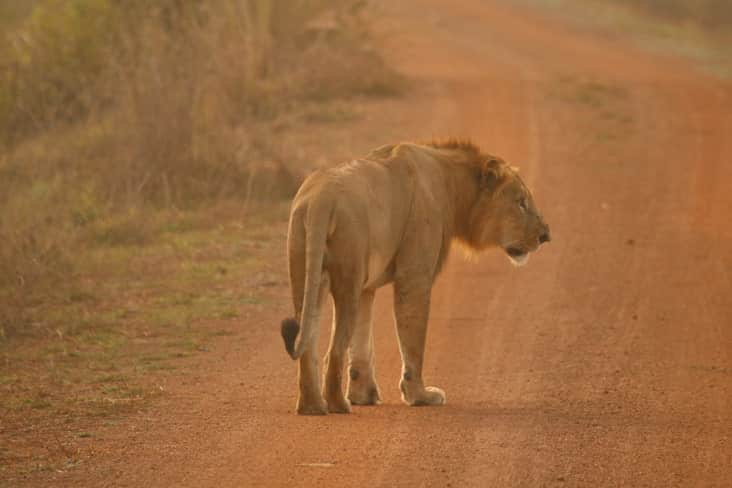
11. Benin, along with Burkina Faso and Niger, is home to the largest intact eco-system in West Africa, the W-Arly Pendjari Complex. The UNESCO-listed park also “harbors the only viable population of lions in the region.”
12. Benin only has one UNESCO site located solely in Benin, the Royal Palaces of Abomey. Built during the Kingdom of Dahomey from the 17th-century, the site consists of a set of ten palaces.
13. A throne associated with King Gezo of Dahomey was once mounted on four human skulls, believed to have belonged to rival rulers defeated by the kingdom.
14. With a median age of just 18.2 years old, Benin has one of the youngest population in the world.
15. Benin has a simple flag with horizontal stripes of yellow and red and a vertical green stripe. The meanings of the flag’s colors are explained in L’Aube Nouvelle (“The New Dawn”), the national anthem of Benin.
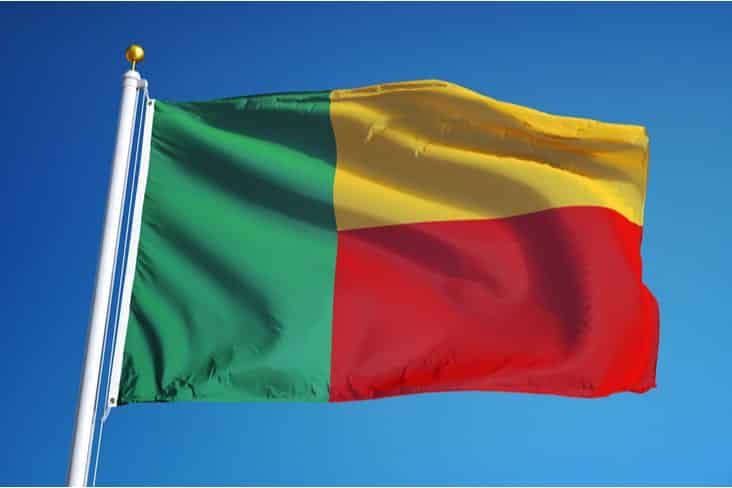
See how Benin’s flag compares to other African flags.
16. Although Porto-Novo is the capital city, the government sits in Cotonou, the country’s largest city, economic capital the country’s only seaport and international airport.
17. Cotonou means “by the river of death” in the native Fon language and Porto-Novo means “new port” in Portuguese.
18. Snakes are revered in Benin and it is considered a sign of good fortune if a snake crosses one’s path.
19. Benin is home to the Temple of Pythons, a sacred shrine inspired by the legends of King Kpasse, that’s home to dozens of royal pythons that move freely within the temple’s grounds.
20. The village of Ganvie, located on Lake Nokoue in Benin, has been dubbed the “Venice of Africa” as it was built entirely on stilts.

21. The official language of Benin is French, though it’s only spoken by around one-third of the population.
22. Angélique Kidjo, the Grammy-winning musician, is from Benin. Kidjo was also awarded Amnesty International’s top human rights award in 2016 for her activism work.
23. Benin has one of the lowest smoking rates in the world, with around 5% of people aged 15 and over smoking daily. Less than 1% of women smoke, compared with 9% of men.
Explore more: Test your knowledge with our Africa map quiz.
We strive to verify all facts using authoritative and primary sources where possible. However, if you find an error or have any questions, please contact us.

Caitriona Maria is an education writer and owner of The Facts Institute. With seven years of teaching experience and a background in educational content, she specialises in creating clear reference resources about countries, geography and global topics.