The most interesting facts about Niger include its very own dinosaur – the Nigersaurus – and the world’s highest mud-brick minaret.

Fast facts
Official name: Republic of Niger
Population: 27.9 million
Area: 1,267,000 sq km
Capital city: Niamey
Major languages: Hausa, Zarma, French (official), Fufulde, Tamashek, Kanuri, Gurmancema, Tagdal
Major religions: Islam
Time zone: UTC+1 (West Africa Time)
Interesting facts about Niger
1. Niger is a country located in West Africa bordered by seven countries: Algeria, Benin, Burkina Faso, Chad, Libya, Mali and Nigeria.
2. Evidence suggests that Niger has been inhabited for around 60,000 years.
3. Niger is a landlocked country as it’s entirely surrounded by land with no access to the open sea. There are currently 44 such countries and five partially recognized states.

4. Niger is one of the poorest countries in the world when measured by GDP per capita based on purchasing power parity (PPP). In 2023, is ranked fifth-poorest.
5. Between the 10th and 18th centuries, Niger was part of several West African empires, including the Kanem-Borno, Mali, and Songhaï empires. All were involved in the trading of gold, salt and slaves.
6. Niger was colonized by France in 1890. In 1958, it became an autonomous republic of the French Community before achieving full independence in 1960.

7. Following independence, Niger suffered from a series of coups and political instability and, more recently, from repeated droughts, insurgency and widespread poverty.
8. In 2025, Niger ranked fifth least developed country in the world, according to the UN’s Human Development Index (HDI).
9. Niger’s flag consists of three stripes of orange, white, and green, with an orange circle in the center. The orange circle is commonly interpreted as representing the sun.
10. The flag is similar to the national flags of Ireland, Ivory Coast and India.

See how Niger’s flag compares to other African flags.
11. As of 2024, Niger had the highest birth rate in the world, with an average of 6.64 children per woman. More recent data shows it remains among the countries with the highest fertility rates globally.
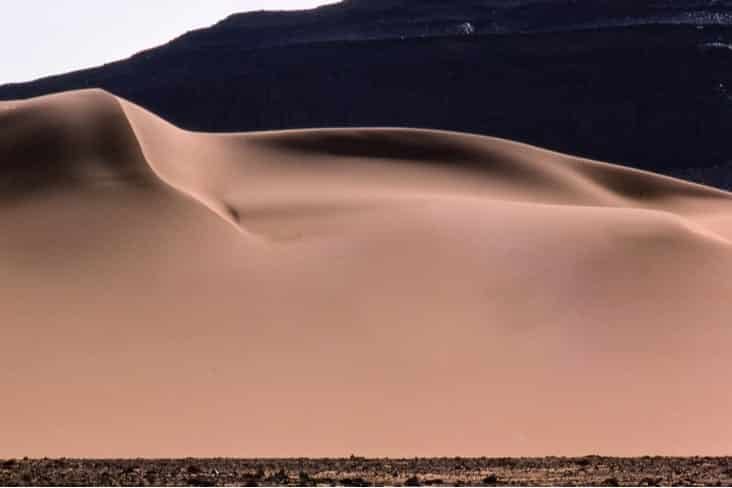
12. Niger is partly covered by the world’s largest hot desert (excluding the Arctic and Antarctic deserts). The Sahara Desert, with a total area of 8,600,000sq km (3,320,000sq mi), covers much of North Africa.
13. In fact, nearly four-fifths of Niger is desert, making it one of the hottest countries in the world.
14. Agadez, on the southern edge of the Sahara desert, is known as “the gateway to the desert”. The UNESCO-listed town dates to the 15th century AD and was an important crossroads for the trans-Saharan caravan trade.
15. In the centre of town is the Grand Mosque which has a 27m-high minaret made entirely of mud-brick. It is the highest such structure in the world.
16. Niger is one of the world’s least obese nations, with just 3.9% and 6.3% of its male and female adult populations classified as obese, respectively.
17. Niger is named after the Niger River that traverses the southwest of the country. It comes from the native term “Ni Gir” meaning “River Gir”.

18. The Niger River is West Africa’s main river and, with a length of 4,200 km (2,600mi), it is the third-longest river in Africa after the Nile and the Congo.
19. Niger shares the UNESCO-listed W-Arly-Pendjari Complex with Benin and Burkina Faso. The complex is an important refuge for threatened wildlife in the region. It is home to the largest population of elephants in West Africa as well as other large mammals such as the African Manatee, cheetah, lion and leopard.
20. In 2025, Niger was named one of the world’s hungriest countries, ranking 117th out of 123 countries on the Global Hunger Index (GHI). It suffers from serious levels of hunger.
21. Niger is home to one of Africa’s largest protected areas, the Air and Ténéré Natural Reserves. The 7,736,000 hectares sanctuary is surrounded by the Saharian desert and includes a wide range of landscapes, plant species and wild animals.
22. Niger is one of the countries involved in the ambitious Great Green Wall project – a 7,000km long and 16km wide wall of trees stretching across Africa. The trees will traverse several countries along the arid Sahel savanna. from the Atlantic Ocean to the Indian Ocean. The project is behind schedule but is still planned to go ahead.
23. Niger records an average alcohol consumption of just 0.2 liters per person each year, one of the lowest in the world. The country’s predominantly Muslim population and strict cultural norms largely account for the minimal drinking levels.
24. The Cure Salee (salt cure) festival in Niger has been celebrated for centuries. The three-day annual event marks the end of the rains and sees Tuareg, Peul and Wodaabe nomads congregate on the salt flats to exchange news, perform music and dance.
25. Additionally, Niger (along with Chad, Cameroon and Nigeria) hosts the Gerewol festival, a beauty pageant where the men of a polygamous Wodaabe tribe battle it out to be chosen by unmarried women as their partners.

26. Niger is the world’s seventh-largest producer of uranium, the basic fuel required for a nuclear power reactor.
27. According to the UK Foreign Office, Niger is one of 24 countries considered unsafe for tourists to visit.
28. Niger is the fifth most terrorism-affected country in the world, with a Global Terrorism Index (GTI) score of 7.776 in 2025. Violence in the Sahel region and cross-border militant activity have kept terrorism levels high.
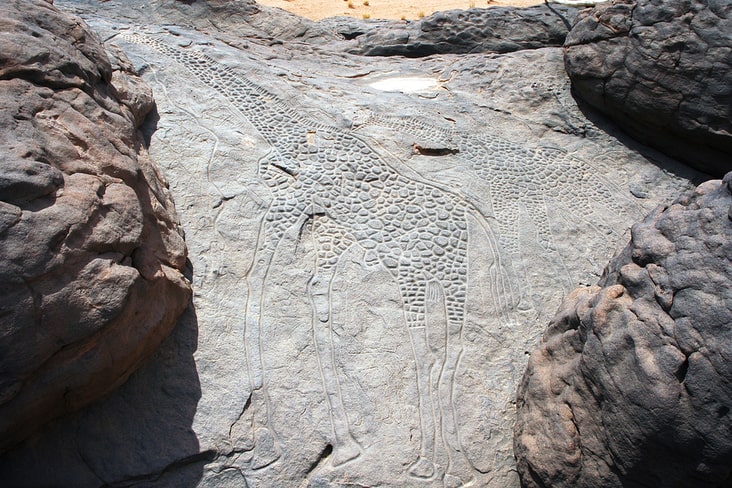
29. Niger is home to the largest known animal carvings in the world. The Dabous Giraffe Petroglyph is a life-sized carving of two giraffes estimated to be between 7,000 and 10,000 years old.
30. Niger has a dinosaur named after it. The Nigersaurus – which means ‘Niger lizard’ – was a herbivorous dinosaur that lived in the region around 121-99 million years ago. Its bones have been found in Algeria, Niger and Tunisia.
31. Niger is among the countries with the lowest CO₂ emissions globally per capita, emitting an estimated 0.1 metric tons per person.
Explore more: Test your knowledge with our Africa map quiz.
We strive to verify all facts using authoritative and primary sources where possible. However, if you find an error or have any questions, please contact us.

Caitriona Maria is an education writer and owner of The Facts Institute. With seven years of teaching experience and a background in educational content, she specialises in creating clear reference resources about countries, geography and global topics.