A ranked list of the largest countries in the European Union (EU) by total surface area, based on consistent international geographic data and current EU membership.
Surface area refers to the combined land and inland water area within a country’s internationally recognized boundaries. This includes lakes and rivers but excludes overseas territories unless otherwise stated.
Largest country in the European Union
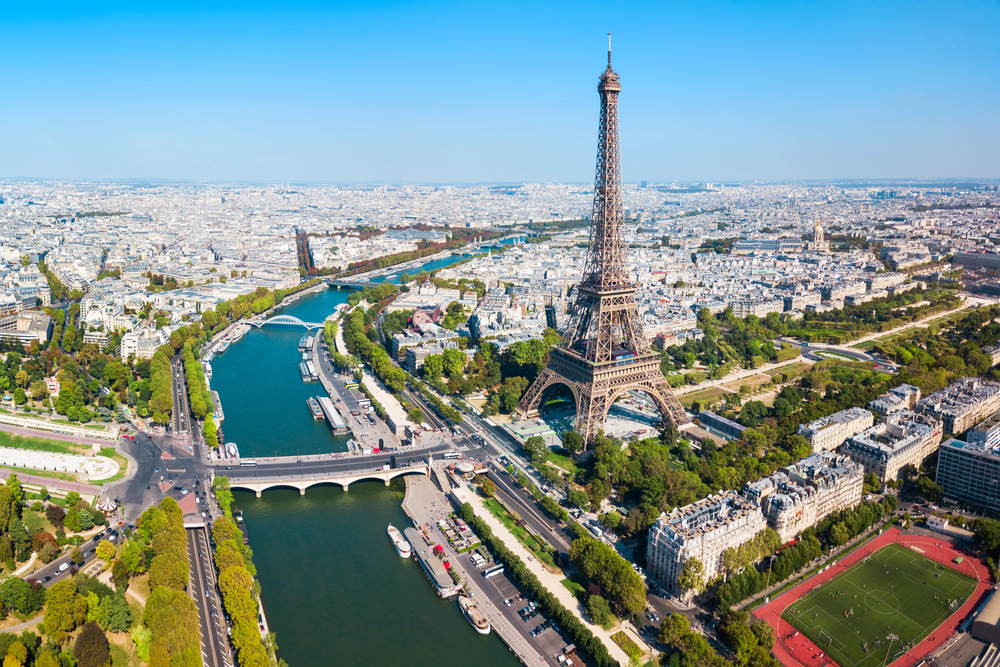
France is the largest country in the European Union by total area.
When overseas territories are included, France covers over 640,000 square kilometers, making it the largest EU member state by surface area. Even when only mainland France is considered, it remains the EU’s largest country.
France is also one of the EU’s most populous countries and plays a central role in the bloc’s political, economic, and military affairs.
Largest EU countries by area
These are the 10 largest countries in the European Union, ranked by total surface area:
Smallest countries in the European Union by area
These are the 10 smallest EU member states by total surface area:
- Malta
- Luxembourg
- Cyprus
- Slovenia
- Belgium
- Netherlands
- Denmark
- Estonia
- Slovakia
- Croatia
Note: Only current EU member states are included in this ranking. All non-EU countries and territories are excluded.
Complete ranking of EU countries by area
The table below ranks all 27 EU member states by total surface area in square kilometers (sq km) and square miles (sq mi).
Area figures may vary slightly between sources due to differences in how inland waters and overseas territories are measured.
For consistency, this ranking uses data from the CIA World Factbook and reflects current European Union membership.
| EU ranking | Country | Sq km | Sq mi | Global Ranking |
|---|---|---|---|---|
| 1 | France | 643,801 | 248,573 | 45 |
| 2 | Spain | 505,370 | 195,124 | 54 |
| 3 | Sweden | 450,295 | 173,860 | 58 |
| 4 | Germany | 357,022 | 137,847 | 64 |
| 5 | Finland | 338,145 | 130,559 | 66 |
| 6 | Poland | 312,685 | 120,728 | 71 |
| 7 | Italy | 301,340 | 116,348 | 73 |
| 8 | Romania | 238,391 | 92,043 | 83 |
| 9 | Greece | 131,957 | 50,949 | 97 |
| 10 | Bulgaria | 110,879 | 42,811 | 105 |
| 11 | Hungary | 93,028 | 35,918 | 110 |
| 12 | Portugal | 92,090 | 35,556 | 111 |
| 13 | Austria | 83,871 | 32,383 | 114 |
| 14 | Czechia | 78,867 | 30,451 | 116 |
| 15 | Ireland | 70,273 | 27,133 | 120 |
| 16 | Lithuania | 65,300 | 25,212 | 123 |
| 17 | Latvia | 64,589 | 24,938 | 124 |
| 18 | Croatia | 56,594 | 21,851 | 127 |
| 19 | Slovakia | 49,035 | 18,933 | 130 |
| 20 | Estonia | 45,228 | 17,463 | 132 |
| 21 | Denmark | 43,094 | 16,639 | 133 |
| 22 | Netherlands | 41,543 | 16,040 | 134 |
| 23 | Belgium | 30,528 | 11,787 | 140 |
| 24 | Slovenia | 20,273 | 7,827 | 154 |
| 25 | Cyprus | 9,251 | 3,572 | 169 |
| 26 | Luxembourg | 2,586 | 998 | 178 |
| 27 | Malta | 316 | 122 | 207 |
For a broader comparison, see the full global ranking of the world’s largest countries by total surface area.
Notes on EU geography and size
The European Union spans a wide range of country sizes, from France, the bloc’s largest member by area, to Malta, its smallest.
Land area does not necessarily correspond to population size or economic output. For example, Germany, while smaller than several EU countries by area, has the largest population in the European Union.
For population-based rankings, see the list of largest EU countries by population.

Caitriona Maria is an education writer and owner of The Facts Institute. With seven years of teaching experience and a background in educational content, she specialises in creating clear reference resources about countries, geography and global topics.