10 fun facts about Angola
1. Angola is home to the giant sable antelope, a rare animal found nowhere else in the world. It was thought extinct for decades before being rediscovered in 2004.
2. Kalandula Falls are among Africa’s largest waterfalls, with a 105 m (344 ft) drop.
3. Angola has an exclave called Cabinda, which is separated from the rest of the country by the Democratic Republic of the Congo.
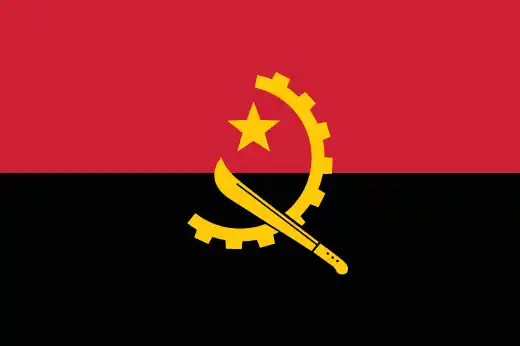
4. Angola’s flag features a yellow half gear, machete and star, a design often compared to the hammer-and-sickle symbol used by the former Soviet Union.
5. The name Angola comes from ngola, a title once used by rulers of the Kingdom of Ndongo.
6. Angola has one of the youngest populations in the world, with a median age of around 17 years.
7. Angola is one of Africa’s leading oil producers, with most production coming from offshore fields.
8. Angola became independent from Portugal in 1975, after about 400 years of Portuguese colonial rule.
9. Angola has the world’s seventh-highest fertility rate, with an average of five births per woman.
10. In December 2024, then-US President Joe Biden became the first sitting American president to visit Angola.
Read more: Facts about Angola
At a glance
Capital city: Luanda
Population: 39 million
Area: 1,246,700 sq km
Major languages: Portuguese and Bantu languages, including Umbundu, Kimbundu and Kikongo
Time zone: UTC+1 (West Africa Time)
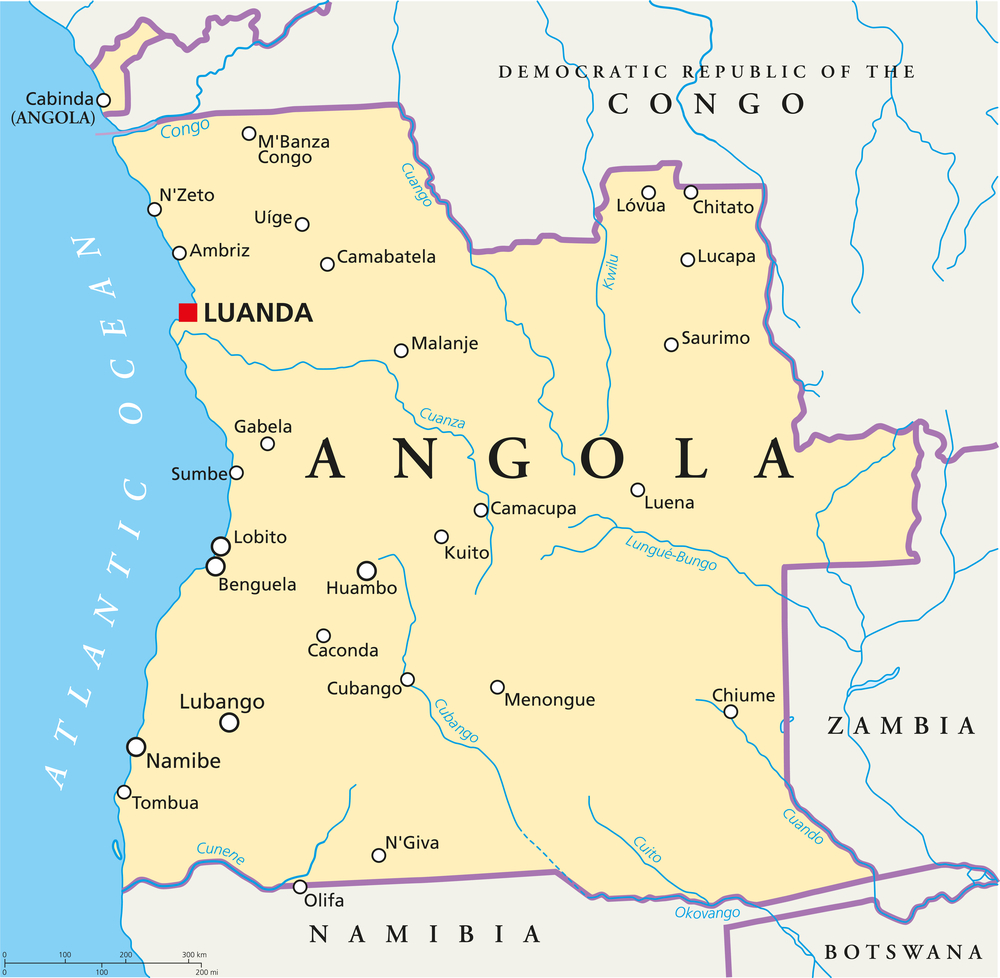
Where is Angola?
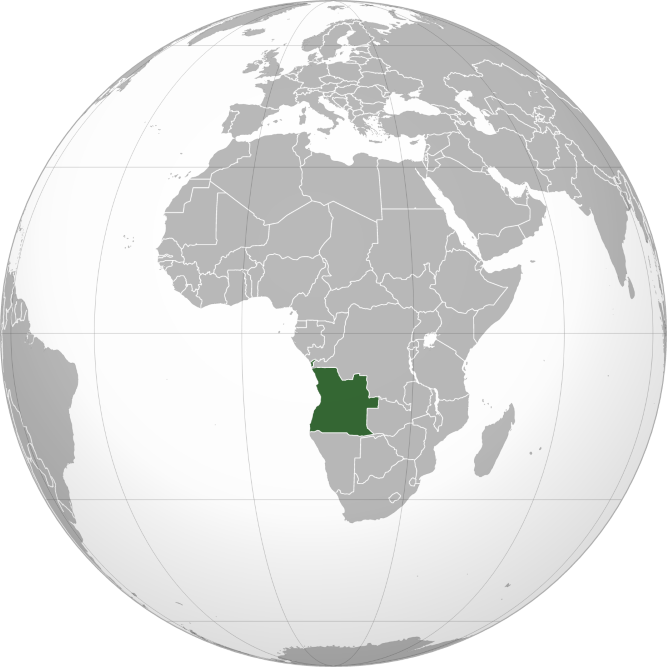
Continent: Africa
Region: Central Africa
Neighboring countries: Namibia, Zambia, Democratic Republic of the Congo and the Republic of the Congo
Highest point: Mount Moco (2,620 m / 8,596 ft)
Geography of Angola
Angola is one of the largest African countries by area, roughly twice the size of France.
It is located in Central Africa, where around half of the land area is classified as forest and several major rivers rise from its highlands.
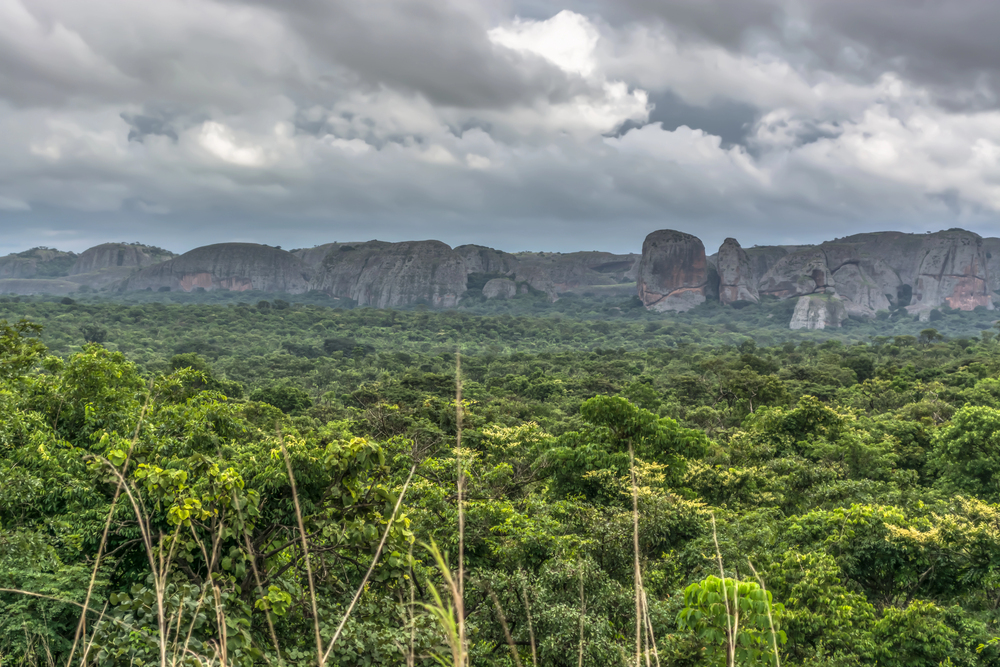
Northern Rainforests
Northern Angola and the Cabinda exclave contain tropical rainforest. It shares the sprawling Mayombe Forest with three other countries.
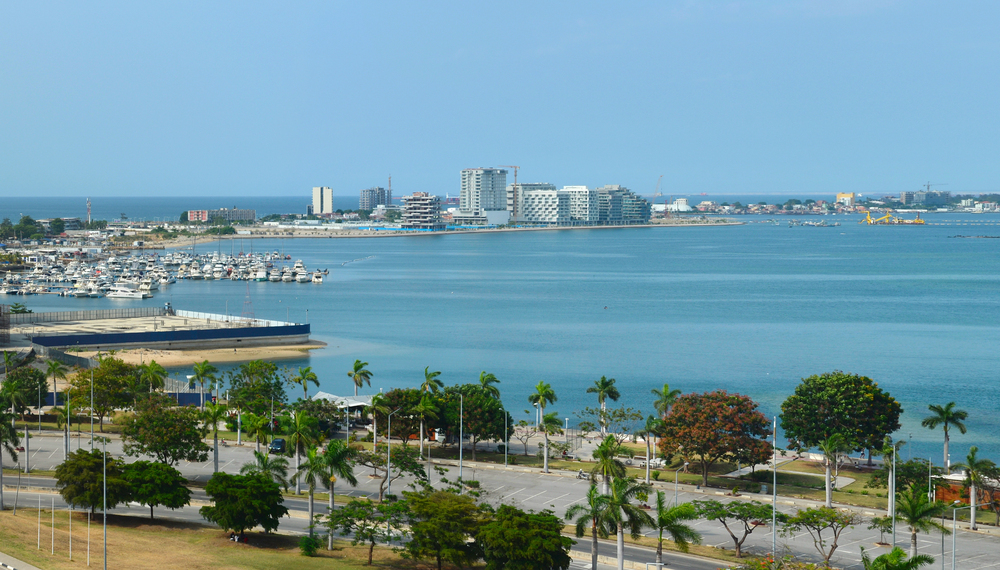
Atlantic Coast
Angola has a long coastline on the Atlantic Ocean. Major coastal cities include Luanda, Lobito and Namibe.
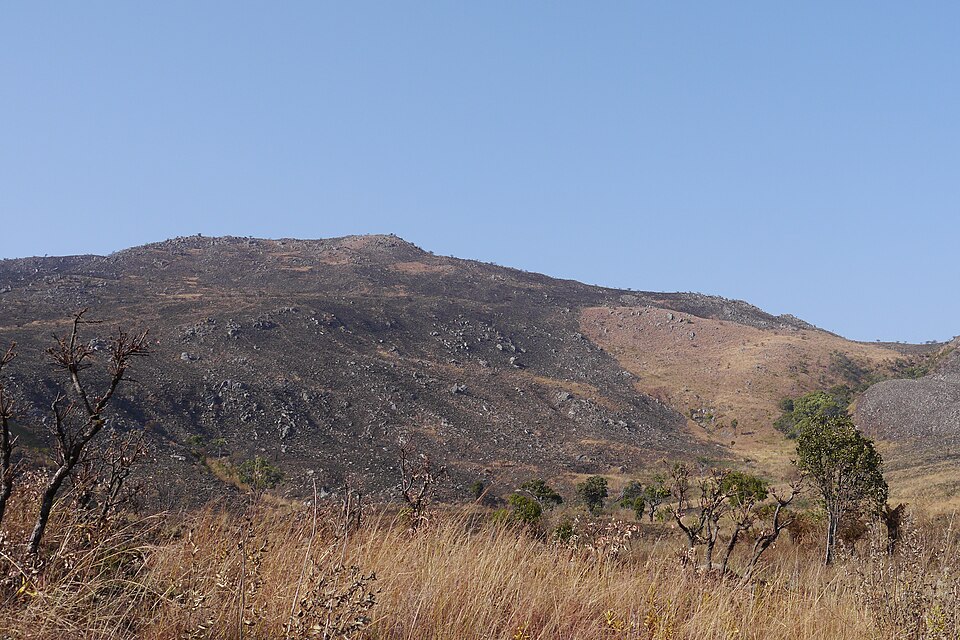
Inland Highlands and Plateaus
Much of inland Angola is made up of highlands and plateaus. This region includes Mount Moco, the country’s highest point.
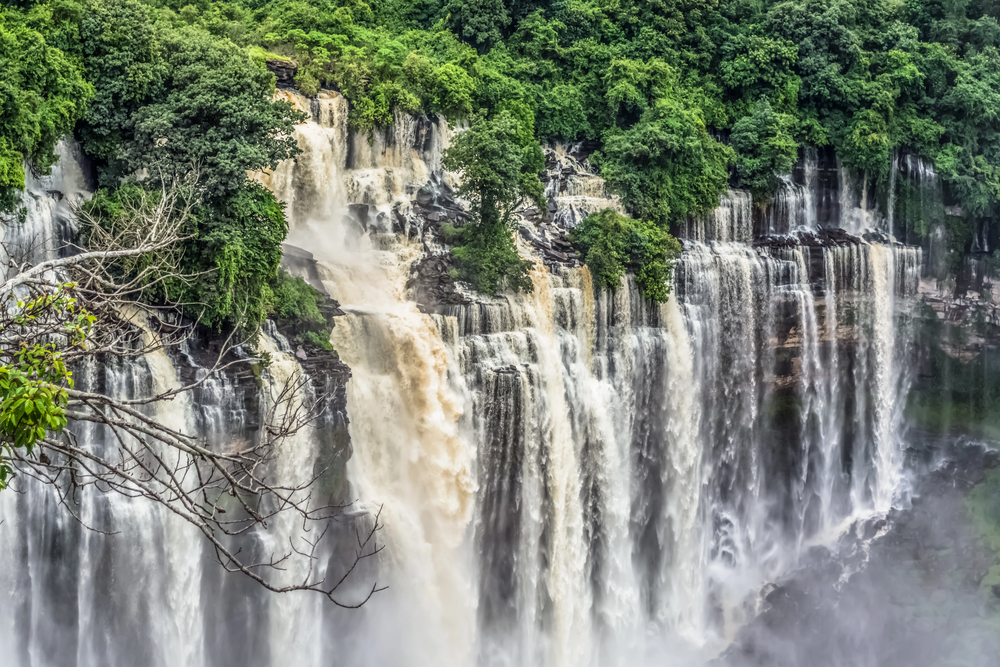
Kalandula Falls
Kalandula Falls, on the Lucala River in northern Angola, is among Africa’s largest waterfalls.
Climate of Angola
Angola has a warm but highly varied climate, with distinct rainy and dry seasons across much of the country. Northern Angola is generally wetter, while conditions become increasingly dry toward the south and southwest. The elevated central plateau is also considerably cooler than many lower-lying areas.
The differences can be striking. Soyo, near the mouth of the Congo River, has historically recorded an average annual temperature of about 26°C (79°F), compared with under 16°C (61°F) at high-altitude Huambo. Frost can even occur at higher elevations during the coolest part of the year.
See article: Angola Climate
See article: Flag of Angola
Angola flag
The Angolan flag has roots in the country’s independence movement. During Portuguese rule, Angola used the Portuguese flag, but the People’s Movement for the Liberation of Angola (MPLA) later adopted a red-and-black flag with a yellow star.
A new national flag based on the MPLA flag was raised when Angola became independent in 1975. After the civil war, Angola considered replacing it with a new design, but the proposal was never adopted.
Image credits:
Angola (centered orthographic projection), L’Américain, via Wikimedia Commons, licensed under CC0.

Caitriona Maria is an education writer and owner of The Facts Institute. With seven years of teaching experience and a background in educational content, she specialises in creating clear reference resources about countries, geography and global topics.