Africa’s richest woman, a rediscovered antelope and an immense waterfall are among the most interesting facts about Angola.

Fast facts
Official name: Republic of Angola
Capital city: Luanda
Population: 39 million
Area: 1,246,700 sq km
Major languages: Portuguese, Umbundu, Kimbundu and Kikongo
Time zone: UTC+1 (West Africa Time)
Interesting facts about Angola
1. Located in Southwestern Africa, Angola is known to have been inhabited by agricultural cultures from around 1000 to 500 BCE.
2. Angola was once part of the central and west African Kingdom of Kongo. Founded in the 14th century, the kingdom incorporated much of present-day northern Angola as well as parts of the Democratic Republic of the Congo, Congo and Southern Gabon.
3. The name Angola derives from the word ngola which was the title given to Ndongo kings – the historical African kingdom of the Mbundu people founded around the late 15th or early 16th century.
4. In 1482, Portuguese explorer Diogo Cão became the first European to explore the region.
5. Luanda was once one of the world’s most expensive cities for expatriates, ranking 30th globally in Mercer’s 2023 cost-of-living survey. It then fell 128 places in 2024, largely because of Angola’s currency devaluation.
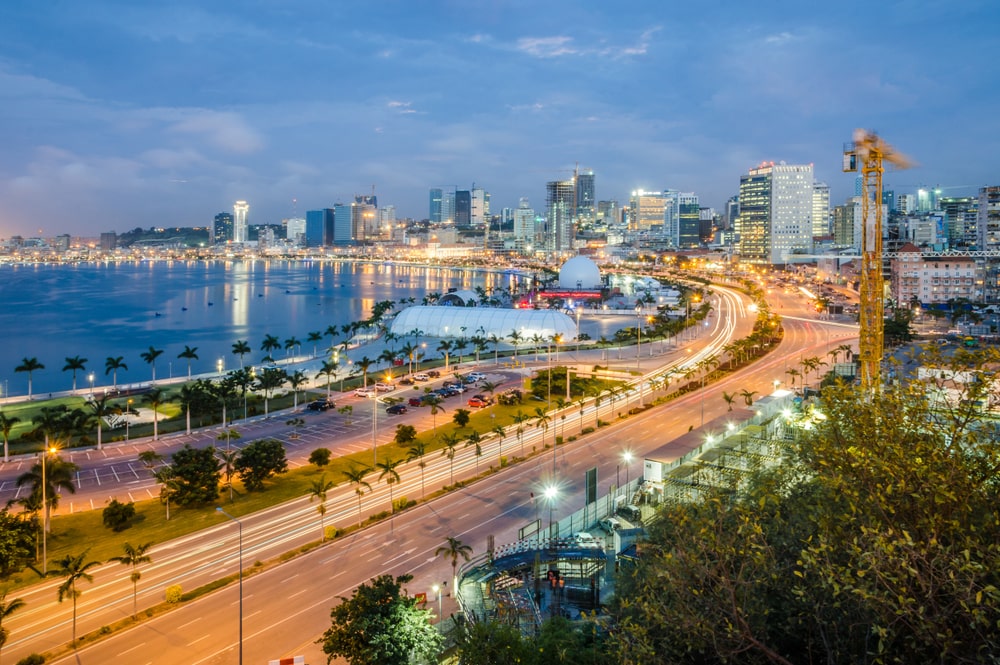
6. During the 17th and 18th centuries, Angola was a significant Portuguese slave-trading base. Between 1580 and 1680, over a million slaves were transported to Brazil.
7. In 1975, following a revolution in Portugal, Angola gained full independence. Portugal’s entire colonial empire collapsed which also included Guinea-Bissau, Mozambique, Cape Verde and Sao Tome and Principe.
8. Angola then fell into a 27-year civil war dominated by foreign intervention, which included the USA, Cuba and South Africa. By the time peace came in 2002, over a million people had died.
9. The Angolan flag is horizontally striped red and black. In the center is a yellow emblem featuring a star signifying internationalism and progress, a cogwheel for industrial workers and a machete for agricultural labourers. The ensemble is similar to the hammer, sickle and star of the old Soviet flag.

See how Angola’s flag compares to other African flags.
10. Angolan businesswoman, Isabel dos Santos, is one of Africa’s richest woman. She is the daughter of the former Angolan president José Eduardo dos Santos and once worth an estimated $3.5bn.
11. Dos Santos is currently the subject of a criminal investigation in Angola and has been charged with 12 crimes, including embezzlement, tax fraud, and money laundering.
12. In 2023, Angola was Africa’s fourth-largest crude oil producer, behind Algeria, Nigeria and Libya.
13. Oil accounts for at least 88% of the country’s total exports. Petroleum exports significantly contribute to Angola’s position as the second-largest trading partner of the United States.
14. Angola’s dry season can be almost rainless but surprisingly misty. Known locally as the cacimbo, it falls during the cooler part of the year and is often marked by heavy morning mist. In June and July, national rainfall averages just 0.8 mm (0.03 in), despite the damp-looking mornings.
15. Angola is Africa’s seventh-largest country by land area and the world’s 22nd.
16. The giant sable antelope, which is endemic to Angola, was thought to be extinct since 1982. However, the antelope was ‘rediscovered’ in 2004 but remains endangered.
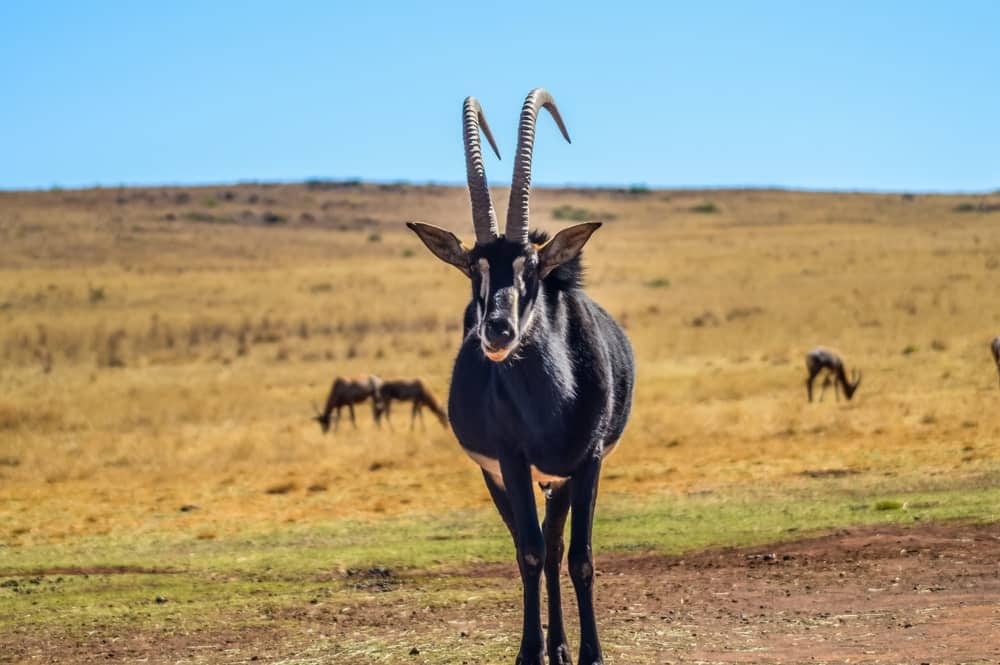
17. Angola is home to Africa’s second highest uninterrupted waterfall, the Kalandula Falls, 105 m (344 ft) drop.
18. Angola is still struggling to clear landmines leftover from its civil war. Members of the British Royal Family, Princess Diana, and Prince Harry, visited Angola to raise awareness of the issue in 1997 and 2019.
19. Angola has one of the youngest populations in the world, with a median age of around 17 years old.
20. Angola also has the world’s seventh-highest fertility rate, with an average of five births per woman.
21. In December 2024, then-US President Joe Biden became the first sitting American president to visit Angola, where he promoted the Lobito Corridor railway project linking Angola with the Democratic Republic of the Congo and Zambia.
Explore more: Test your knowledge with our Africa map quiz.
We strive to verify all facts using authoritative and primary sources where possible. However, if you find an error or have any questions, please contact us.

Caitriona Maria is an education writer and owner of The Facts Institute. With seven years of teaching experience and a background in educational content, she specialises in creating clear reference resources about countries, geography and global topics.