From diverse flora and fauna to a tragic history, these are the most interesting facts about the Democratic Republic of Congo.

Fast facts
Official name: Democratic Republic of the Congo
Capital city: Kinshasa
Population: 112.8 million
Area: 2,344,858 sq km
Major languages: French, Lingala, Swahili, Kituba and Tshiluba
Major religion: Christianity
Time zone: UTC+1 (West Africa Time) and UTC+2 (Central Africa Time)
Interesting facts about the Democratic Republic of Congo
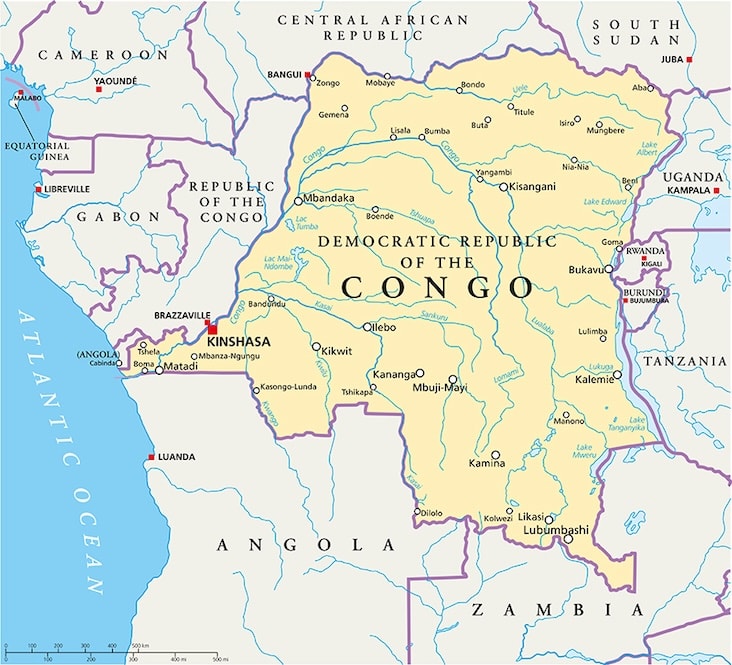
1. The Democratic Republic of Congo in Central Africa is often referred to as DRC, DR Congo and sometimes Congo (Kinshasa) to distinguish it from the Republic of the Congo which is often referred to as Congo (Brazzaville).
Note: we refer to the Democratic Republic of Congo (DRC) as DR Congo below.
2. Harpoon tips, some of the earliest known sophisticated tools made from bone, were discovered on the banks of the Semliki River in DR Congo and are more than 90,000 years old.
3. The Kingdom of Kongo ruled much of the region from the 14th to 19th centuries.
4. In 1482, Portuguese navigator Diogo Cao became the first European to visit the Congo setting up ties with the king of Kongo.
5. Belgium’s King Léopold II set up a private venture to colonize Kongo from the 1870s onwards. The colony was the largest private estate ever acquired by a single man and possibly led to the deaths of 10 million people.
6. DR Congo’s flag consists of a blue background with a yellow-bordered red diagonal stripe running across it and a yellow star in the top left corner. The star represents a united country and a hopeful future.

See how DR Congo’s flag compares to other African flags.
7. DR Congo’s recent history has been plagued by civil war, conflict and political upheaval. It has been at the center of what has been called “Africa’s world war”, which directly or indirectly killed up to six million people.
8. In 1971, the country was renamed Zaire and the River Congo became the River Zaire following a military takeover. The country reverted to the Democratic Republic of Congo in 1997.
9. At 2,900mi (4,700 km), the Congo River, which runs through DR Congo, is Africa’s second-longest river after the Nile. It is also the world’s deepest river.

10. From 1874-77, famed British explorer Henry Stanley became the first to navigate the Congo River to the Atlantic Ocean. The city of Kisangani (Stanleyville) and the Boyoma Falls (Stanley Falls) were named after him. The Boyoma Falls are a 100km (60mi) stretch of seven cataracts that are the last point ships can travel upriver from Kinshasa.
11. DR Congo’s capital city, Kinshasa, is located on the Congo River opposite Brazzaville, the capital of Congo (Republic of Congo). The two cities are 2.96 mi (4.76 km) apart, making them the closest capital cities in the world.
12. DR Congo’s capital city Kinshasa, with a population of more than 12 million, is the world’s largest French-speaking city.

13. DR Congo is Africa’s fourth most populous country and the 15th most populous in the world.
14. The world’s second-largest rainforest, the Congolese Rainforest, is part-located in DR Congo. The Congolese Rainforest spans six countries: Cameroon, the Central African Republic, the Republic of the Congo, Equatorial Guinea and Gabon.
15. The Congo Basin spans six countries including DR Congo. The Congo Basin makes up one of the most important wilderness areas on Earth and is home to approximately 10,000 plant species, 400 mammal species, 1,000 bird species and 700 fish species.
16. As such, DR Congo is one of 17 megadiverse countries in the world. Megadiverse countries are the world’s most biodiversity-rich countries.
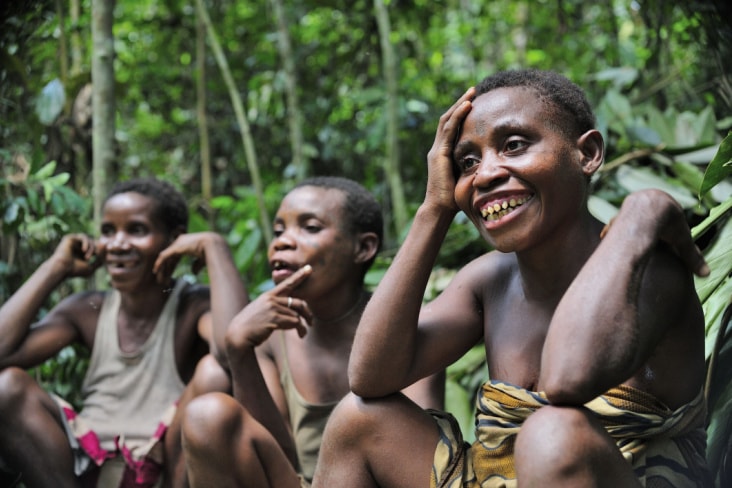
17. There are more than 200 African ethnic groups in DR Congo. The majority are Bantu with the four largest tribes – Mongo, Luba, Kongo (all Bantu) and the Mangbetu-Azande (Hamitic) – making up around 45% of the population.
18. DR Congo and Somalia share the world’s second-highest fertility rate, averaging 5.8 births per woman.
19. DR Congo and the Congo Basin countries are home to the ethnic group of Pygmy people, known for their short stature – typically under five feet tall. The word “Pygmy” comes from the Greek for “dwarfish”, although pygmies are conventionally proportioned.
20. In 1904, Pygmy Ota Benga was kidnapped from what is now DR Congo and taken to the US, where he was exhibited with monkeys in a zoo. More than a century later, the Bronx Zoo in New York finally issued an apology.
21. DR Congo has five UNESCO World Heritage Sites. All are natural heritage sites and include four national parks and one wildlife reserve.
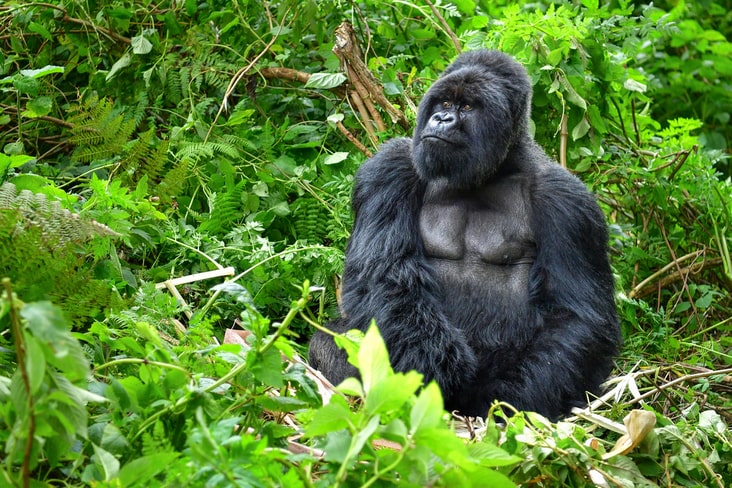
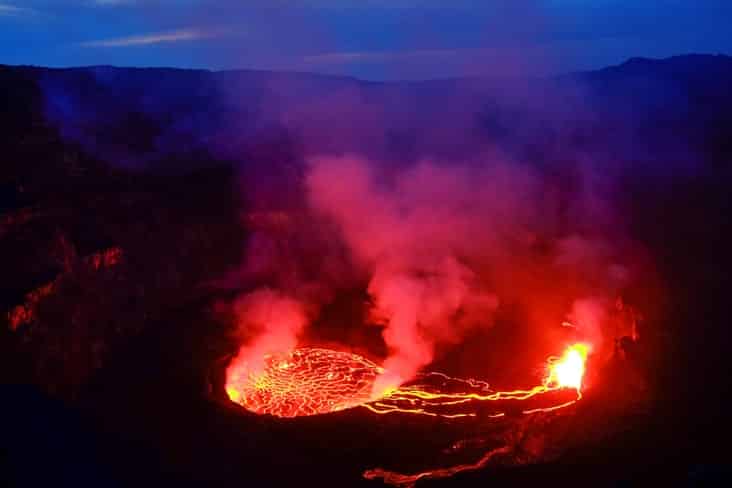
22. The UNESCO-listed Virunga National Park is Africa’s oldest national park and home to an array of wildlife and natural landscapes, including mountain gorillas and chimpanzees, as well as the two most active volcanoes of Africa.
23. The DR Congo is home to the endangered okapi, the giraffe’s closest living relative. With zebra-like stripes on its legs and a body resembling a deer, the okapi is found only in the wild in the Ituri Rainforest of the DR Congo.

24. DR Congo is the world’s 11th-largest and Africa’s second-largest country after Algeria.
25. Mount Nyiragongo is one of the world’s most dangerous volcanoes and is known locally as “General Nyiragongo”. In 2002, lava from the volcano destroyed part of the nearby city of Goma.
26. DR Congo is potentially one of the world’s richest countries with vast natural resources including cobalt, copper, niobium, tantalum, petroleum, industrial and gem diamonds, gold, silver, zinc, manganese, tin, uranium, coal, hydropower and timber.
27. However, DR Congo is the world’s fourth poorest country when measured by GDP per capita based on purchasing power parity (PPP).
28. DR Congo is tied as the second-hungriest country in the world, alongside South Sudan, according to the 2025 Global Hunger Index. It experiences alarming levels of hunger.
29. DR Congo records some of the lowest CO₂ emissions per capita globally, at just 0.04 metric tons per person each year, due to its low industrial output and heavy reliance on renewable biomass for energy.
Explore more: Test your knowledge with our Africa map quiz.
We strive to verify all facts using authoritative and primary sources where possible. However, if you find an error or have any questions, please contact us.

Caitriona Maria is an education writer and owner of The Facts Institute. With seven years of teaching experience and a background in educational content, she specialises in creating clear reference resources about countries, geography and global topics.