The most interesting facts about South Sudan, from Africa’s newest nation and decades of conflict to “mega-herds” of migrating wildlife.

Fast facts
Official name: Republic of South Sudan
Capital city: Juba
Population: 12.2 million
Area: 644,329 sq km
Major languages: English, Arabic
Major religions: Christianity and indigenous beliefs
Time zone: UTC+3 (East Africa Time)
Interesting facts about South Sudan
1. South Sudan is a landlocked country in Africa. Landlocked countries are wholly surrounded by land and do not have access to open sea.
2. South Sudan was once part of Sudan, formerly Africa’s largest and the world’s 10th-largest country by area.
3. The wider Sudan region, known as Ancient Nubia, has been inhabited since Mesolithic times (Middle Stone Age), around 30,000 to 20,000 BC.
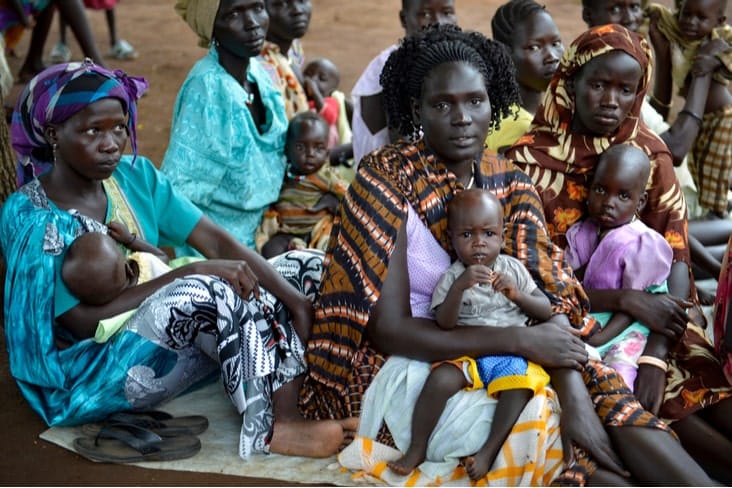
4. The name “Sudan” comes from the Arabic “bilad-as-sudan” meaning “land of the black people”.
5. From 1899 to 1955, South Sudan was part of Anglo-Egyptian Sudan and under joint British-Egyptian rule.
6. In 2011, Sudan split into two countries, and South Sudan became the world’s newest internationally recognized country.

7. The split followed a 2005 peace agreement, which ended Africa’s longest-running civil war – the Second Sudanese Civil War. The conflict lasted 22 years, from 1983 to 2005, killed at least 1.5 million, and displaced over four million people.
8. This followed a previous civil war that had been fought in Sudan from 1955 to 1972 between a guerrilla movement and the Sudanese government.
9. In 2013, civil war broke out yet again when President Salva Kiir accused his former vice-president, Riek Machar, of plotting to overthrow him. This led to yet another conflict that has displaced at least another four million people.
10. South Sudan’s flag consists of horizontal black, red and green stripes, separated by two white lines. The blue triangle symbolizes the River Nile and the yellow star represents unity of the states of Southern Sudan.
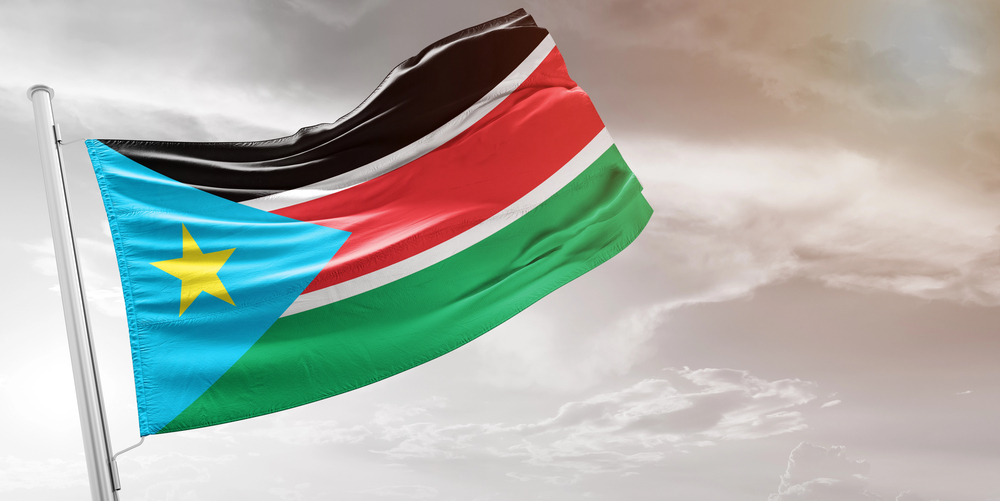
See how South Sudan’s flag compares to other African flags.
11. South Sudan is one of the poorest countries in the world, with a GDP per capita PPP of just $954 USD. In 2025, it ranked last among 193 countries on the Human Development Index (HDI).
12. Cattle traditionally represent wealth and social status in South Sudan and play an important role in marriage arrangements, where cattle may be given as bridewealth.
13. In 2026, the Boma–Badingilo Migratory Landscape, which comprises Boma National Park, Badingilo National Park, and the surrounding floodplain and savanna landscapes, became South Sudan’s first UNESCO World Heritage Site.
14. The Boma National Park is one of Africa’s largest reserves and home to one of the continent’s largest wildlife migrations, with as many as six million antelopes simultaneously migrating in “mega-herds”.

15. South Sudan ranks last in the world on the 2025 Corruption Perceptions Index (CPI), with a score of just 8 out of 100, indicating extremely high perceived levels of public sector corruption.
16. South Sudan has one of the world’s lowest life expectancy. As of 2023, it had the fifth-lowest life expectancy at an estimated 58 years.
17. The longest river in the world, the Nile, runs through South Sudan. The White Nile, one of the two main tributaries of the Nile, runs through South Sudan’s capital city. It joins the other major tributary, the Blue Nile, at Khartoum in Sudan.

18. There are over 60 different ethnic groups in South Sudan.
19. South Sudan is home to the Sudd, Africa’s largest wetland and one of the largest tropical wetlands in the world.
20. South Sudan experiences severe air pollution, with PM₂.₅ levels four times higher than the WHO guideline and nearly half of stroke and heart-disease deaths linked to polluted air.
21. While pollution remains a major concern, CO₂ emissions remain low at about 0.14 metric tons per person each year, owing to its minimal industrial output.
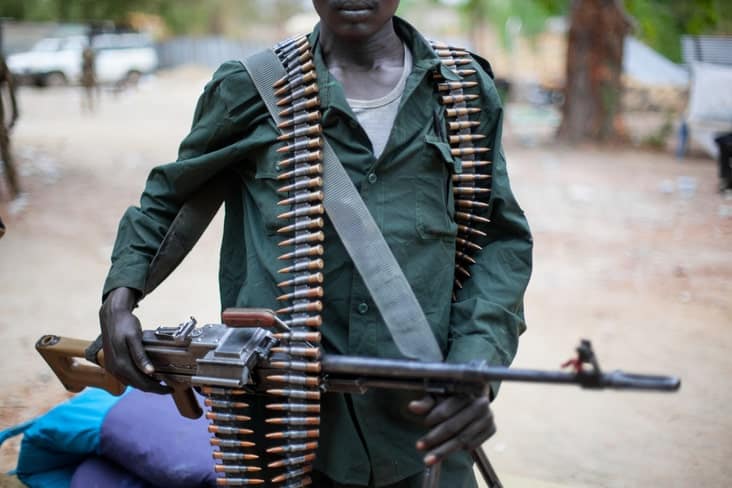
22. South Sudan was once a major slave-trading area in the 19th century in the Arab slave trade.
23. Continued unrest and instability have contributed to alarming levels of hunger in South Sudan according to the Global Hunger Index (GHI).
Explore more: Test your knowledge with our Africa map quiz.
We strive to verify all facts using authoritative and primary sources where possible. However, if you find an error or have any questions, please contact us.

Caitriona Maria is an education writer and owner of The Facts Institute. With seven years of teaching experience and a background in educational content, she specialises in creating clear reference resources about countries, geography and global topics.