The most interesting facts about the Republic of the Congo, from Africa’s first Marxist-Leninist state to the Congo’s Loch Ness Monster.
Fast facts
Official name: Republic of the Congo
Population: 6.5 million
Area: 342,000 sq km
Capital city: Brazzaville
Major languages: French, Lingala and Kituba (Monokutuba)
Major religions: Roman Catholic 33.1%, Awakening Churches/Christian Revival 22.3%, Protestant 19.9%
Time zone: UTC+1 (West Africa Time)
Interesting facts about the Republic of the Congo
1. The Republic of the Congo is located in Central Africa, bordered by five countries: Angola, Cameroon, Central African Republic, Democratic Republic of the Congo and Gabon.
2. The Republic of the Congo is often referred to as Congo-Brazzaville, Congo (Brazzaville) or just Congo to distinguish it from its neighbor DR Congo (Democratic Republic of Congo).
3. The Republic of the Congo takes its name from the Congo River, which makes up a significant portion of the country’s eastern border. The name of the river comes from Kongo, a Bantu kingdom that occupied the river mouth, whose name derived from its people the Bakongo, meaning “hunters”.

4. At 2,900mi (4,700 km), the Congo River is Africa’s second-longest river after the Nile. It is also the world’s deepest river.
5. The Republic of the Congo was officially a colony of France from 1891 known as French Congo and then later French Equatorial Africa.
6. The Republic of the Congo flag is made up of a diagonal yellow stripe separating a green triangle from a red triangle. The flag uses the pan-African colors of green, yellow, and red, which are widely associated with African independence movements.

See how The Republic of the Congo’s flag compares to other African flags.
7. Between 1921 and 1934, the French forced Congolese labourers to build the Congo-Ocean Railway from Pointe-Noire to Brazzaville. The construction project caused between 15,000 and 20,000 Africans dead and is considered the most costly ever in terms of African lives.
8. The country’s capital city, Brazzaville, is named after the French explorer, Pierre Savorgnan de Brazza. De Brazza promoted French colonial interests in the region during the 19th century and campaigned against slavery and forced labour.

9. In 1482, Portuguese navigator Diogo Cao became the first European to explore the coastal areas of what would eventually become the Republic of the Congo.
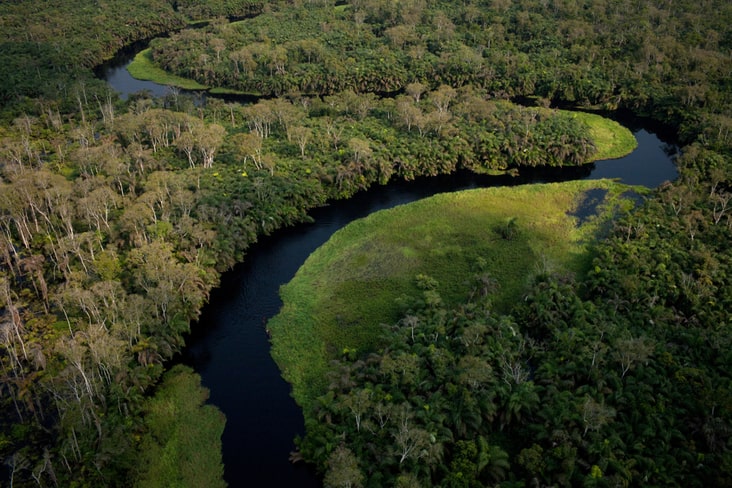
10. The world’s second-largest rainforest, the Congolese Rainforest, is part-located in the Republic of the Congo. The Congolese Rainforest spans six countries: Cameroon, Central African Republic, DR Congo, Equatorial Guinea, Gabon and the Republic of the Congo.
11. The Congo Basin is one of the most important wilderness areas on Earth and is home to approximately 10,000 plant species, 400 mammal species, 1,000 bird species and 700 fish species.

12. The Republic of the Congo capital city, Brazzaville, is located on the Congo River opposite DR Congo’s capital city, Kinshasa. The two cities are less than a mile (1.6km) apart, making them the closest capital cities in the world. Rome and Vatican City are closer, but as Vatican City is a city-state, it technically doesn’t have a capital.
13. The Republic of Congo has a very low population density of about 18 people per square kilometer, compared to the world average of 62 people per square kilometer.
14. In 2015, the Republic of the Congo was named by Lonely Planet as one of the top 10 countries in the world to visit thanks to its “potential to become one of Africa’s finest ecotourism destinations.”
15. The Republic of the Congo has one UNESCO World Heritage Site, the Sangha Trinational. Located where the country meets Cameroon and the Central African Republic, the site includes the Nouabalé-Ndoki National Park in the Republic of the Congo and features a broad range of tropical forest ecosystems rich in flora and fauna such as Nile crocodiles, goliath tigerfish, elephants, western lowland gorillas and chimpanzees.
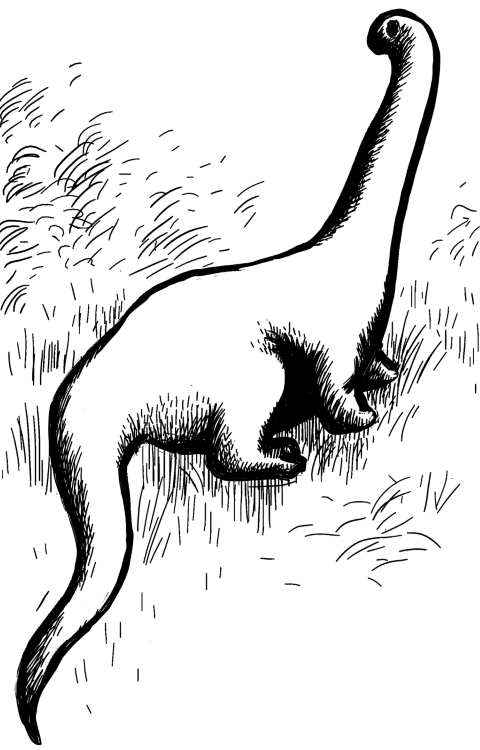
16. The Republic of the Congo is supposedly home to the legendary Mokele-mbembe known as “Congo’s Loch Ness Monster”. The beast is said to be a large reptile-like creature, with a long neck and long tail similar to Scotland’s legendary monster.
17. The Republic of the Congo is home to Diosso Gorge, known as the “Grand Canyon of the Congo”. The gorge is known for its mix of distinctive red rock cliffs which reach up to 50m (165ft) in height.
18. The Republic of the Congo was Africa’s first Marxist state. Following a 1968 military coup, the country was renamed the People’s Republic of the Congo ushering in Africa’s first Marxist-Leninist state (Angola and Ethiopia would later follow). Following the collapse of the Soviet Union, the country’s previous name was restored and the country held its first democratic election in 1992.
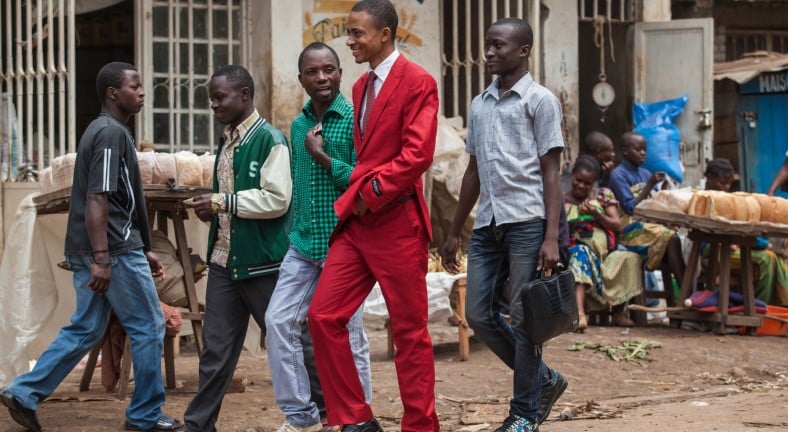
19. The Republic of the Congo is known for its sapeurs (the Society for the Advancement of People of Elegance). Founded in the 1920s, the Sapeurs are well-dressed stylish men and women who parade the streets of Brazzaville and Kinshasa.
20. In 1993, fighting broke out in the Republic of the Congo, followed by a full-scale civil war in 1997 between political rivalries. Angolan troops were involved until peace was eventually brokered in the early 2000s.
21. The Odzala-Kokoua National Park in the Republic of the Congo is one of Africa’s oldest national parks. It is an expansive 13,500 square kilometer (5,200 square mile) protected area consisting of about 85% forest. Designated in 1935, it also received UNESCO Biosphere Reserve status in 1977.
22. The Republic of the Congo is one of Africa’s largest petroleum and crude oil producers and exporters producers.
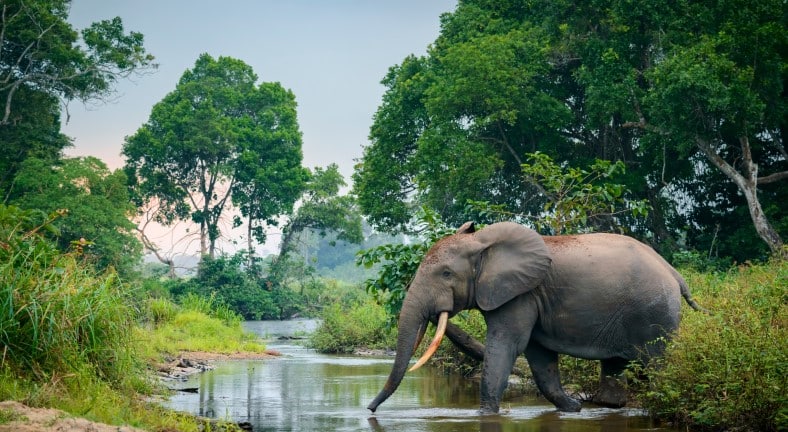
23. Forests covered 64.3% of the Republic of the Congo making it one of the most heavily forested countries in Africa in 2021. The latest research shows that the forests are steadily dwindling due to deforestation.
24. The ethnic group of Pygmy people can be found in the Republic of the Congo (as well as other Congo Basin countries). The Pygmy are known for their short stature – typically under five feet tall. The word “Pygmy” comes from the Greek for “dwarfish”, although Pygmys are conventionally proportioned.
Explore more: Test your knowledge with our Africa map quiz.
We strive to verify all facts using authoritative and primary sources where possible. However, if you find an error or have any questions, please contact us.

Caitriona Maria is an education writer and owner of The Facts Institute. With seven years of teaching experience and a background in educational content, she specialises in creating clear reference resources about countries, geography and global topics.