10 fun facts about Tunisia
1. Tunisia is home to Cape Angela (Ras Angela), the northernmost point on the African continent, overlooking the Mediterranean Sea.
2. Parts of southern Tunisia lie within the Sahara Desert, the largest hot desert in the world.
3. Several Star Wars films were shot in Tunisia, where desert landscapes and traditional buildings were used to portray the fictional planet Tatooine. The planet’s name was inspired by the Tunisian town of Tataouine.
4. Tunisia is home to the ancient city of Carthage, which grew into the center of a powerful trading empire that once competed with Rome for control of the Mediterranean.
5. The Roman Amphitheatre of El Jem is one of the largest ancient amphitheatres in the world and could once hold around 35,000 spectators.
6. Kairouan is one of the most important historic cities in the Islamic world and is often referred to as the fourth holiest Islamic city after Mecca, Medina and Jerusalem.
7. The Medina of Tunis contains around 700 historic monuments, including mosques, palaces, mausoleums, madrasas and fountains.
8. Tunisia played a central role in the beginning of the Arab Spring. Protests that began in the country in 2010 led to the fall of President Zine El Abidine Ben Ali and inspired uprisings elsewhere in the Arab world.
9. The Tunisian National Dialogue Quartet was awarded the Nobel Peace Prize in 2015 for helping support a peaceful democratic transition following the 2011 revolution.
10. Tunisia’s UNESCO-listed Ichkeul National Park is an important stop for hundreds of thousands of migratory waterbirds, including geese, storks and pink flamingoes.
Read more: Facts about Tunisia

At a glance
Capital city: Tunis
Population: 12.3 million
Area: 163,610 sq km
Major languages: Arabic, French, Berber
Major religion: Islam
Time zone: UTC +1 (Central European Time)
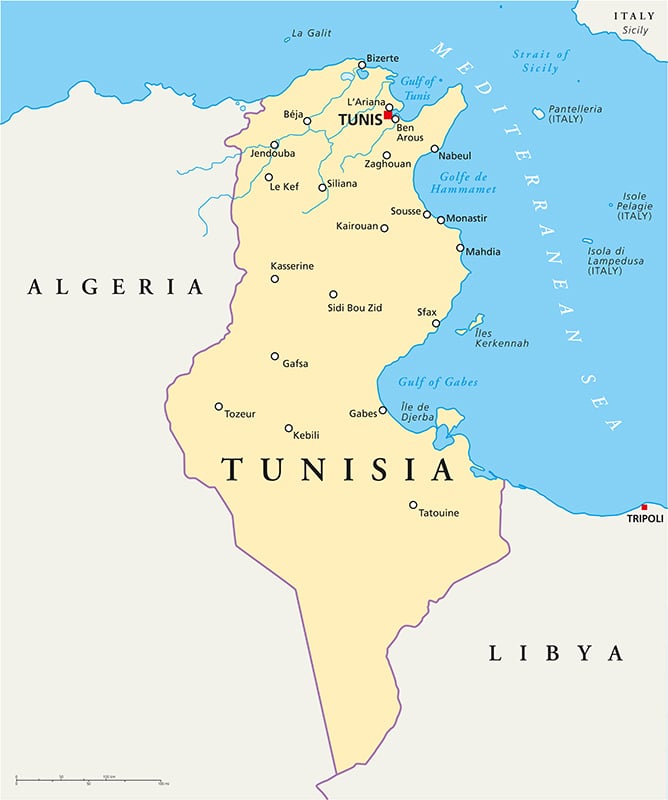
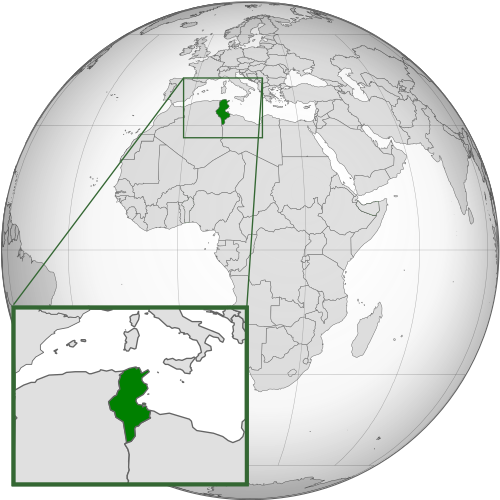
Geography of Tunisia
Tunisia lies in Northern Africa, with a long coastline on the Mediterranean Sea.
Its landscape changes considerably from north to south, ranging from forested hills and fertile plains to dry steppes, salt lakes and the Sahara Desert.
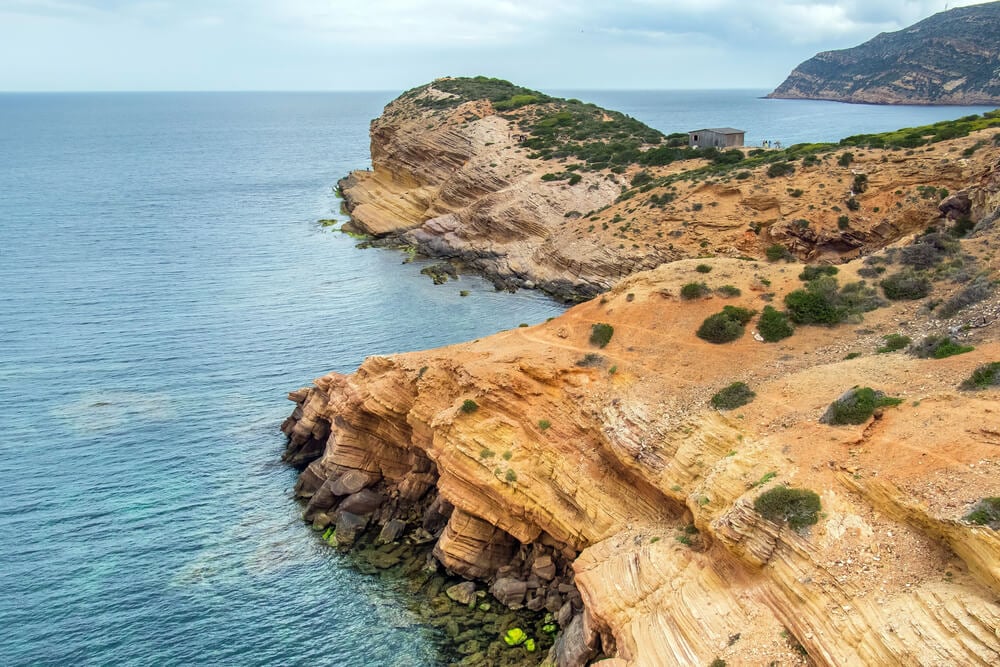
Mediterranean Coast & Northern Plains
Tunisia has an extensive Mediterranean coastline, including the Gulf of Tunis and Gulf of Hammamet in the north and northeast, and the Gulf of Gabès farther south. Fertile coastal plains occur in several areas, particularly around the northern valleys.
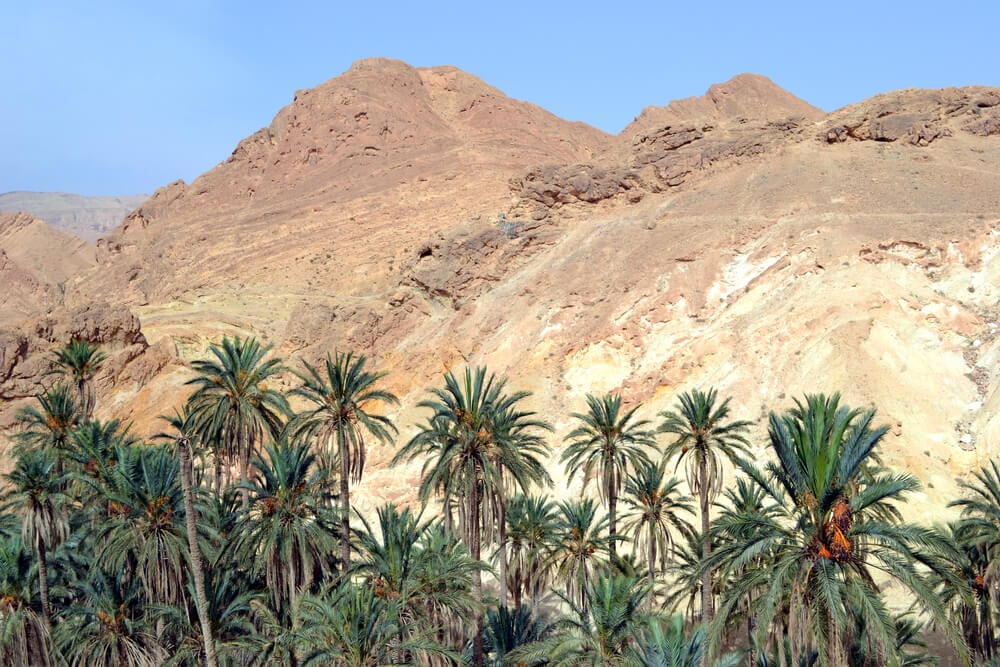
Northern Mountains & Tell Region
Northern Tunisia contains the country’s greenest and most mountainous landscapes. Extensions of the Atlas Mountains cross this region, with wooded hills, valleys and areas of Mediterranean forest receiving more rainfall than the rest of the country.
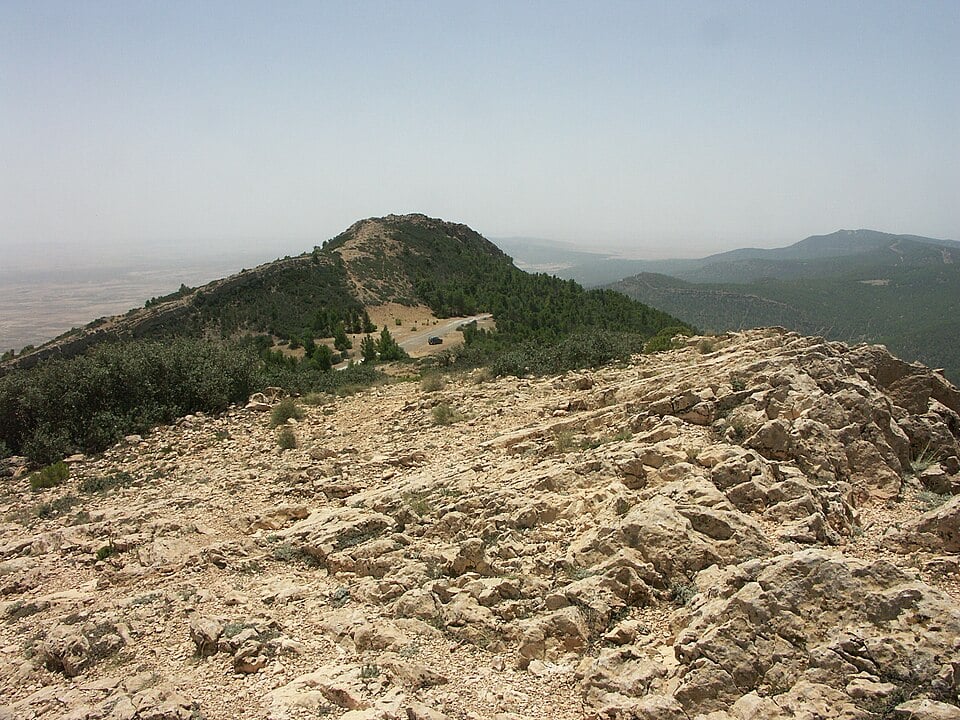
Central Highlands & Jebel ech Chambi
Central-western Tunisia contains rugged hills and uplands near the border with Algeria. Jebel ech Chambi, the highest point, is located here.
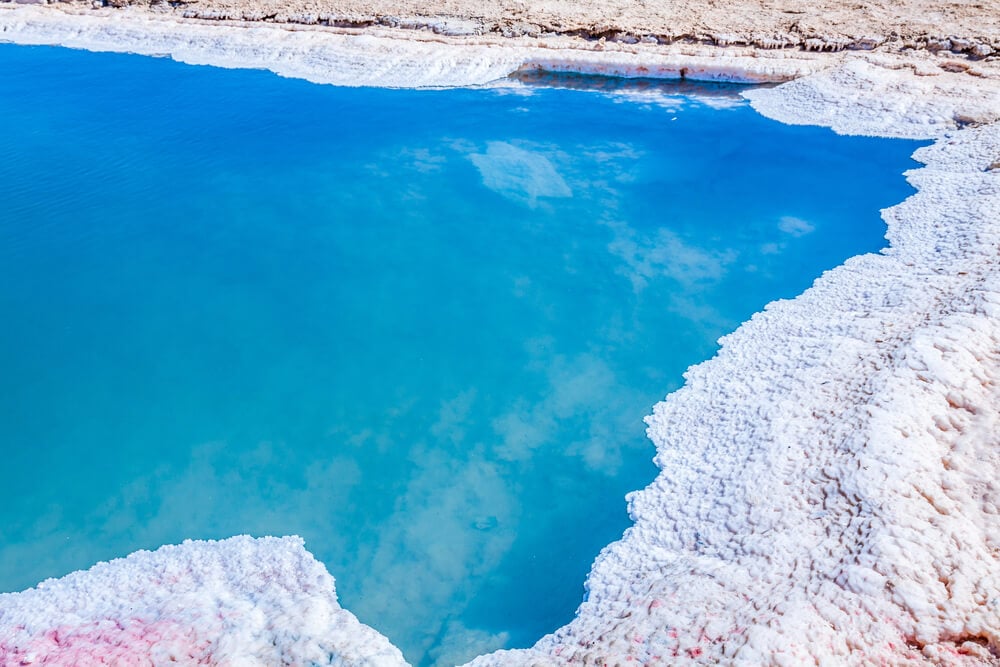
Central Steppe & Salt Lakes
Much of central Tunisia consists of semi-arid to arid plains and steppe vegetation. Large salt depressions known as chotts occur in the interior, including Chott el Djerid, which is often dry or covered by a shallow layer of highly saline water.
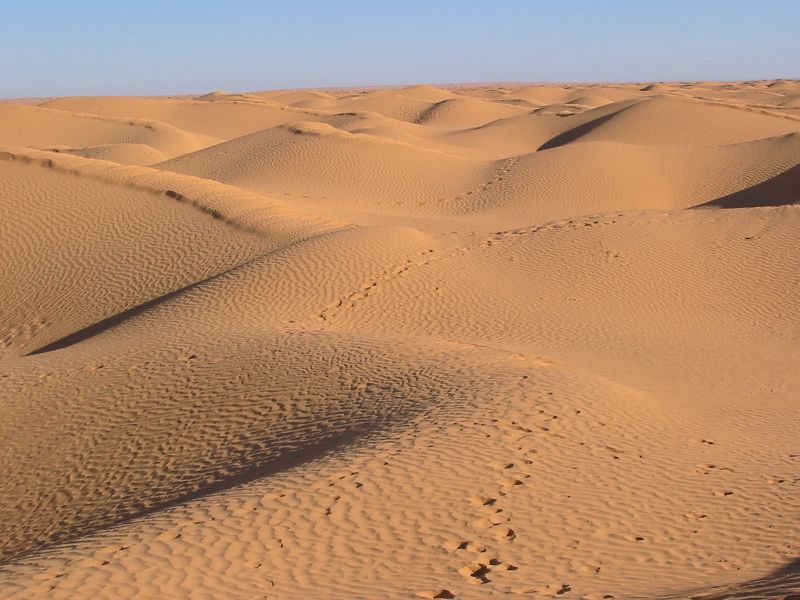
Sahara Desert
Southern Tunisia forms part of the Sahara Desert and is much hotter and drier than the north. Large dune fields of the Grand Erg Oriental extend into the country from Algeria, particularly in the far south.
See article: Flag of Tunisia
Tunisia flag
Tunisia’s flag developed from earlier maritime flags used in Tunis and took its modern form in the early 19th century under the Husseinite dynasty. Originally used as a naval flag, its red background and crescent-and-star design were influenced by Ottoman symbols.
The basic design remained in use during the French protectorate and was retained after independence in 1956. It was formally recognized in Tunisia’s 1959 Constitution as the national flag.
Image credits:
Tunisia (centered orthographic projection): Habib M’henni, via Wikimedia Commons, licensed under CC BY-SA 4.0.
Jebel ech Chambi: Nabucodonosor, via Wikimedia Commons, licensed under CC BY-SA 3.0.
Grand Erg Oriental, Tunisian Sahara: The original uploader was Elcèd77 at French Wikipedia, Wikipedia Commons, licensed under CC BY-SA 3.0.

Caitriona Maria is an education writer and owner of The Facts Institute. With seven years of teaching experience and a background in educational content, she specialises in creating clear reference resources about countries, geography and global topics.