From ‘the smoke that thunders’ to the capital city of the legendary Queen of Sheba, these are the most interesting facts about Zimbabwe.

Fast facts
Official name: Republic of Zimbabwe
Capital city: Harare
Population: 17 million
Area: 390,757 sq km
Major languages: Shona, Ndebele, English
Major religions: Christianity
Time zone: UTC+2 (Central Africa Time)
Interesting facts about Zimbabwe
1. Zimbabwe is a landlocked country in Southern Africa. A landlocked nation is surrounded by land with no access to the sea.
2. Zimbabwe borders four countries: Botswana, Mozambique, South Africa and Zambia.
3. Evidence suggests that Zimbabwe has been inhabited since the Stone Age – up to 500,000 years ago.

4. The UNESCO World Heritage Site of Great Zimbabwe – the capital city of the legendary Queen of Sheba – was built between 1100 and 1450 AD. It was part of a wealthy global trading network and once the capital of the Kingdom of Zimbabwe.
5. When Europeans discovered the ruins of Great Zimbabwe and its surrounding goldmines, they refused to believe that indigenous Africans could have built such a city.

6. Great Zimbabwe inspired several books including H Rider Haggard’s King Solomon’s Mines and She, and Wilbur Smith’s best-seller, The Sunbird.
7. In Zimbabwe, it’s possible to see the renowned ‘big five’ game animals of lion, leopard, rhino, elephant and buffalo.
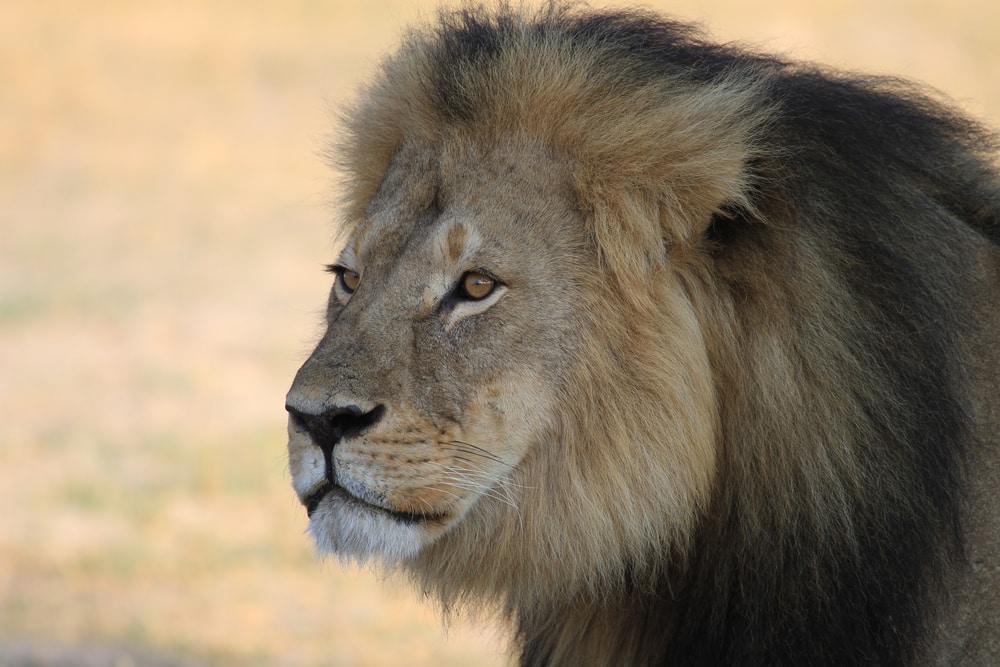
8. In 2015, Zimbabwe made global headlines when it emerged that American Walter Palmer had paid $54,000 to hunt Cecil the Lion, an internationally known 13-year-old lion who inhabited Zimbabwe’s Hwange National Park. The incident caused an international outcry.
9. Zimbabwe was known as Southern Rhodesia after a man called Cecil Rhodes. Rhodes and his British South Africa Company used a British mandate to lead the colonization of Zimbabwe during the 19th century.
10. The Zimbabwe flag consists of seven horizontal stripes of green, yellow, red, and black, with a white triangle at the hoist. There is also a red star and a depiction of the Zimbabwe Bird that appeared on carvings in Great Zimbabwe.

See how Zimbabwe’s flag compares to other African flags.
11. In 1980, after a civil war that cost 30,000 lives, a black majority finally took control of the country – formally renamed Zimbabwe – and declared independence.
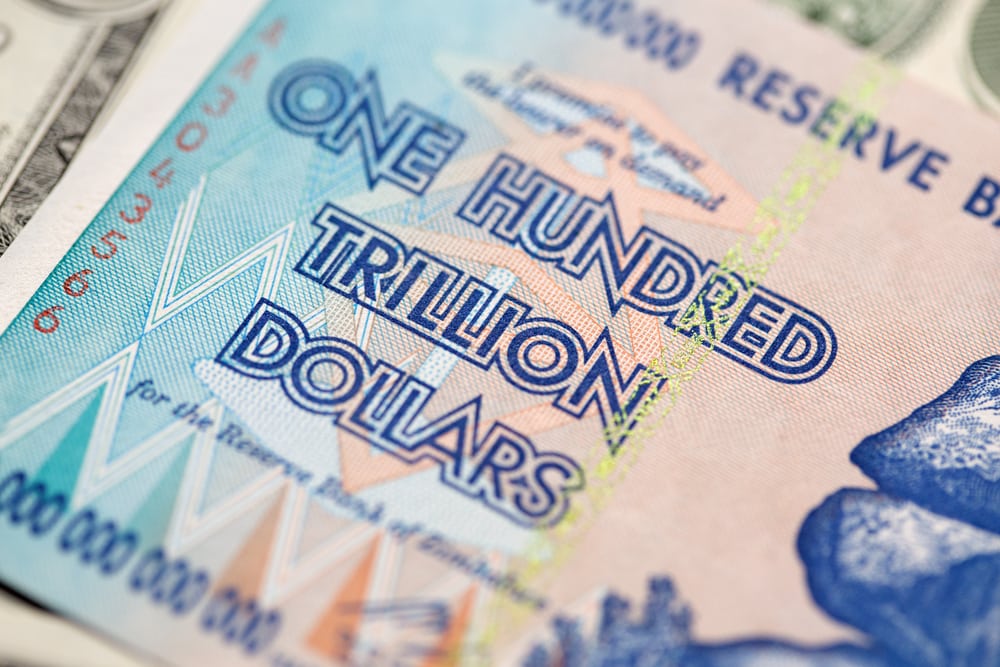
12. In the 2000s Zimbabwe experienced hyperinflation with its currency suffering from year-on-year inflation that exceeded 1,000%. In 2009, the country issued a banknote with a face value of 100 trillion Zimbabwean dollars, worth around $33 (£22) on the black market. The country was eventually forced to abandon its currency.
13. Robert Mugabe was Zimbabwe’s first president and ruled for nearly four decades (37 years). He was finally forced out of power during a coup in 2017 and died in 2019 at the age of 95.
14. Zimbabwe is home to Victoria Falls – the world’s largest sheet of falling water. The falls span the entire breadth of the Zambezi River, more than 1,700m wide and drop approximately 108m.
15. They were named in 1855 after the British Queen Victoria, by Scottish explorer David Livingstone. They are known locally by the Kalolo-Lozi people as Mosi-oa-Tunya, “the smoke that thunders.”
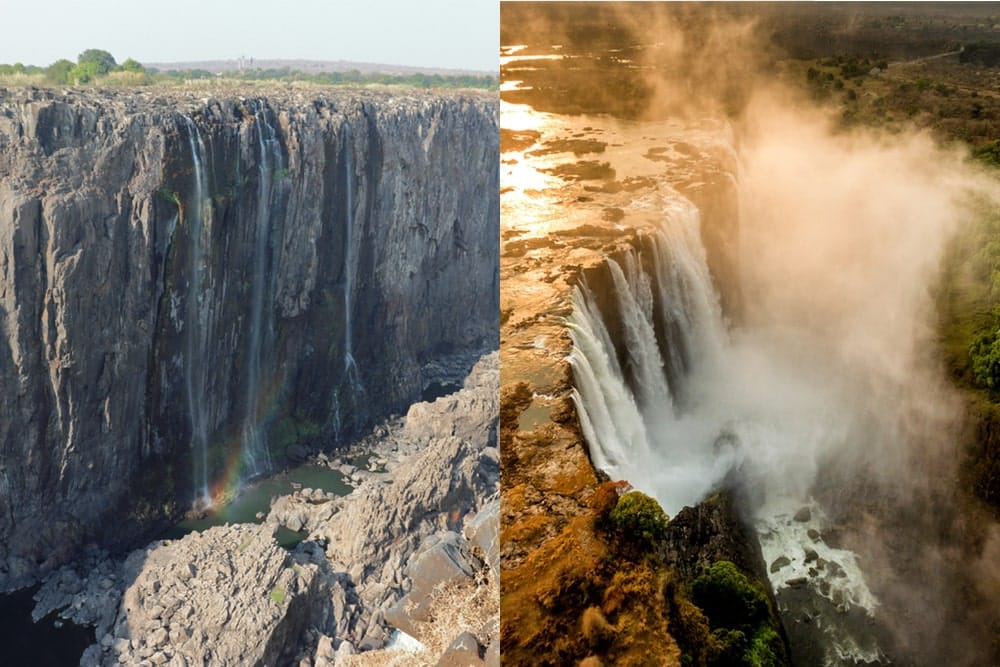
16. In 2019, the falls slowed to a trickle after the region’s worst drought in a century.
17. In Zimbabwean folklore, mermaids have supernatural powers. Construction work on a dam was halted in 2011 after reports of sightings. A traditional healer was called in to expel the mermaids.
18. The world’s largest man-made lake in the world is in Zimbabwe. Lake Kariba, along the border of Zimbabwe and Zambia, was created between 1958 and 1963 when the 579m-long Kariba Dam was built across Kariba Gorge. With a maximum width of 40km and length of 223km, the lake holds approximately 180 billion tons of water.

19. Zimbabwe is one of the few countries in the world where both white and black rhinos can be observed. Estimated at 766 in 2014, Zimbabwe’s rhino population is Africa’s fourth-largest after South Africa, Kenya, and Namibia.
20. The mbira is a traditional Zimbabwean small hand-held musical instrument that dates back to the 16th century. It is often referred to as a ‘thumb piano’.
21. Zimbabwe has one of the world’s highest rates of HIV-AIDS infection. As of 2019, it is 11.8% per 100 people – the eighth-highest in the world.
22. Zimbabwe’s capital city, Harare, was formerly known as Salisbury, named after Lord Salisbury, the British prime minister at the time of its founding in 1890. The name Harare derives from the Shona Chief Neharawe, whose name meant ‘he who does not sleep’.
Explore more: Test your knowledge with our Africa map quiz.
We strive to verify all facts using authoritative and primary sources where possible. However, if you find an error or have any questions, please contact us.

Caitriona Maria is an education writer and owner of The Facts Institute. With seven years of teaching experience and a background in educational content, she specialises in creating clear reference resources about countries, geography and global topics.