A brief overview of the meaning, history, and key facts about the national flag of Zimbabwe.

Flag of Zimbabwe
The national flag of Zimbabwe consists of seven horizontal stripes of green, yellow, red, and black, with a white triangle at the hoist containing a red five-pointed star and the Zimbabwe Bird. The green stripes represent the country’s agriculture and vegetation, while the yellow stripes symbolize Zimbabwe’s mineral wealth. The red stripes commemorate the bloodshed during the struggle for liberation, and the black stripe represents the heritage and identity of the African people of Zimbabwe. The white triangle symbolizes peace, while the red star represents the nation’s aspirations for the future.
Printable Zimbabwe Flag (PNG Download)
Interesting facts about Zimbabwe’s flag
1. The national flag of Zimbabwe was adopted on 18 April 1980, the day the country gained independence.
2. The Zimbabwe Bird, placed on top of the star, is a national emblem derived from ancient stone sculptures found at the historic site of Great Zimbabwe.
3. The red stripes represent the bloodshed during Zimbabwe’s wars of liberation, often referred to as the First and Second Chimurenga.
4. The red star on the flag officially represents the nation’s aspirations, although some sources also associate it with socialism and the revolutionary struggle.
5. The design of Zimbabwe’s flag was based on the flag of ZANU-PF, the political movement that led the country to independence.
6. Although official specifications exist, flags made inside and outside Zimbabwe sometimes show different versions of the Zimbabwe Bird and star.
Explore more about Zimbabwe:
Evolution of Zimbabwe’s flag
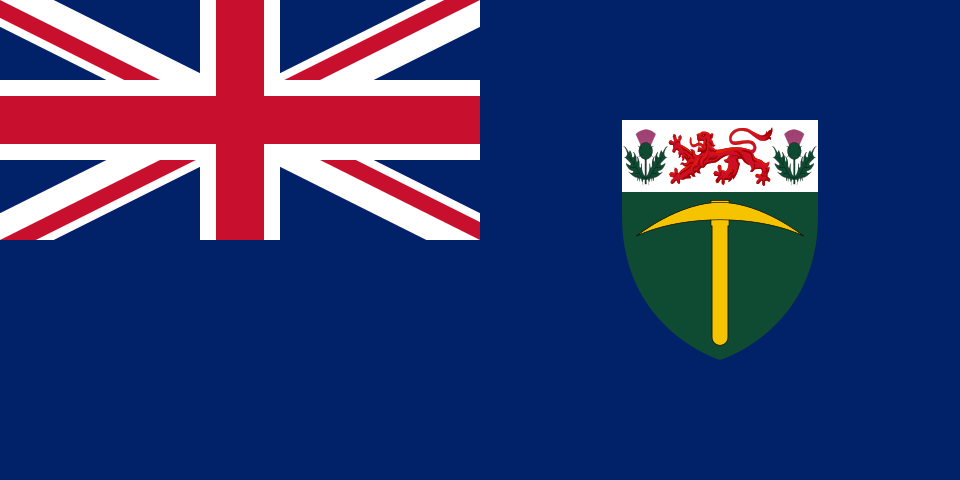
Flag of Southern Rhodesia (1924–1964)
During British colonial rule, Southern Rhodesia used a Blue Ensign with the shield from the colonial coat of arms.
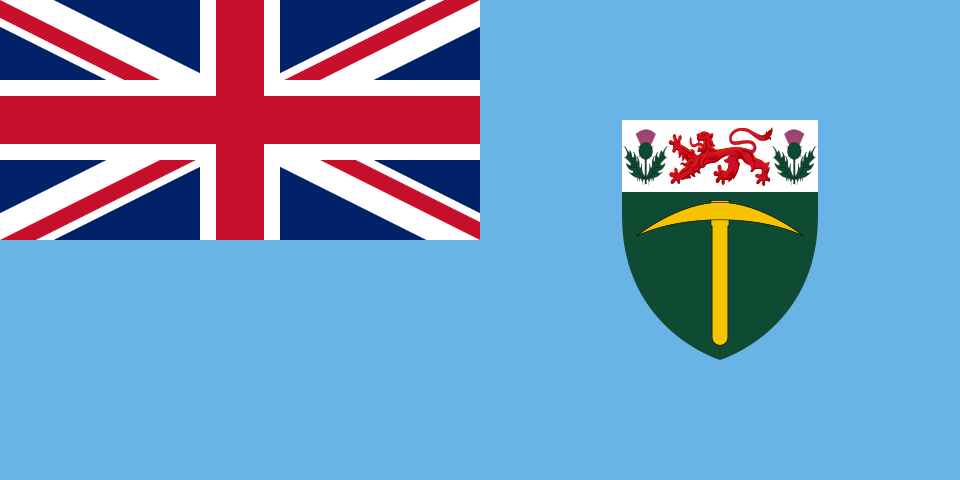
Flag of Rhodesia (1964–1968)
After the breakup of the Federation of Rhodesia and Nyasaland, Rhodesia used a light blue ensign based on the earlier colonial pattern.
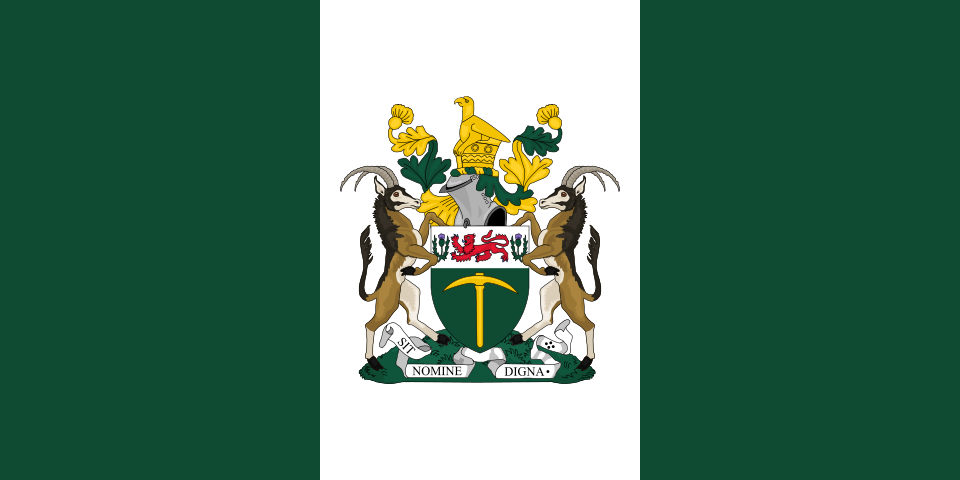
Flag of Rhodesia (1968–1979)
Rhodesia eventually adopted a green-white-green vertical tricolor with the national coat of arms in the center. This was the first national flag to include the Zimbabwe Bird.
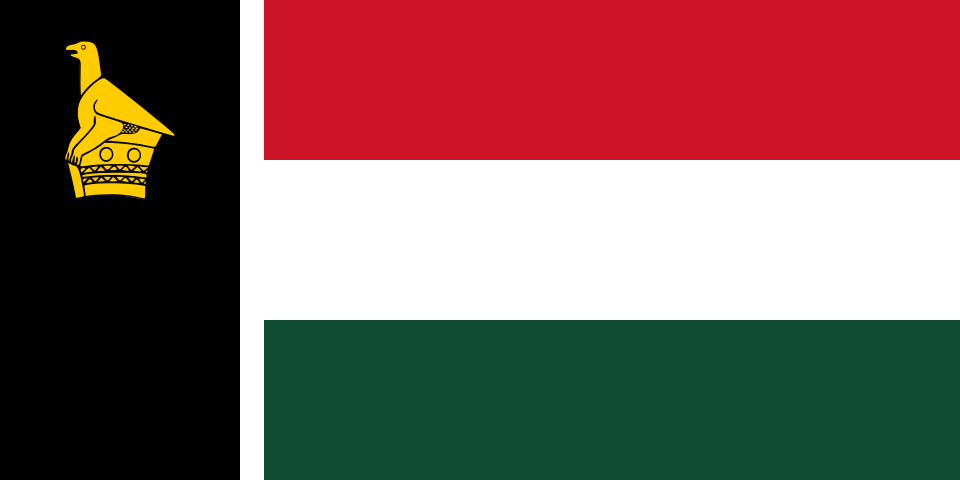
Flag of Zimbabwe Rhodesia (1979)
The adopted flag used the pan-African colors of red, yellow, green, and black, with the Zimbabwe Bird displayed on a vertical black stripe.
History of Zimbabwe’s flag
Colonial period
Before independence, the territory now known as Zimbabwe was called Southern Rhodesia and later simply Rhodesia.
During much of the colonial period, it used British-style ensigns and later other national flags under white-minority rule.
Early use of the Zimbabwe Bird
The Zimbabwe Bird first appeared in official heraldry in 1924, when it was included on the coat of arms of Southern Rhodesia.
It later became a central national symbol and was carried forward onto later flags.
Transition to majority rule
In 1979, the flag of Zimbabwe Rhodesia was introduced during a transitional political period. Its design used pan-African colors and placed the Zimbabwe Bird on a black vertical stripe.
However, the flag had limited support among black nationalist leaders and remained in use only briefly.
Adoption of the modern flag
Following the Lancaster House Agreement and the end of the Rhodesian Bush War, Zimbabwe gained independence from Britain at midnight between 17 and 18 April 1980.
A new national flag was adopted at independence. The initial design did not include the Zimbabwe Bird, but it was later added before final approval because of its historical importance and uniqueness.

Caitriona Maria is an education writer and owner of The Facts Institute. With seven years of teaching experience and a background in educational content, she specialises in creating clear reference resources about countries, geography and global topics.