A brief overview of the meaning, history, and key facts about the national flag of Kyrgyzstan.

Flag of Kyrgyzstan
Adopted in 1992, the national flag of Kyrgyzstan features a red field with a yellow sun at the center containing 40 rays representing the traditional Kyrgyz tribes. The red color symbolizes valor and courage while the golden sun represents peace and wealth. Inside the sun is a stylized representation of the tunduk, the roof opening of a traditional Kyrgyz yurt, symbolizing home and, in a broader sense, the universe.
Printable Kyrgyzstan Flag (PNG Download)
Interesting facts about Kyrgyzstan’s flag
1. Before the current red design was approved in 1992, one of the early proposals featured a blue flag with a white tunduk and six white stars, representing the country’s five regions and Bishkek.
2. The choice of a red flag was debated in parliament in 1992. Supporters linked it to the red banner of Manas in the Kyrgyz epic tradition, while some opponents preferred blue.
3. The 40 rays of the sun were officially explained as representing the unification of 40 ancient tribes into one Kyrgyz nation.
4. In December 2023, Kyrgyzstan officially modified the flag design, changing the shape of the sun’s rays from wavy to straight.
5. The 2023 redesign was controversial because critics said the old wavy rays made the sun look more like a sunflower than a sun.
Explore more about Kyrgyzstan:
Evolution of Kyrgyzstan’s flag
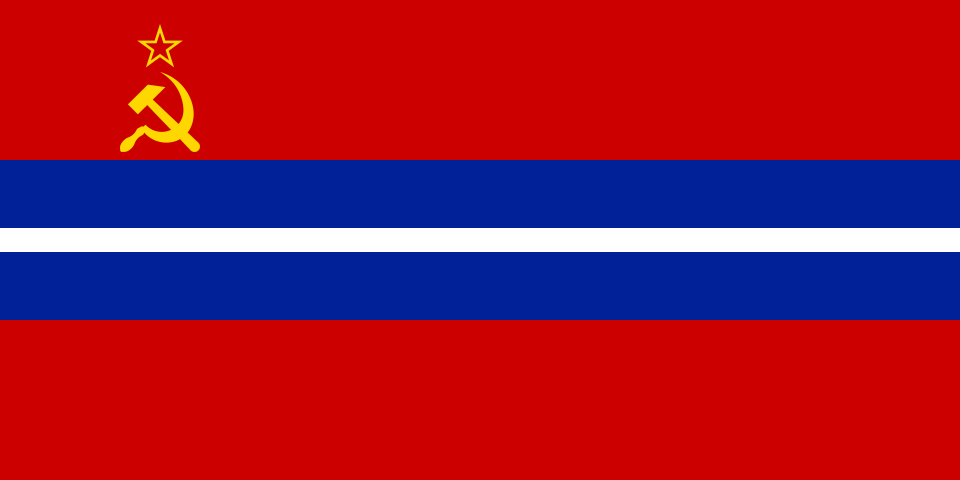
Flag of the Kirghiz SSR (1952–1992)
When Kyrgyzstan declared independence in 1991, it initially continued using the flag of the Kirghiz Soviet Socialist Republic until a new national flag was adopted in 1992.

Flag of Kyrgyzstan (1992–2023)
Adopted on 3 March 1992, the new national flag featured a red field with a yellow sun containing 40 rays and a stylized tunduk at the center.
History of Kyrgyzstan’s flag
Independence and the search for new state symbols
In July 1991, as Kyrgyzstan prepared a new constitution, the Presidium of the Supreme Soviet of the Kyrgyz Republic announced a competition to create new national symbols, including a flag, coat of arms, and anthem.
Several early proposals were submitted by artists and designers. Some designs featured a blue background with a white tunduk (the circular roof opening of a traditional Kyrgyz yurt) and stars representing the regions of the country.
After Kyrgyzstan declared independence on 31 August 1991, the country initially continued using the flag of the Kirghiz Soviet Socialist Republic while a new national flag was being developed.
Adoption of the national flag (1992)
On 3 March 1992, the Supreme Soviet of Kyrgyzstan adopted a new national flag after reviewing several proposed designs.
The final design featured a red field with a golden sun containing forty rays and a stylized tunduk at the center. The red background was chosen partly due to its association with the national epic Manas, which describes the legendary hero Manas carrying a red banner.
Later legal definitions of the flag
In 2004, Kyrgyzstan adopted a law on state symbols that formally defined the design and proportions of the national flag.
Technical specifications for the flag, including official colors and construction details, were later approved by the government in 2017.
Modification of the flag in 2023
In December 2023, Kyrgyzstan adopted amendments to the law on state symbols that modified the design of the national flag.
The change altered the shape of the sun’s rays, replacing the earlier wavy rays with straight ones. The construction of the tunduk inside the sun was also revised.
The updated design became the official version of the flag following the approval of the amendments by the Kyrgyz parliament and their signing into law by President Sadyr Japarov.

Caitriona Maria is an education writer and owner of The Facts Institute. With seven years of teaching experience and a background in educational content, she specialises in creating clear reference resources about countries, geography and global topics.