A brief overview of the meaning, history, and key facts about the national flag of Seychelles.

Flag of Seychelles
Adopted in 1996, the national flag of Seychelles consists of five oblique bands of blue, yellow, red, white, and green radiating from the bottom of the hoist side. The oblique bands symbolize a dynamic country moving into the future. Blue represents the sky and the surrounding sea, yellow represents the sun that gives light and life, red represents the people and their determination to work for the future in unity and love, white represents social justice and harmony, and green represents the land and natural environment.
Printable Seychelles Flag (PNG Download)
Interesting facts about Seychelles’ flag
1. Seychelles’ flag was designed by Philippe Uzice following a nationwide competition held to develop new national symbols representing the Third Republic.
2. The modern flag is the third national flag of Seychelles since the country gained independence in June 1976.
3. Seychelles’ first national flag introduced in 1976 remained in use for only one year before being replaced after the 1977 coup.
4. The colors of the modern Seychelles flag reflect the main political parties in the country: the Seychelles People’s United Party and the Seychelles Democratic Party.
Explore more about Seychelles:
Evolution of Seychelles’ flag
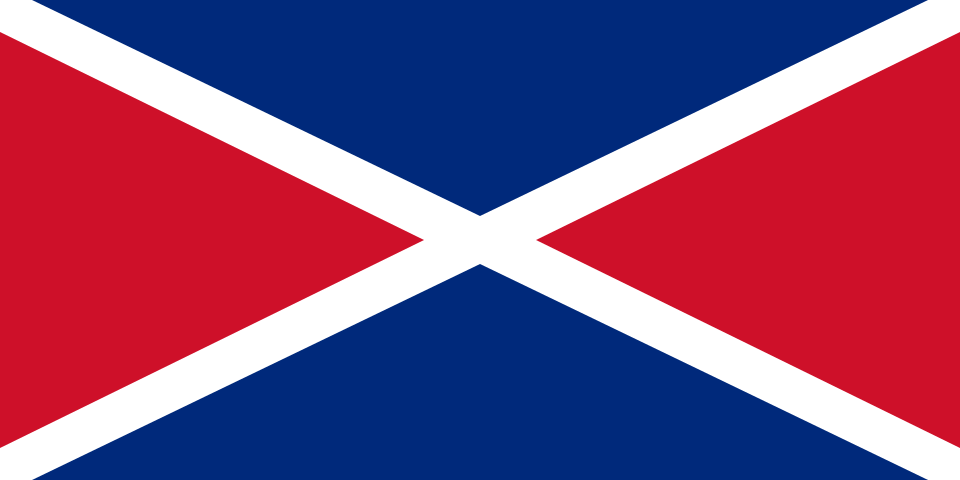
Flag of Seychelles (1976–1977)
Seychelles’ first national flag featured alternating blue and red triangular sections divided by a white saltire.
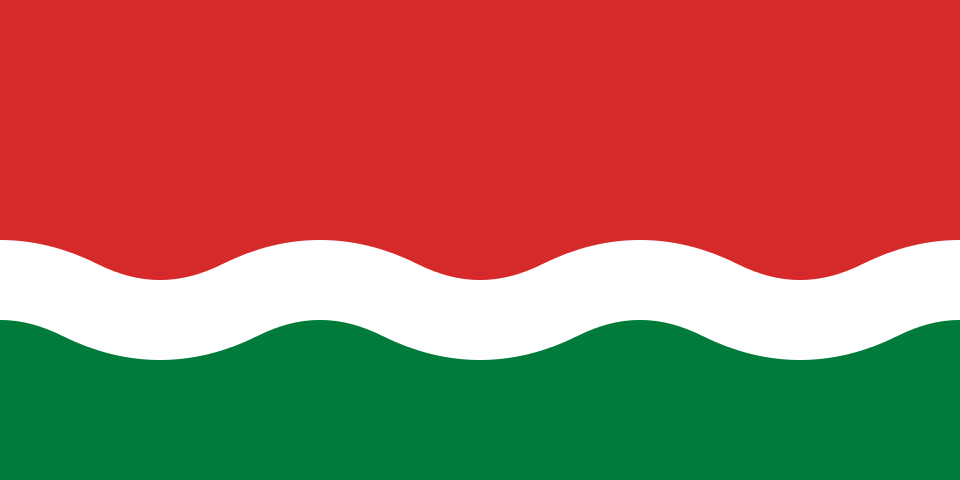
Flag of Seychelles (1977–1996)
After a coup in 1977, a new flag was introduced featuring horizontal bands of red and green separated by a wavy white stripe.
History of Seychelles’ flag
Independence and the first national flag
Seychelles gained independence from the United Kingdom on 29 June 1976.
A new national flag was adopted at independence, featuring alternating blue and red triangular sections.
Political change and the second national flag
In 1977 a coup brought France-Albert René to power, replacing President James Mancham.
A new flag was introduced soon after, featuring red and green fields divided by a wavy white band.
The design reflected the colors of the ruling political party at the time.
Introduction of the modern flag
Following the introduction of a multiparty political system, the government launched a national competition to design new national symbols.
The winning design, created by Philippe Uzice, was adopted on 18 June 1996.

Caitriona Maria is an education writer and owner of The Facts Institute. With seven years of teaching experience and a background in educational content, she specialises in creating clear reference resources about countries, geography and global topics.