Some countries sit entirely on one continent. Others don’t.
Because continental borders are based on conventions rather than hard scientific rules, the exact list of transcontinental countries can vary slightly depending on the definition used.
However, there is a widely accepted core group of countries that clearly qualify.
What is a transcontinental country?
A transcontinental country is any country that lies partly in two (or more) continents.
There are two main types:
1. Contiguous transcontinental countries
These are countries whose mainland territory physically crosses a continental border.
In other words, part of the country lies on one continent and another part lies on a different continent, with the two areas directly connected by land.
A classic example is Russia, which lies in both Europe and Asia.
2. Non-contiguous transcontinental countries
These are countries that have territory on more than one continent, but the territories are not physically connected to each other. Instead, they are separated by ocean or by other countries.
Most non-contiguous transcontinental countries have major overseas territories that are considered integral parts of the state.
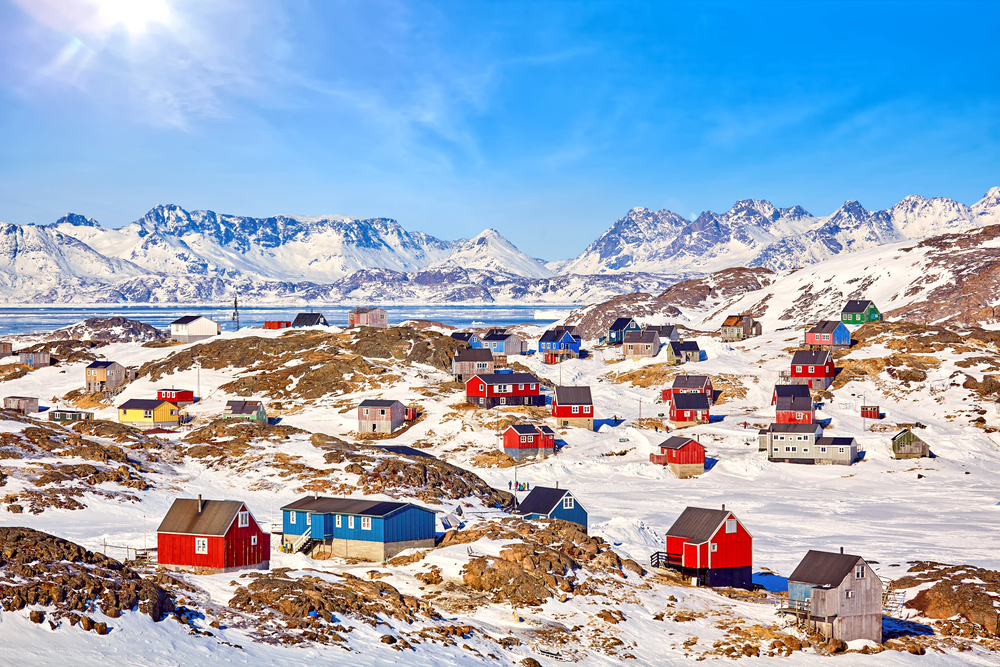
For example, Denmark is located in Europe, but its autonomous territory Greenland lies geographically in North America, making Denmark a non-contiguous transcontinental country.
Countries whose only overseas possessions consist of small islands or distant dependent territories are not usually described as transcontinental in general geography usage.
Full list of transcontinental countries
Here is a clear overview of the most commonly recognized transcontinental countries.
| Country | Continents | Type |
|---|---|---|
| Russia | Europe & Asia | Contiguous |
| Turkey | Europe & Asia | Contiguous |
| Kazakhstan | Europe & Asia | Contiguous |
| Azerbaijan | Europe & Asia | Contiguous |
| Georgia | Europe & Asia | Contiguous |
| Egypt | Africa & Asia | Contiguous |
| Denmark | Europe & North America | Non-contiguous |
| Colombia | South America & North America | Non-contiguous |
| Venezuela | South America & North America | Non-contiguous |
| Indonesia | Asia & Oceania | Non-contiguous |
| Panama | North America & South America | Debatable |
| Trinidad and Tobago | North America & South America | Debatable |
Transcontinental countries between Europe and Asia
The boundary between Europe and Asia is the most important source of transcontinental countries.
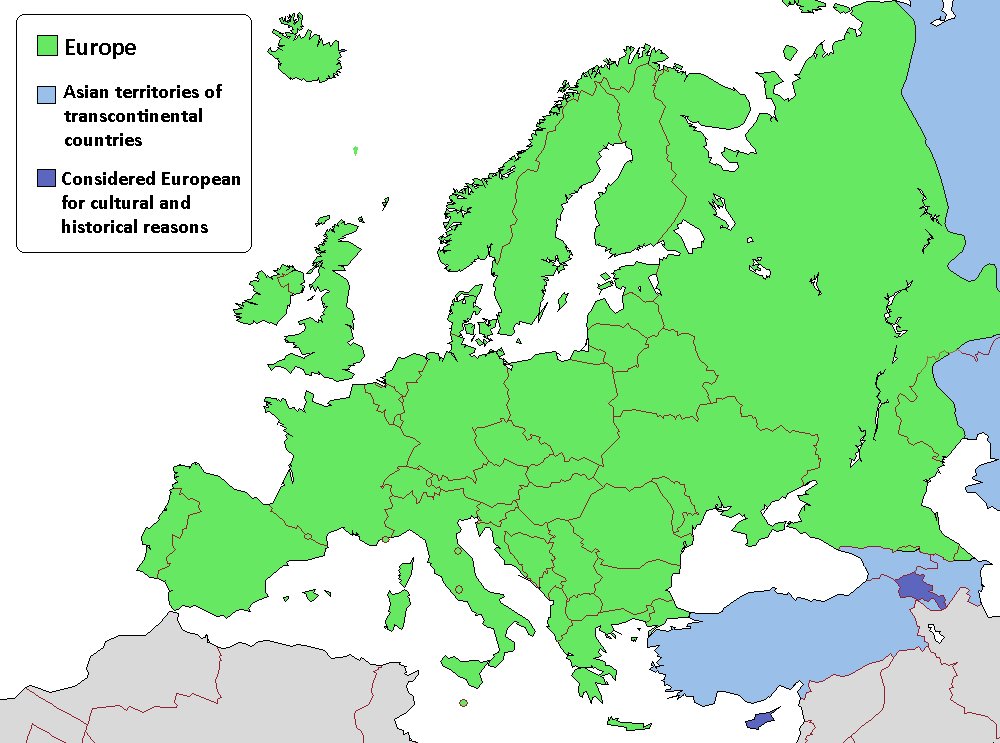
The modern conventional boundary generally follows:
- The Ural Mountains
- The Ural River
- The Caucasus region
- The Black Sea
- The Turkish Straits (Bosphorus and Dardanelles)
Because of this, several countries are split between the two continents.
Russia (contiguous)
Russia is the world’s largest transcontinental country.
Although most of Russia’s landmass is in Asia, around 80% of its population lives in the European section of the country west of the Ural Mountains.
Russia’s capital, Moscow, is located entirely in Europe.
Turkey (contiguous)
Turkey is another classic transcontinental country.
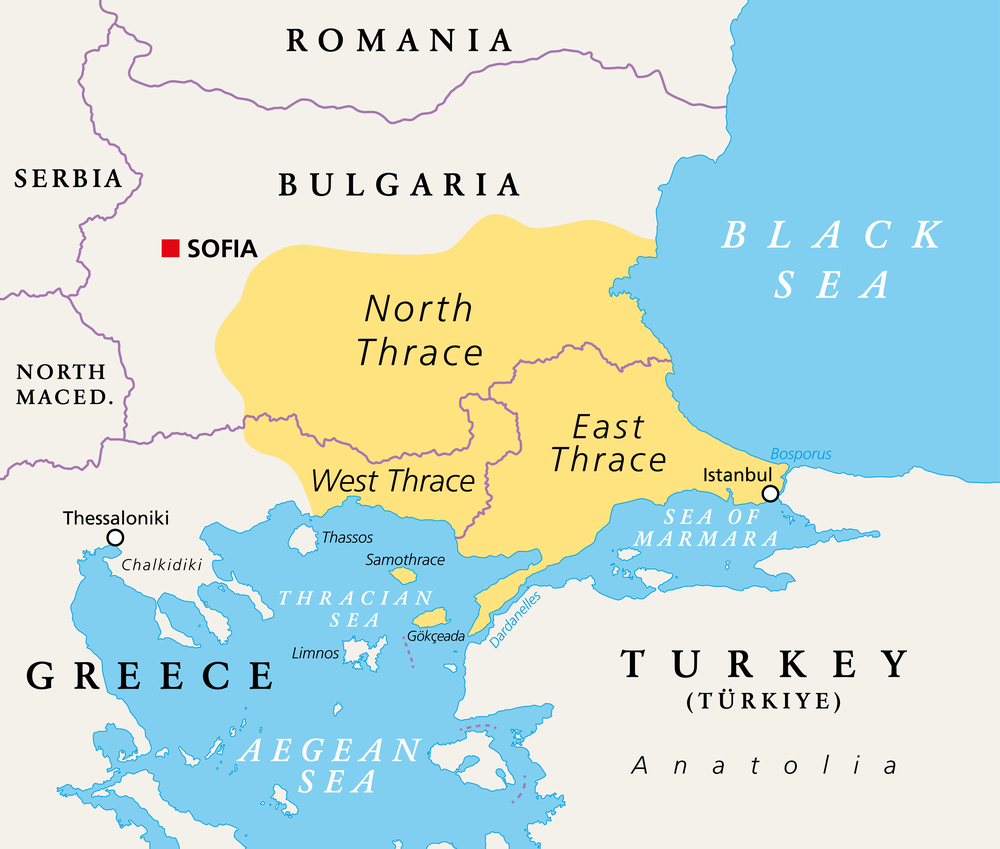
The majority of Turkey lies in Asia in a region known as Anatolia, or Asia Minor.
About 3% of the landmass lies in Europe. Called East Thrace, this region holds over 15% of the population.
Turkey’s largest city, Istanbul, sits on both continents, with about two-thirds of its population living in Europe.
Kazakhstan (contiguous)
Kazakhstan is mostly in Central Asia, but a small portion of its territory extends west of the Ural River. This places about 15% of the country geographically in Europe.
Culturally and politically, Kazakhstan is generally considered an Asian country.
Azerbaijan (contiguous)
Azerbaijan is generally considered a transcontinental country. Most of its territory lies in Asia, but some geographic definitions of the Europe-Asia boundary place a small portion of northern Azerbaijan within Europe.
Georgia (contiguous)
Georgia is located mainly in Asia, but parts of northern Georgia lie on the European side of the Caucasus watershed.
For cultural and political reasons, Georgia is often associated with Europe.
Transcontinental countries between Africa and Asia
Only one country clearly lies in both Africa and Asia.
Egypt (contiguous)
Egypt is mostly located in North Africa.
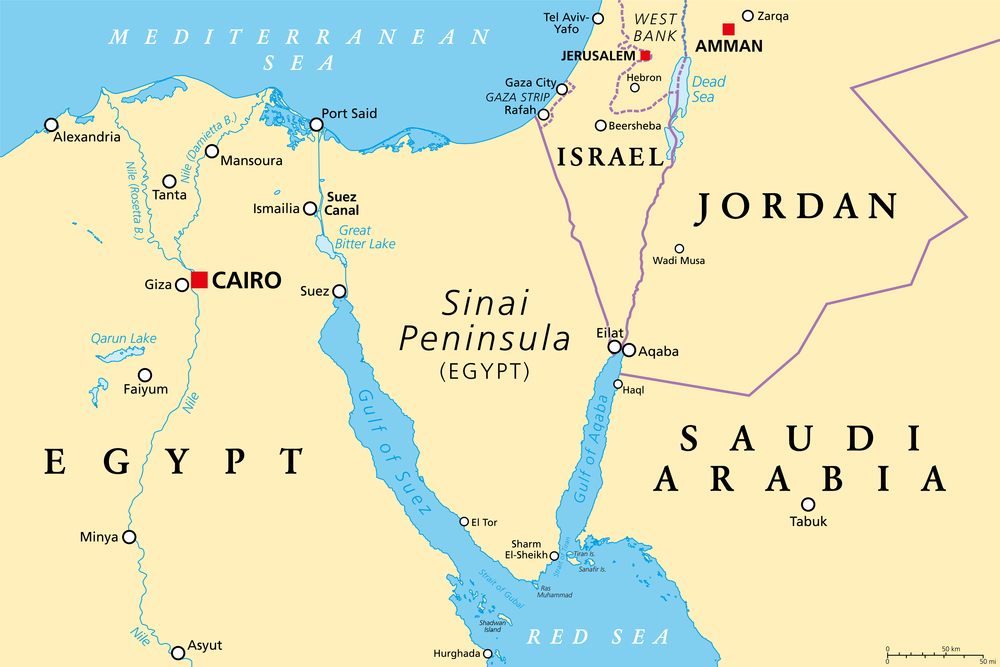
However, the Sinai Peninsula, which is usually regarded as part of Asia, and the Suez Canal, are commonly used as the boundary between the two continents.
This makes Egypt a classic contiguous transcontinental country.
Transcontinental countries between North America and South America
The boundary between North and South America is less clearly defined.
Most atlases place the border along the Colombia-Panama boundary, near the Darién Gap.
Due to this, a few countries have transcontinental status.
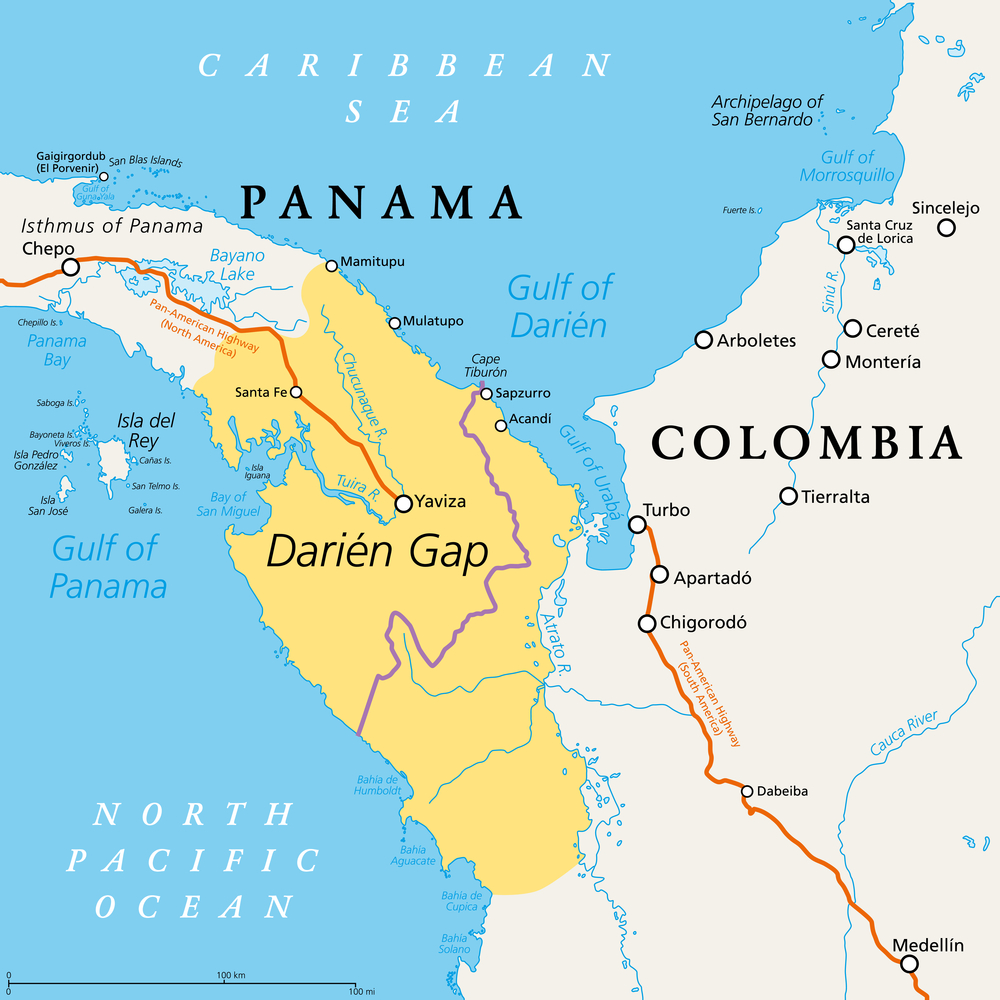
Panama (debatable)
Panama is usually considered part of North America.
However, some definitions place the continental boundary at the Panama Canal. This would make Panama partly South American.
For this reason, Panama is often listed as a debatable transcontinental country.
Colombia (non-contiguous)
Colombia is located in South America.
But it controls the San Andrés and Providencia islands, which are geographically part of the Caribbean region of North America.
This makes Colombia a non-contiguous transcontinental country.
Venezuela (non-contiguous)
Venezuela is also located in South America.
However, Aves Island, a Venezuelan territory, lies in the Caribbean region of North America.
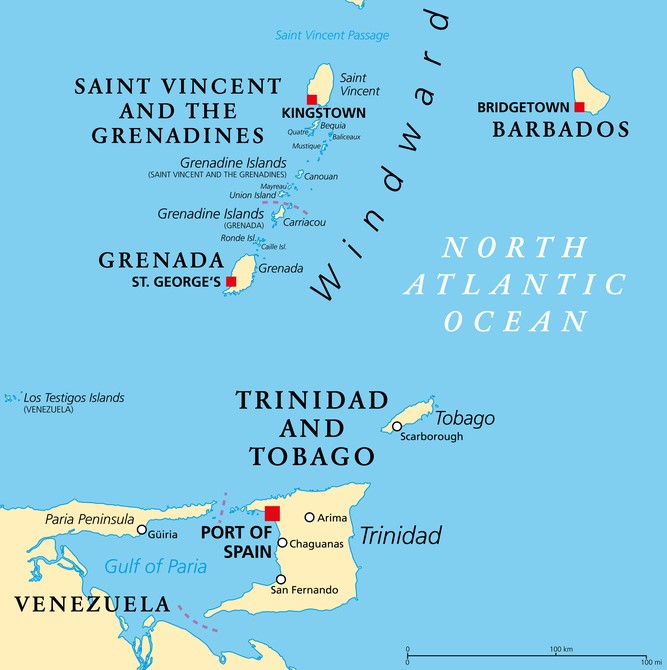
Trinidad and Tobago (debatable)
Trinidad and Tobago sits just off the coast of South America.
Geographically it is very close to Venezuela, but geopolitically it is usually grouped with North America and the Caribbean.
It also lies between two tectonic plates: the southern half of Trinidad lies on the South American plate while the northern half of Tobago lies on the Caribbean plate.
However, this geological feature doesn’t necessarily qualify the country as continental.
Transcontinental countries between Europe and North America
Some countries are transcontinental because they control land far from their main territory.
Denmark (non-contiguous)
Denmark is located entirely in Europe.
However, Greenland, an autonomous territory of Denmark, is geographically part of North America.
This makes Denmark one of the clearest examples of a non-contiguous transcontinental country.
Transcontinental countries between Asia and Oceania
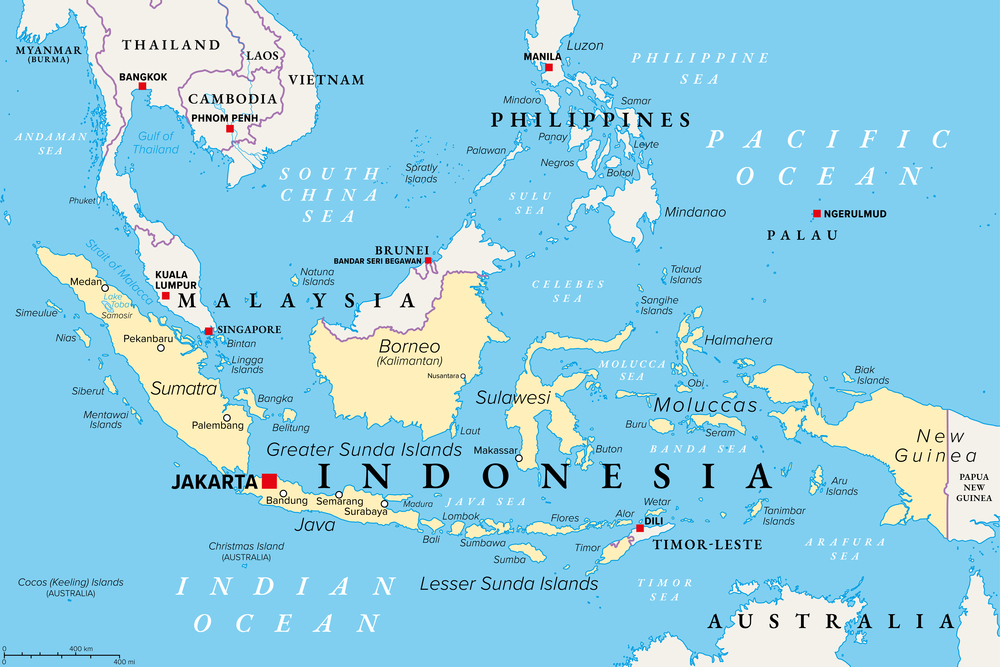
Indonesia (non-contiguous)
Indonesia is usually considered part of Southeast Asia, but its territory extends into the region commonly associated with Oceania.
The western islands of Indonesia, such as Sumatra, Java, and Borneo, lie on the Asian continental shelf.
However, the eastern part of the country, including Western New Guinea (Papua) and nearby islands, lies on the Australian continental shelf and is often grouped with Oceania in geographic and biogeographic terms.
Because Indonesia spans both the Asian and Australian continental regions without a single land connection, it is frequently regarded as a non-contiguous transcontinental country.
Scope and methodology
In general geography usage, countries are only considered transcontinental when they have significant, integral territory on more than one continent.
Some sources classify any country with overseas territory on another continent as transcontinental. This broader definition would include countries like Denmark, France, Portugal, the Netherlands, Spain and the United Kingdom.
However, this article follows the more common geographic usage that limits the term to countries with significant, integral territory on more than one continent.

Caitriona Maria is an education writer and owner of The Facts Institute. With seven years of teaching experience and a background in educational content, she specialises in creating clear reference resources about countries, geography and global topics.