A brief overview of the meaning, history, and key facts about the national flag of Samoa.

Flag of Samoa
Adopted in 1949, the national flag of Samoa consists of a red field with a blue rectangle in the canton containing five white stars representing the Southern Cross constellation.
Printable Samoa Flag (PNG Download)
Interesting facts about Samoa’s flag
1. Samoa officially adopted its national flag in February 1949, while the territory was still administered by New Zealand. The country later gained independence in January 1962.
2. The Southern Cross constellation is commonly used on the flags of countries in the Southern Hemisphere, where it is visible in the night sky. Australia, Brazil, New Zealand and Papua New Guinea all depict the Southern Cross on their flags.
3. When the design was first introduced in 1948, the flag displayed four stars. A fifth, smaller star was added in 1949, creating the current design.
4. The design was created by Tupua Tamasese Meaʻole and Malietoa Tanumafili II, who later became Samoa’s first heads of state after independence.
Explore more about Samoa:
Evolution of Samoa’s flag
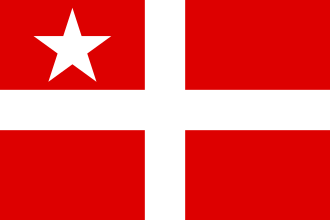
Flags of the Kingdom of Samoa (19th century)
During the 19th century, the independent Kingdom of Samoa used several different flags as rival dynasties and political groups competed for power.
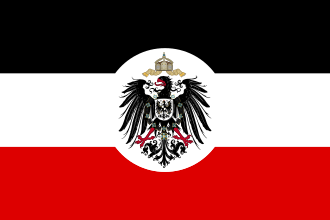
German Samoa (1899–1914)
In 1899, Samoa became part of the German colonial empire. German territories used the tricolor of the German Empire bearing the imperial eagle.
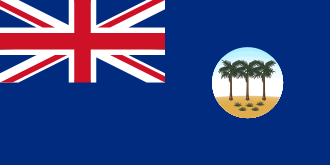
New Zealand administration (1914–1962)
New Zealand forces occupied German Samoa and used various administrative flags, including the flag of New Zealand and ensigns used by the colonial administration.
Sodacan, CC BY-SA 4.0, via Wikimedia Commons.
History of Samoa’s flag
Colonial period and foreign rule
During the late 19th century, Samoa experienced political instability and competition between local leaders. Several different flags were used by rival factions during this period.
In 1899, the islands became part of the German colonial empire. German Samoa used the imperial German tricolor until the First World War.
New Zealand administration
New Zealand forces occupied Samoa in 1914, and the territory later became a League of Nations mandate and subsequently a United Nations trust territory administered by New Zealand.
During this time, various colonial flags and administrative ensigns were used to represent the territory.
Adoption of the modern Samoan flag
A new flag design was created in 1948, featuring a red field with a blue canton containing stars representing the Southern Cross. When it was first introduced, the design included four stars, but a fifth smaller star was added in 1949.
The updated version was officially adopted on 24 February 1949.
Independence and continued use
Samoa gained independence from New Zealand on 1 January 1962, becoming the first Polynesian nation in the twentieth century to regain independence.
The flag adopted in 1949 remained in use, and in 1997 the country officially shortened its name from Western Samoa to Samoa.
The flag continues to represent the Independent State of Samoa today.
Explore more: Oceania flags or test your knowledge with our Oceania Flag Quiz.

Caitriona Maria is an education writer and owner of The Facts Institute. With seven years of teaching experience and a background in educational content, she specialises in creating clear reference resources about countries, geography and global topics.