The most interesting facts about Samoa, from jumping back and forth over the International Dateline to the origins of tattoos.

Fast facts
Official name: Independent State of Samoa
Capital city: Apia
Population: 228,600
Area: 2,831 sq km
Major languages: Samoan, English
Time zone: UTC+13 (West Samoa Time)
Interesting facts about Samoa
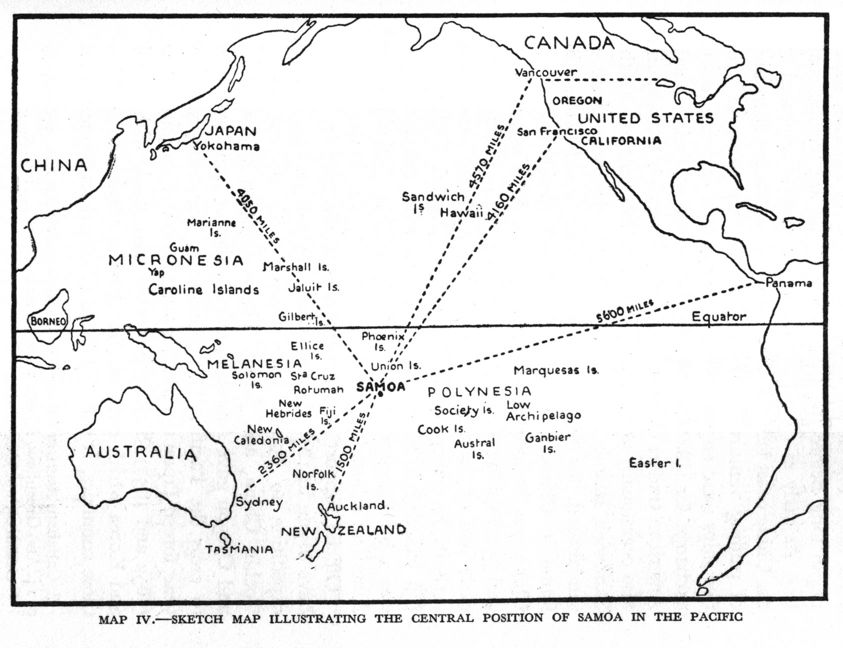
1. Samoa is an island nation located in Oceania made up of nine volcanic islands.
2. Just two of the islands – Savai’i and Upolu – account for more than 99% of the country’s land with around 95% of the population living on the two islands.
3. Lapita village has the oldest evidence of human occupation in Samoa, with carbon tests dating the site to around 1000 BC. The village is partially submerged in a lagoon on the island of Upolu.
4. In 1722, Dutch navigator Jacob Roggeveen became the first European to explore Samoa, although it’s likely that whalers, pirates and escaped convicts had previously visited unofficially.
5. Samoa was annexed by Germany in 1900 and then taken over by New Zealand in 1914 who administered the country until independence.
6. In 1962, Western Samoa became completely independent, becoming the first Pacific island nation to do so.
7. In 1997, Western Samoa changed its name to Samoa. The move caused some tension in American Samoa as the change implied Western Samoan authority over the Samoan archipelago.
8. More than a hundred star-shaped stone platforms have been discovered by archaeologists in Samoa. It is understood these platforms, known as ‘star mounds’, were used to trap wild pigeons, a hobby of matai (chiefs).
9. Samoa is the world’s fifth most obese country among women and sixth among men. About 85% of adults are classified as overweight or obese.
10. In 2009, Samoa became the first country in decades to officially switch from right- to left-side driving. The change was made to bring Samoa in line with Australia and New Zealand as it is cheaper to import cars from there than from right-side-driving countries such as the US or Europe.
11. In 2011, Samoa (along with Tokelau) jumped forward one day and skipped December 30th. By moving to the west of the International Date Line, Samoa would be just one hour ahead of New Zealand and only three hours ahead of eastern Australia, rather than nearly a day behind both.
12. As such, Samoa is only 164km and a 30-minute flight away from “yesterday”. Despite only a short distance separating Samoa from its closest neighbor, American Samoa, the countries are on either side of the International Dateline. This also means Samoa celebrates the new year a whole day earlier than American Samoa.
13. Oddly, this wasn’t the first time Samoa had changed their calendar. In 1892, the country did the opposite and shifted to the east side of the dateline. As such, Samoa celebrated 4th July – US independence day – twice.

14. There is a “third gender” in Samoa known as fa’afafine which translates as “in the manner of a woman” and has long been recognized and accepted in Samoan culture. Genetically male, fa’afafine live as women and are taught the traditional duties of Samoan women.
15. Hollywood actor and ex-professional wrestler Dwayne “The Rock” Johnson is half-Samoan. Johnson performed the Siva Tau in Fast & Furious Presents: Hobbs & Shaw.
16. Scottish author, Robert Louis Stevenson, most noted for Treasure Island (1881) and The Strange Case of Dr. Jekyll and Mr. Hyde (1886), lived in Samoa from 1890 to his death in 1894. His home is now a museum.
17. King Malietoa Tanumafili II, who ruled Samoa from 1962 for 45 years, was the world’s third-longest reigning monarch. He was 94 when he died in 2007.
18. Samoa’s flag is made up of a red background with a blue rectangle in the corner featuring the Southern Cross constellation, which can be seen in many Southern Hemisphere national flags.

See how Samoan’s flag compares to other Oceania flags.
19. Samoa is one of just 21 countries in the world that do not have an army.
20. Kilikiti, an adapted form of cricket, is Samoa’s national sport. The game was brought to Samoa by English missionaries and seafarers in the 19th century and features two teams of batters, bowlers and fielders, but has different bats, balls, a scoring system and bigger stumps.
21. The word tattoo is believed to originate from Samoa. Dating back centuries, the Samoan “tatau” is regarded as a right of passage for many Samoans. The male tattoo, known as pe’a, covers the body from waist to the knees and represents the journeys of ancestors from Asia to Polynesia.
22. Significantly more Samoans live outside Samoa than in their home country, mainly in New Zealand, Australia and the USA.
23. Traditional Samoan houses, known as fales, do not have walls. In their simplest form, a fale is a wooden platform with poles supporting a thatched roof, surrounded by woven blinds for privacy.

24. In 2009, Samoa was hit by a deadly tsunami triggered by an undersea earthquake. It killed 149 people, injured hundreds and caused huge amounts of damage.
25. Like several Pacific Island nations, Samoa faces serious air-quality challenges, with air pollution linked to about 17.2% of all deaths.
26. Samoa is home to Polynesia’s largest ancient structure, the Pulemelei Mound. Built between 1100AD and 1400AD, the pyramidal structure measures 65m by 60m at its base and rises to a height of more than 12m.
27. One of Samoa’s most recognizable sites is the To Sua Ocean Trench, a giant 30m-deep sinkhole with an underwater passage linked to the sea.

Explore more from Oceania
We strive to verify all facts using authoritative and primary sources where possible. However, if you find an error or have any questions, please contact us.

Caitriona Maria is an education writer and owner of The Facts Institute. With seven years of teaching experience and a background in educational content, she specialises in creating clear reference resources about countries, geography and global topics.