10 fun facts about Colombia
1. Colombia is the only country in South America with coastlines on both the Caribbean Sea and the Pacific Ocean.
2. Colombia is one of the most biodiverse countries on Earth and it is home to around 10% of the world’s animal and plant species.
3. Colombia is the world’s leading producer of high-quality emeralds and is particularly famous for the valuable green stones mined in areas such as Muzo, Coscuez, and Chivor.
4. Tejo is Colombia’s national sport. Players throw heavy metal discs towards a clay-covered target containing small packets of gunpowder, which explode when struck.
5. Colombia is one of the world’s best-known coffee-producing countries. Its mountainous terrain and tropical climate provide ideal conditions for growing Arabica coffee.
6. The wax palm is Colombia’s national tree and the tallest palm species in the world. These striking palms can grow to around 60 m (197 ft) tall and are especially associated with the Cocora Valley.
7. Caño Cristales is sometimes nicknamed the “River of Five Colors.” During certain months, aquatic plants give parts of the river vivid shades of red, yellow, green and other colors.
8. The Carnival of Barranquilla in Colombia is one of the biggest carnivals in the world and is recognised by UNESCO as part of the Intangible Cultural Heritage of Humanity.
9. San Basilio de Palenque was founded by people who escaped slavery during the colonial period and became one of the earliest free African settlements in the Americas.
10. Hidden in the Sierra Nevada de Santa Marta is Ciudad Perdida, an ancient city built by the Tayrona people. It was established centuries before Machu Picchu in Peru.
Read more: Facts about Colombia

At a glance
Capital city: Bogotá
Population: 49,588,357 (2024 est.)
Area: 1,138,910 sq km
Major languages: Spanish (official), 65 official Indigenous languages
Major religions: Christianity
Time zone: UTC-5 (SA Pacific Standard Time)

Where is Colombia?
Continent: South America
Neighboring countries: Panama, Venezuela, Brazil, Peru and Ecuador
Highest point: Pico Simón Bolívar (5,720 m / 18,767 ft)
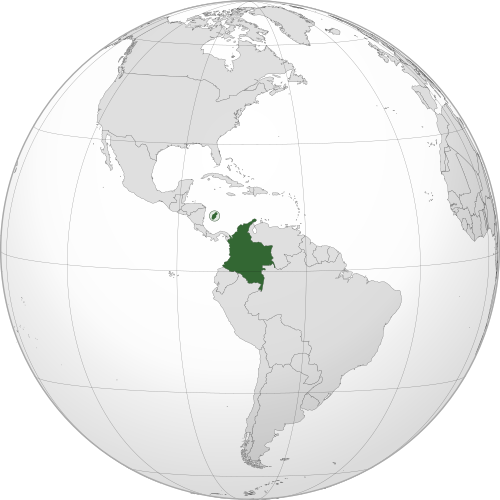
Geography of Colombia
Colombia lies in northwestern South America, with coastlines on both the Caribbean Sea and Pacific Ocean.
Its landscape is exceptionally varied, ranging from tropical coastlines and rainforests to vast savannas, high Andean mountains and the Amazon Basin.
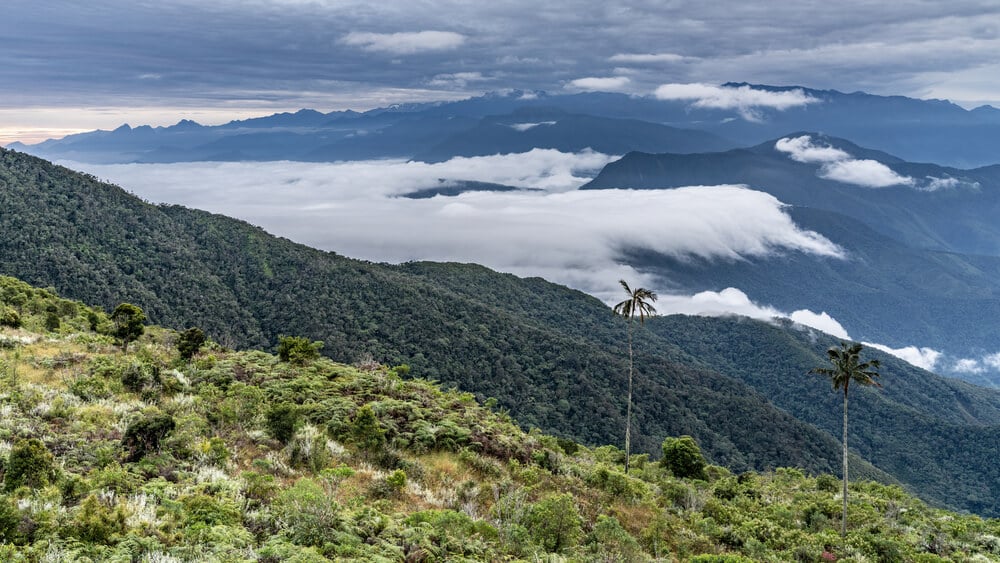
Caribbean Coast & Sierra Nevada de Santa Marta
Northern Colombia is dominated by tropical lowlands along the Caribbean coast, although the northeastern La Guajira Peninsula is notably dry. Near the coast, the isolated Sierra Nevada de Santa Marta rises dramatically above the surrounding lowlands and contains the country’s highest peaks.
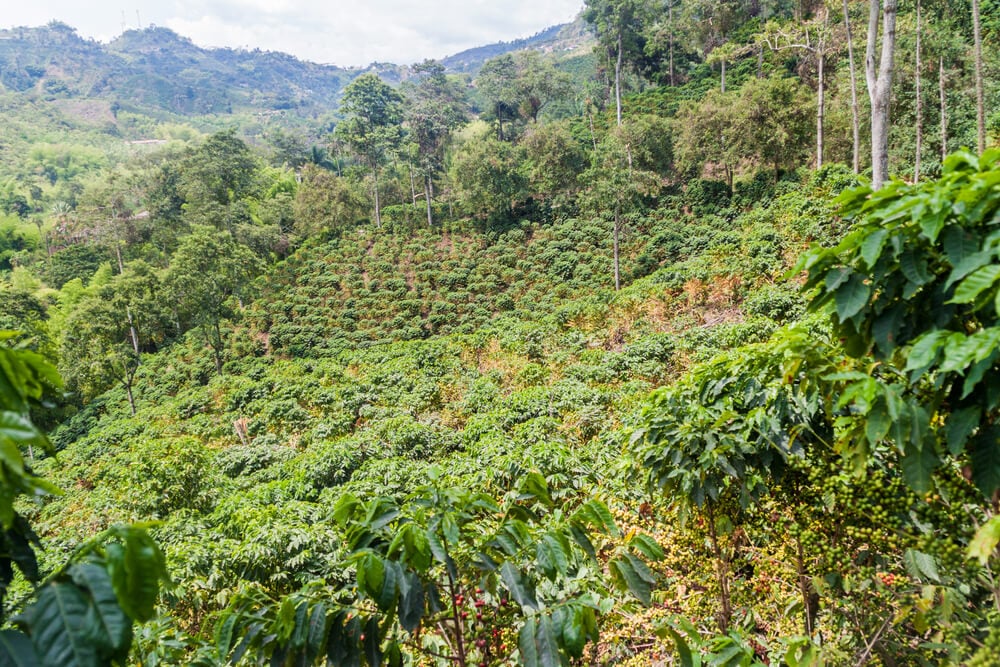
Andes Mountains & Central Valleys
The Andes divide into three main ranges in Colombia: the Cordillera Occidental, Cordillera Central and Cordillera Oriental. Between them lie deep valleys carved by the Cauca and Magdalena rivers. Much of Colombia’s population lives within this mountainous region, including Bogotá, Medellín and many of the cities of the Coffee Region.
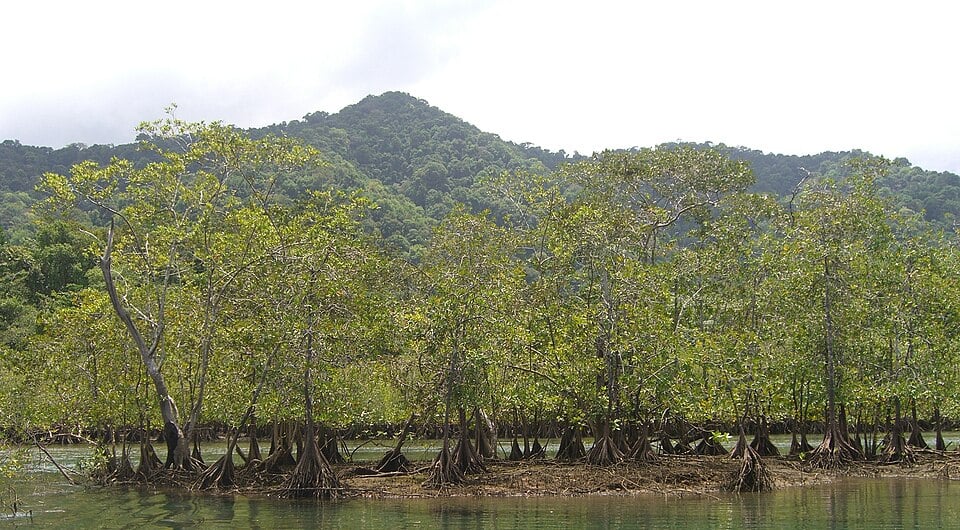
Pacific Coast & Rainforest
Western Colombia has a narrow Pacific coastal region backed by mountains and covered by some of the country’s wettest tropical forests, such as the Chocó–Darién moist forests. The region receives some of the highest rainfall totals in the world.
Eastern Plains & Los Llanos
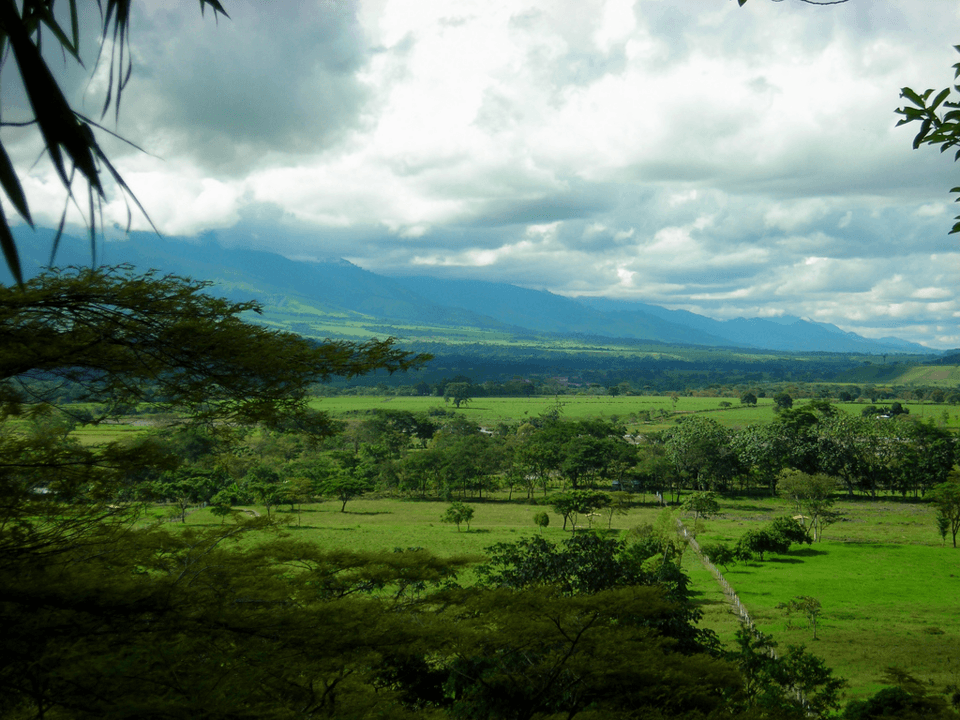
East of the Andes, the mountains descend into the vast tropical grasslands of the Llanos. These broad, generally flat plains form part of the Orinoco River basin and extend eastwards towards Venezuela, with large areas of savanna that become seasonally flooded during the rainy season.
Amazon Rainforest
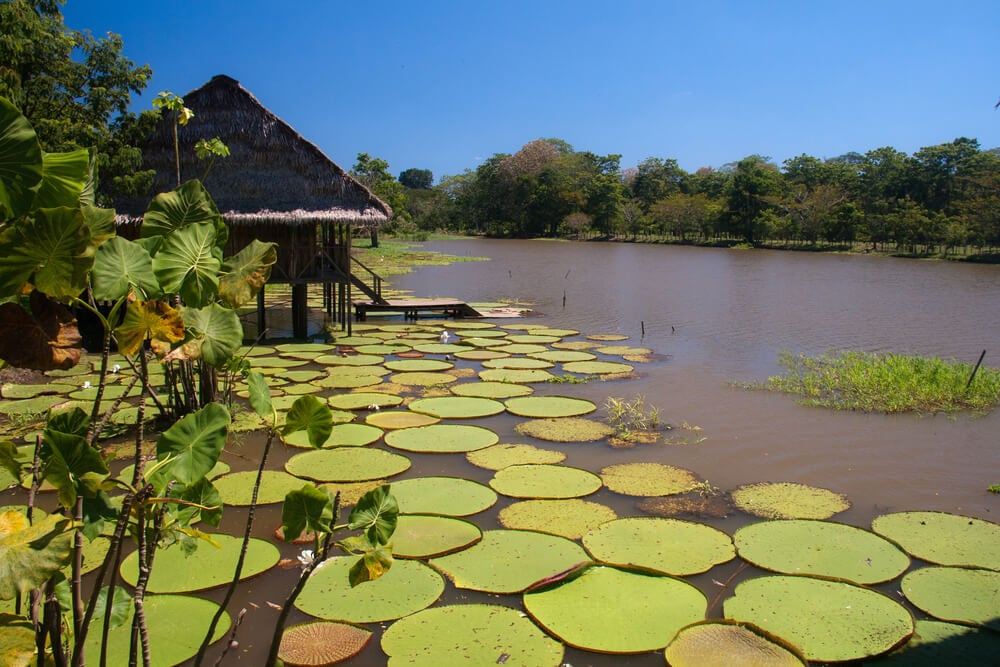
Southern Colombia forms part of the Amazon Natural Region and is dominated by extensive tropical rainforest crossed by large rivers. The Colombian Amazon covers about 42% of the country and extends towards the borders with Brazil, Peru and Ecuador.
Magdalena & Cauca Rivers
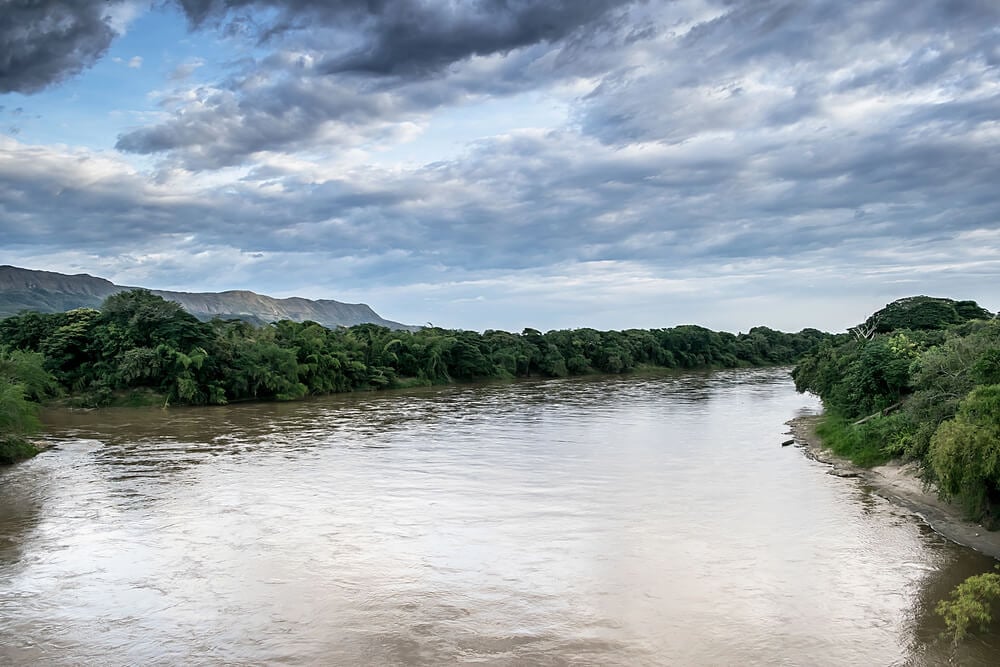
The Magdalena is Colombia’s principal river, flowing north between the Central and Eastern Andes before reaching the Caribbean Sea. Its major tributary, the Cauca River, runs through a parallel valley farther west before joining the Magdalena in northern Colombia.
See article: Flag of Colombia
Colombia flag
The Colombian flag originated from the yellow, blue and red tricolor created by Venezuelan revolutionary Francisco de Miranda in the early 1800s and later used during the independence movements of northern South America.
The colors were adopted by Gran Colombia in 1819 and remained influential after the republic dissolved, which is why Colombia, Venezuela and Ecuador still use similar tricolors today.
Colombia adopted the modern flag arrangement on November 26, 1861, with the yellow stripe occupying half of the flag and the blue and red stripes each taking one quarter. Later decrees further regulated its official use.
Image credits:
Colombia (centered orthographic projection): Addicted04, via Wikimedia Commons, licensed under CC BY-SA 3.0.
Chocó–Darién moist forests: Philipp Weigell, via Wikimedia Commons, licensed under CC BY-SA 3.0
Los Llanos: Alejo Rendón (David) from Miami, United States, via Wikimedia Commons, licensed under CC BY 2.0.

Caitriona Maria is an education writer and owner of The Facts Institute. With seven years of teaching experience and a background in educational content, she specialises in creating clear reference resources about countries, geography and global topics.