A brief overview of the meaning, history, and key facts about the national flag of Lebanon.
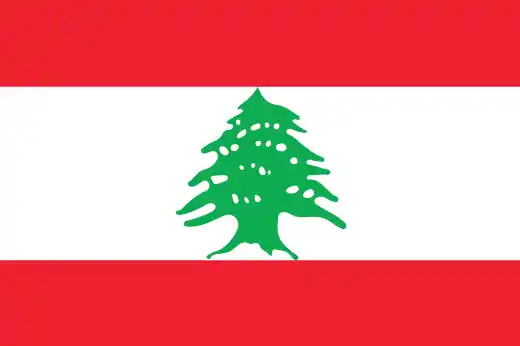
Flag of Lebanon
The national flag of Lebanon consists of two horizontal red stripes at the top and bottom with a wider white stripe in the center. A green cedar tree is displayed in the middle of the white stripe. The red stripes represent the sacrifices made for independence, while the white stripe symbolizes peace and the snow-covered mountains of Lebanon. The cedar tree represents resilience and longevity.
Printable Lebanon Flag (PNG Download)
Interesting facts about Lebanon’s flag
1. The cedar tree displayed on the flag has been associated with Lebanon for centuries and appears in historical and religious references, including the Bible.
2. During the French Mandate period (1920–1943), the flag of Greater Lebanon used the French tricolor with a cedar tree placed in the center.
3. When Lebanon gained independence in 1943, the French tricolor was replaced with a red-white-red design featuring the cedar tree in the center.
4. The cedar tree on the Lebanese flag must be green according to the constitution, although some flag depictions incorrectly show the trunk in brown.
5. Lebanon celebrates Flag Day on 21 November each year, the day before Independence Day, when the national flag is widely displayed across the country.
Explore more about Lebanon:
Evolution of Lebanon’s flag
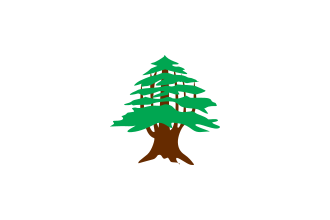
Early cedar flag (1918–1920)
A white flag with a green cedar tree was first raised as a Lebanese symbol in 1918, although the exact depiction of the cedar tree sometimes varied.
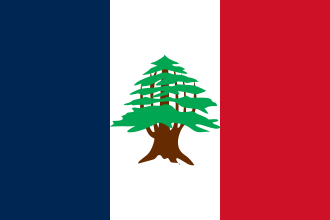
State of Greater Lebanon (1920–1943)
During the French Mandate, the flag of Greater Lebanon combined the French tricolor with a green cedar tree placed in the center.
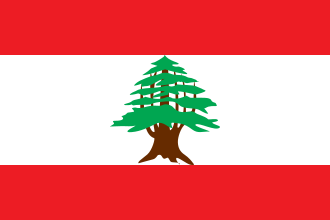
Flag of Lebanon (1943–1990)
Following independence, Lebanon adopted the red-white-red flag with a green cedar tree.
History of Lebanon’s flag
Early regional flags
Different flags were used in Lebanon during the rule of local dynasties such as the Maanids and Shihabs.
These early designs varied in color and symbolism and reflected the political authorities governing Mount Lebanon at the time.
Ottoman period
During the centuries of Ottoman rule, Lebanon did not have an independent national flag and used the Ottoman imperial flag, which featured a red field with a white crescent and star.
Emergence of the cedar symbol
In the early 20th century, the cedar tree increasingly became associated with Lebanese identity.
In 1913, Lebanese expatriates raised a white flag with a green cedar tree as a symbol of the country.
French Mandate period
After the collapse of the Ottoman Empire following World War I, Lebanon came under French mandate rule.
The flag of Greater Lebanon combined the French tricolor with the cedar tree in the center.
Adoption of the modern flag
Lebanon gained independence in 1943, and a new national flag was adopted by the Lebanese parliament.
The design consists of two red horizontal stripes with a white stripe in the center containing a green cedar tree.
In 1990, Lebanon clarified the official design of the national flag, defining the proportions and placement of the cedar tree within the white stripe.
Browse all Middle Eastern flags, or explore more resources about Asia below.

Caitriona Maria is an education writer and owner of The Facts Institute. With seven years of teaching experience and a background in educational content, she specialises in creating clear reference resources about countries, geography and global topics.