A brief overview of the meaning, history, and key facts about the national flag of Spain.

Flag of Spain
Originally adopted in 1785 for naval use, Spain’s flag features three horizontal stripes: the top and bottom stripes are red, and the middle stripe is yellow. On the left side of the yellow stripe, there’s a detailed coat of arms that includes a crowned shield divided into quarters, each representing historic kingdoms of Spain. Flanking the shield are two columns, which symbolize the Pillars of Hercules, with a banner displaying the motto Plus Ultra, meaning “Further Beyond.”
Printable Spanish Flag (PNG Download)
Interesting facts about Spain’s flag
1. The red-yellow-red design was originally created in 1785 for the Spanish navy under King Charles III of Spain. It was chosen because it was easy to recognize at sea and couldn’t be mistaken for other European flags.
2. The flag’s nickname La Rojigualda comes from gualda, an old word for a yellow dye once used to produce the color.
3. The yellow stripe is always twice the height of each red stripe, as defined by Spain’s Constitution.
4. The national coat of arms featured on the flag includes a golden castle representing Castile, a lion for León, red-and-gold stripes for Aragon, linked golden chains symbolizing Navarre, and a pomegranate representing Granada.
5. The blue oval with three golden lilies represents the House of Bourbon, the royal family that has ruled Spain since the early 18th century, though not continuously.
6. The two columns shown on Spain’s coat of arms represent the Pillars of Hercules, traditionally associated with the Strait of Gibraltar, which in ancient times marked the edge of the known world.
7. Spain’s flag includes the motto Plus Ultra, meaning “Further Beyond.” This slogan is linked to the era when Spanish explorers crossed the Atlantic into the New World.
Explore more about Spain:
Flags of Spain
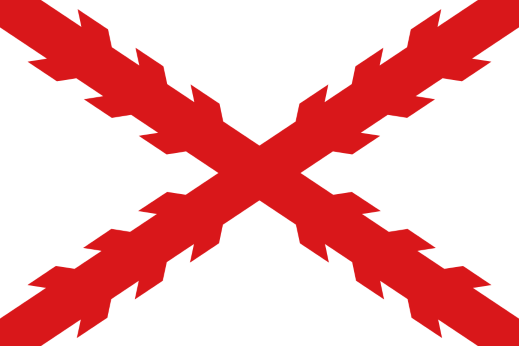
Cross of Burgundy (from the late 15th century)
Before the modern red-yellow-red flag, the Cross of Burgundy was one of the most recognizable symbols associated with Spain. It featured a red diagonal cross on a white field and was widely used by Spanish armies and overseas territories.
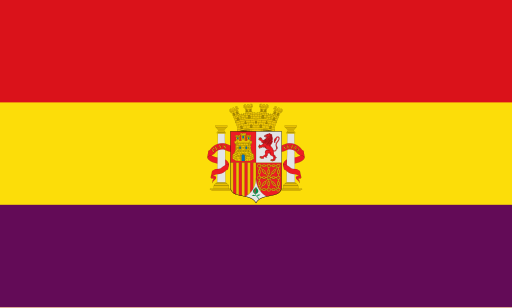
Second Republic Flag (1931–1939)
The Second Republic used a red-yellow-purple tricolor design.
SanchoPanzaXXI, CC BY-SA 4.0, Wikimedia Commons
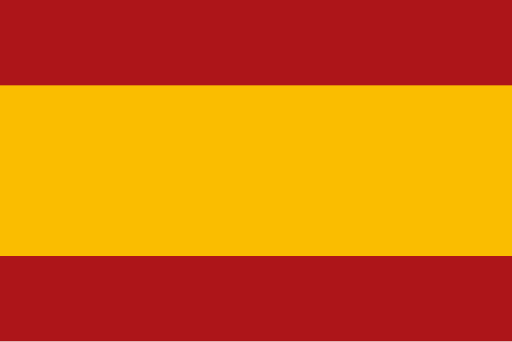
Civil flag (present)
A red-yellow-red design without the coat of arms is visible throughout the country, and may also be flown by civilians if they prefer.
History of Spain’s flag
Before the current flag was created, Spain used several royal, military, and naval symbols rather than one single national flag. One of the most important was the Cross of Burgundy, which became strongly associated with Habsburg Spain and appeared on Spanish military flags for centuries.
Spain’s modern flag began as a naval ensign in 1785, when King Charles III of Spain selected the red-yellow-red design to make Spanish ships easier to recognise at sea. At the time, many European flags were mostly white, which caused confusion between nations.
Between 1931 and 1939, during the Second Spanish Republic, Spain briefly used a different red-yellow-purple tricolor. After the Spanish Civil War, the traditional red-yellow-red design returned and continued through the Franco era, though with different versions of the national emblem.
Following Spain’s transition to democracy, the current flag was defined in the 1978 Constitution, and the modern coat of arms was officially adopted in 1981, creating the design used today.

Caitriona Maria is an education writer and owner of The Facts Institute. With seven years of teaching experience and a background in educational content, she specialises in creating clear reference resources about countries, geography and global topics.