From the world’s oldest pet cat to the only capital city to straddle two nations, these are the most interesting facts about Cyprus.

Fast facts
Official name: Republic of Cyprus
Population: 1.3 million
Area: 9,251 sq km
Capital city: Nicosia
Major languages: Greek, English, Turkish
Major religions: Christianity, Islam
Time zone: UTC+2 (Eastern European Time)
Interesting facts about Cyprus
1. Cyprus is an island nation located in Europe in the Mediterranean Sea south of Turkey.
2. Cyprus has been divided since 1974 after Turkey invaded the north following a Greece-backed military coup.
3. Since then, the island has been partitioned, with the northern third run by a Turkish Cypriot government and the southern two-thirds by the internationally recognized Greek Cypriot government. UN peacekeepers patrol the ‘Green Line separating the two regions.

4. As a result of the partition, Nicosia is the world’s only capital city split between two nations.
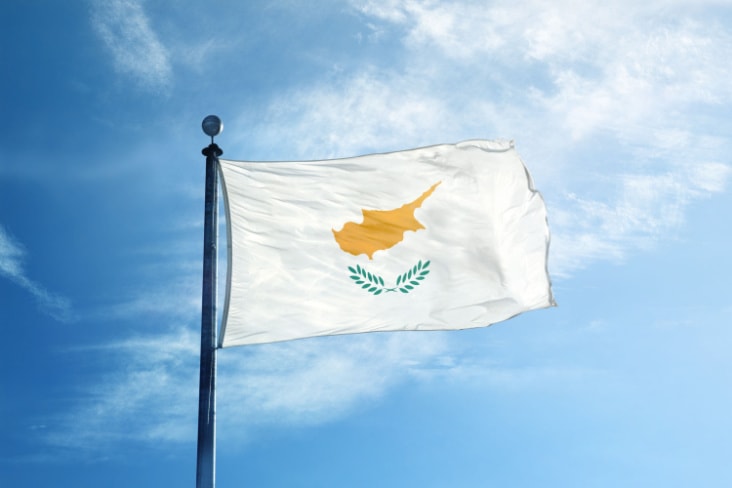
5. The flag of Cyprus has a white background with an orange silhouette of the island above a green olive wreath which symbolizes peace. It was the first country to incorporate a national map into its flag and one of just two to do so – the other being Kosovo.
6. Cyprus is home to the world’s oldest manufactured wine. The sweet dessert wine of Commandaria can be traced as far back as 2000 BC.
7. Cyprus has three UNESCO World Heritage Sites, including the ancient town of Pathos, which features temples dating from the 12th century BC.
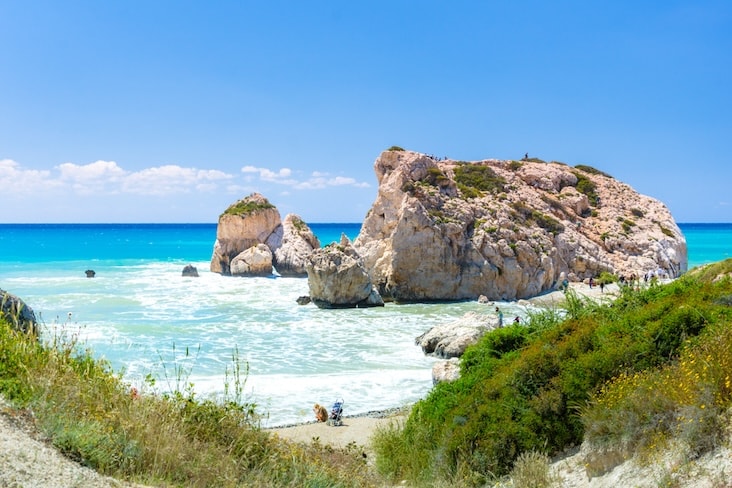
8. Legend has it that Aphrodite, the ancient Greek goddess of love and beauty, came from Cyprus. She supposedly rose from the sea foam near a rock off what is now called Aphrodite’s Beach.
9. Halloumi cheese is registered as a protected designation of origin by the EU. This means that only halloumi made in Cyprus has the right to carry the name halloumi.
10. Elephants and hippos used to live on the island of Cyprus. Fossils of pygmy hippopotami and elephants have both been found dating from around 12000 BC.
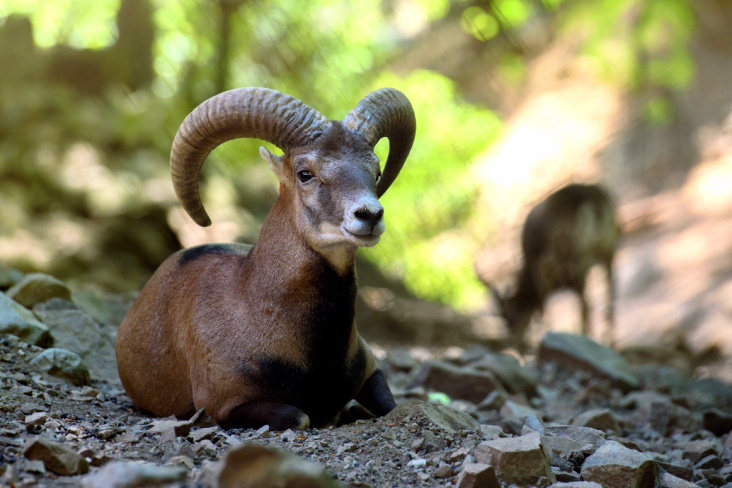
11. Cyprus’ national symbol is a wild sheep called the mouflon. It was nearly hunted to extinction with as few as 15 remaining by the 1930s. Fortunately, conservation efforts have led to its resurgence but they still remain wary of humans.
12. The Ottomans ruled Cyprus for over 300 years until Britain occupied the island in 1878. However, it was not officially annexed by the UK until 1914.
13. One of the top five wreck dives in the world can be found in Cyprus. The Zenobia is a cargo ship that sank off the coast of Cyprus in 1980 which – along with the trucks spread across the seabed – attracts an array of marine life.

14. There are more cats than people in Cyprus, with estimates suggesting that there are up to 1.5 million stray cats.
15. In fact, the remains of the oldest known pet cat were found in Cyprus. In 2004, a complete cat skeleton was unearthed next to a 9,500-year-old human burial, suggesting that the cat was domesticated.
16. Cyprus has one of the highest projected smoking rates globally, with about one-third of people aged 15 and over smoking daily.
17. Cyprus has some of the cleanest water in Europe. In 2021, it ranked top of the 27 countries of the European Union for having the cleanest swimming waters.

18. Northern Cyprus has recorded some of the highest anger levels in Gallup’s Global Emotions Report. The region declared independence in 1983, yet almost no country recognises it, which means limited international trade, travel restrictions, and reliance on Turkey for support. This unusual situation creates daily frustrations for many locals.
19. The origin of the name Cyprus is unknown but may have come from the Latin word ‘cuprum’ for copper due to the extensive mining of the metal on the island in antiquity.
20. The UNESCO-listed Painted Churches in the Troodos Region of Cyprus is a complex of 10 churches and monasteries from the former Byzantine Empire. The monuments are filled with detailed decorations with murals. They date from as far back as 1280 AD.

21. Cyprus enjoys 326 days of sunshine a year.
22. Cyprus is the third-largest Mediterranean island, after Sicily and Sardinia.
23. One of the most impressive sights in Cyprus is the Kourion Archaeological Site. The ancient ruins date from around the 13th century BC and enjoy a spectacular view position high on a hill overlooking the coast.
24. The world’s oldest perfumes were found in Cyprus. In 2007, archaeologists unearthed the remains of mixing bowls, funnels and perfume bottles more than 4,000 years old and were scented with extracts of lavender, bay, rosemary, pine or coriander.
25. The only Cypriot Nobel Prize winner is Christopher A. Pissarides who was jointly awarded the 2010 Nobel Prize for Economics. A special edition stamp was created by the Cyprus Post Office in his recognition.
Explore more from Europe
We strive to verify all facts using authoritative and primary sources where possible. However, if you find an error or have any questions, please contact us.

Caitriona Maria is an education writer and owner of The Facts Institute. With seven years of teaching experience and a background in educational content, she specialises in creating clear reference resources about countries, geography and global topics.