From the world’s oldest desert to the second-largest swimming pool, these are the most interesting facts about Chile.

Fast facts
Official name: Republic of Chile
Population: 18,664,652
Area: 756,102 sq km
Capital city: Santiago
Major languages: Spanish (official), English
Major religions: Christianity (Catholic, Evangelical)
Time zone: UTC-4 (Chile Standard Time)
Fun facts about Chile
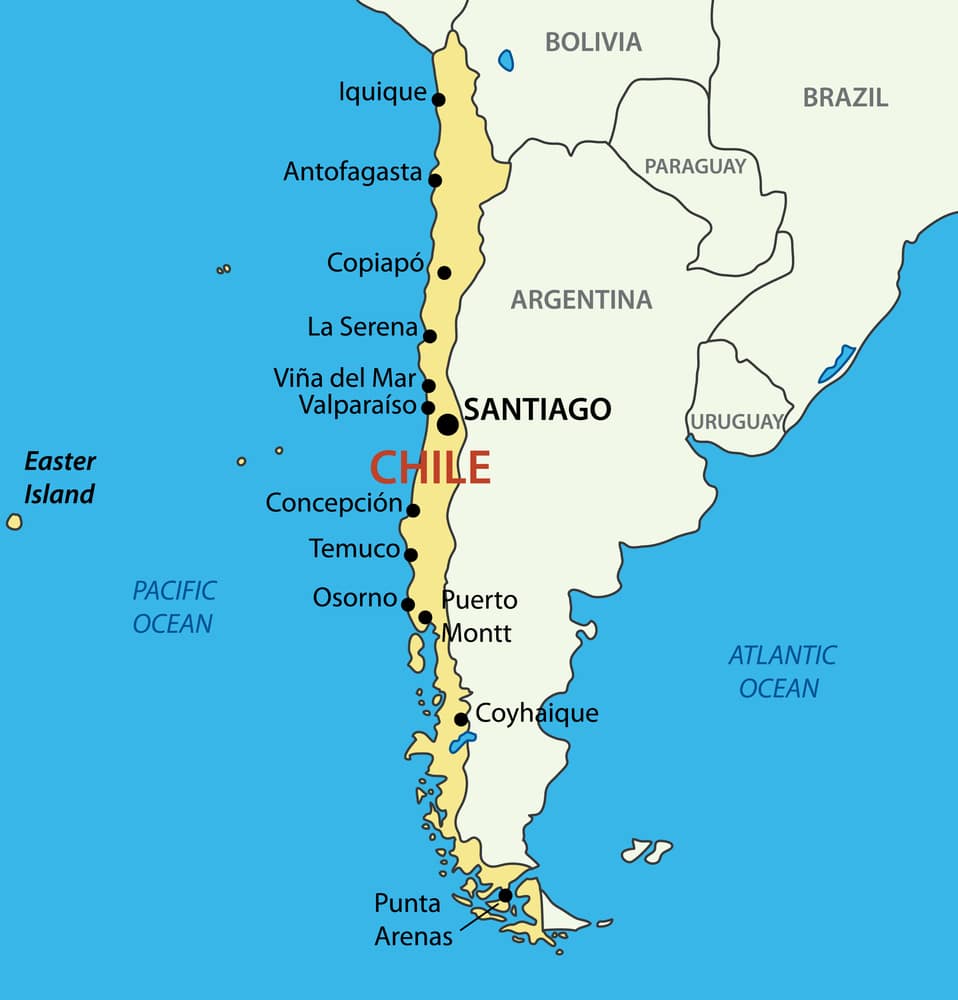
1. Chile is in Western South America, bordering three countries: Peru, Bolivia and Argentina.
2. Chile is the longest and narrowest country in the world between the Andes Mountains and the Pacific Ocean. The country spans 4,270 kilometers (2,653 miles) in length, with the widest point measuring 445 kilometers (276 miles).
3. Small groups of nomads first arrived in Chile between 15,000 and 8,500 BC. The earliest remains were that of the mastodon, an extinct mammal that formed part of the diet of the first inhabitants.
4. Chile was influenced by several civilizations and empires in the 15th century, such as the Chincha and then the Quechua, which formed part of the Inca Empire.
5. The Spaniards arrived in Chile in the early 16th century and colonized the region from 1540 to 1818.
6. The national flag of Chile consists of two horizontal bands of white and red, with a blue square in the upper left corner containing a white five-pointed star. The single white star represents the three branches of government—Executive, Legislative, and Judicial—which uphold the nation’s unity and stability.

See how Chile’s flag compares to other South American flags.
7. The US International Trade Administration reports that Chile has been one of Latin America’s fastest-growing economies in the last decade.
8. Chile’s minimum wage is $5 per hour, or $10,931 per year, after adjusting for purchasing power parity (PPP). PPP is a system used to make fair comparisons between countries by considering local prices, so the same amount of money represents the same buying power everywhere.
9. Chile has the highest projected smoking rate among American countries, with 26% of adults smoking daily.
10. Easter Island, called Rapa Nui by the indigenous peoples, is known today for its spectacular UNESCO-listed Moai, built between the 10th and 16th centuries. These 900 volcanic rock statues of human figures were used in rituals and said to honor their ancestral chiefs.

11. The Latin American Economic Outlook 2023 by OECD reveals that in 2022, poverty in Chile stood at 8.1%, significantly lower than the Latin America and the Caribbean (LAC) average of 24.1%.
12. Chile is home to the driest non-polar desert in the world, known as the Atacama. Located in the Andes Mountains, it receives about 2 millimeters (0.08 inches) of rainfall each year. Some parts of the desert haven’t seen rain for centuries.
13. The Atacama is also one of the oldest deserts in the world. It is thought to be between 10 and 15 million years old.
14. Chile is home to almost 80% of South America’s glaciers. It is estimated that there are 20,000 square kilometers (7,722 square miles) of glaciers. Areas such as Patagonia and the Andes hold a large proportion of South America’s glacier ice.
15. Climate change is seen as a threat to Chilean glaciers, with accelerated melting in the last few decades.

16. Corruption in Chile occurs on a smaller scale than in most Latin American countries. In Transparency International’s 2025 Corruption Perceptions Index (CPI), Chile ranks 31st globally, alongside Saint Vincent and the Grenadines.
17. Chile is the world’s biggest exporter of copper, carbonates (used as a base in soap and detergents, among other uses), molybdenum ores (used in the production of alloys), and pitted fruits.
18. The Andes stretch from Colombia to Chile. It is the longest continental mountain range, at 7,600 kilometers (4,700 miles) in length. The Chilean Andes include some of the highest parts of the mountain range.

19. Chile has the highest life expectancy among countries in South America, at 81 years.
20. The Chinchorro mummies in Northern Chile claim to be the oldest examples of artificially preserved mummies in the world. Some date back more than 7,000 years.
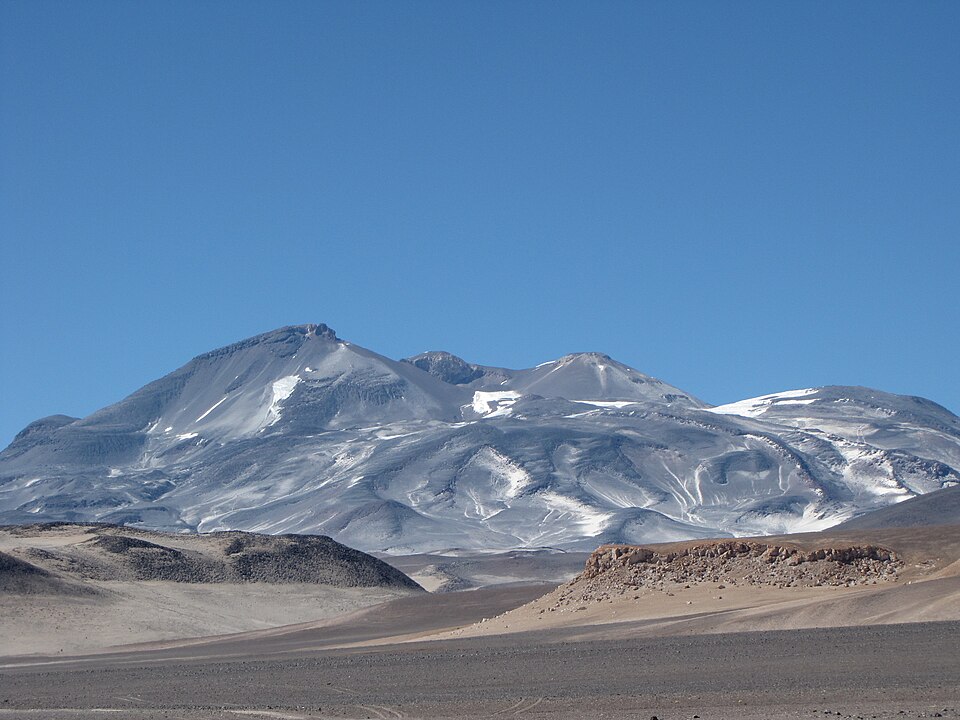
21. Chile is home to Ojos Del Salado, the world’s highest active volcano.
22. Patagonia has an identity that crosses national borders. The vast region stretches across southern Chile and Argentina, and some people there identify strongly as Patagonian rather than primarily by broader labels such as Latino. The identity can include Chileans, Argentines and Indigenous peoples whose communities existed long before the modern border was drawn in 1881.
23. The first Nobel Prize winner for Literature in Latin America was Gabriela Mistral in 1945. A Chilean poet, her name represented the aspirations of Latin American people.
24. The world’s second-largest swimming pool is situated in a private resort called the San Alfonso del Mar in Chile. It’s the size of about 15 football fields, at 7.7 hectares (19 acres).

25. Puerto Williams in Chile has overtaken Ushuaia as the world’s southernmost city. It is the closest city to Antarctica.
26. The most powerful earthquake ever recorded occurred in Chile in 1960, with a staggering magnitude of 9.5 (Mw). The devastating earthquake left two million people homeless, with 3,000 people injured, and claimed approximately 1,655 lives.
27. The novels of Chilean author Isabel Allende struck Hollywood, the most notable of which was “The House of the Spirits”, starring Meryl Streep, Winona Ryder and Jeremy Irons.
Explore more: Test your knowledge with our South America map quiz.
We strive to verify all facts using authoritative and primary sources where possible. However, if you find an error or have any questions, please contact us.

Caitriona Maria is an education writer and owner of The Facts Institute. With seven years of teaching experience and a background in educational content, she specialises in creating clear reference resources about countries, geography and global topics.