A brief overview of the meaning, history, and key facts about the national flag of Japan.
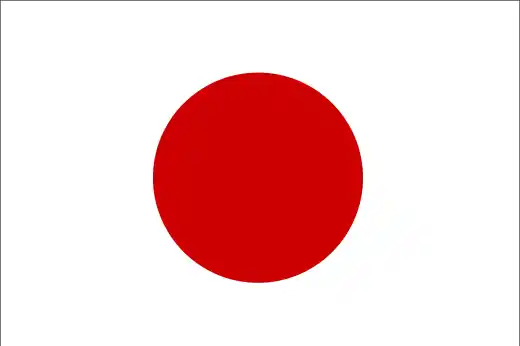
Flag of Japan
Officially adopted in 1999, Japan’s flag features a deep red disc on a white background. The disc – called Hinomaru – denotes the sun, a traditional symbol of Japan. The white is commonly associated with purity and honesty.
Printable Japan Flag (PNG Download)
Interesting facts about Japan’s flag
1. Japan’s flag is officially white and deep red, which is sometimes described as crimson.
2. Japan’s national flag is officially called the Nisshōki (“flag of the sun”).
3. Traditionally, the flag may be displayed on a natural bamboo pole with a decorative gold finial.
4. The red sun disc at the center of Japan’s flag is known as the Hinomaru (“circle of the sun”), a name that is also commonly used to refer to the entire national flag.
5. During the Pacific War, the flag was used in nationalist propaganda. Since World War II, both the flag and the national anthem have remained controversial in some Japanese public schools, and have even resulted in lawsuits.
Explore more about Japan:
The Rising Sun Flags
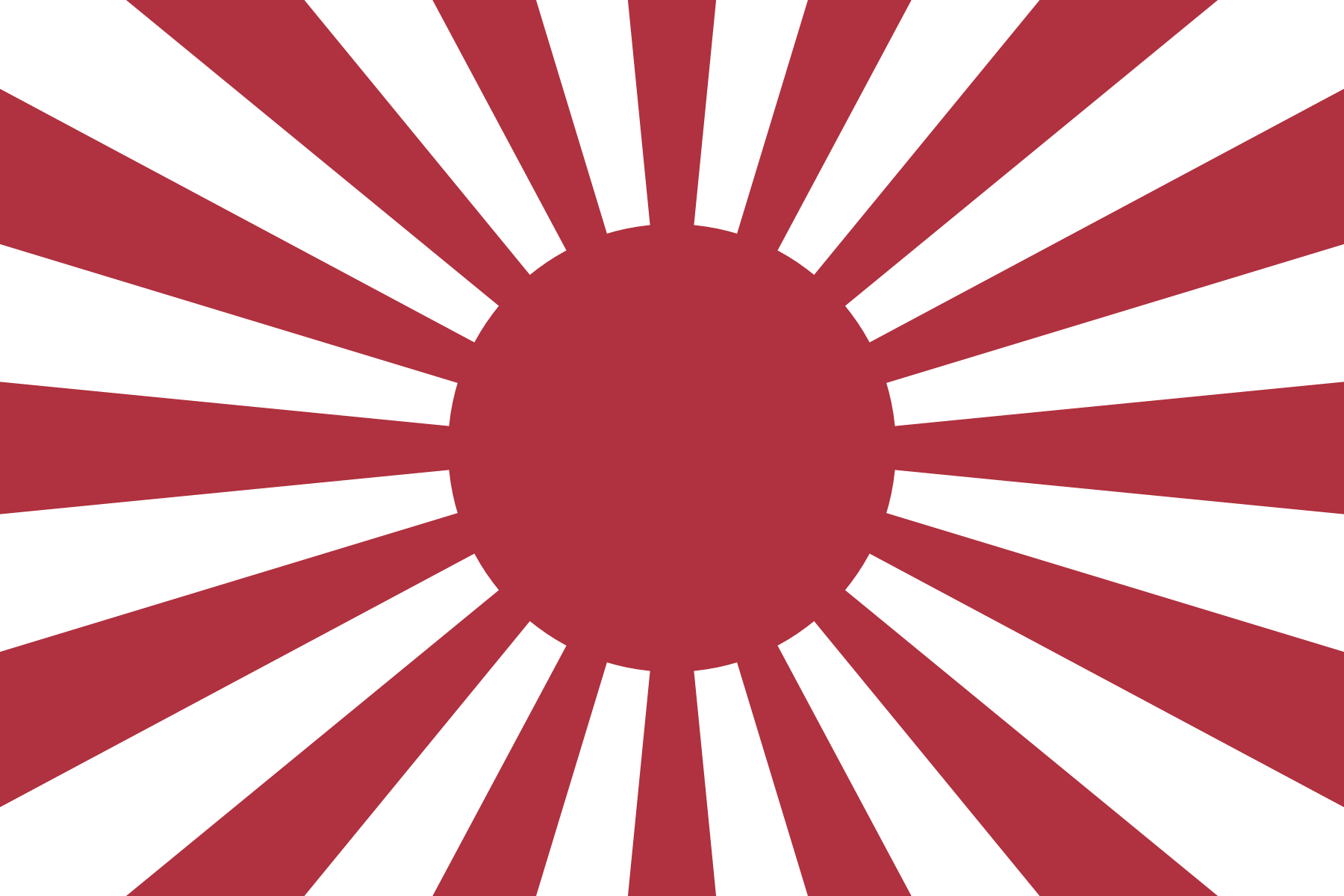
A historical version of the Rising Sun Flag, used by the Imperial Japanese military forces (1868–1945), featuring 16 crimson rays extending from a central sun disk.
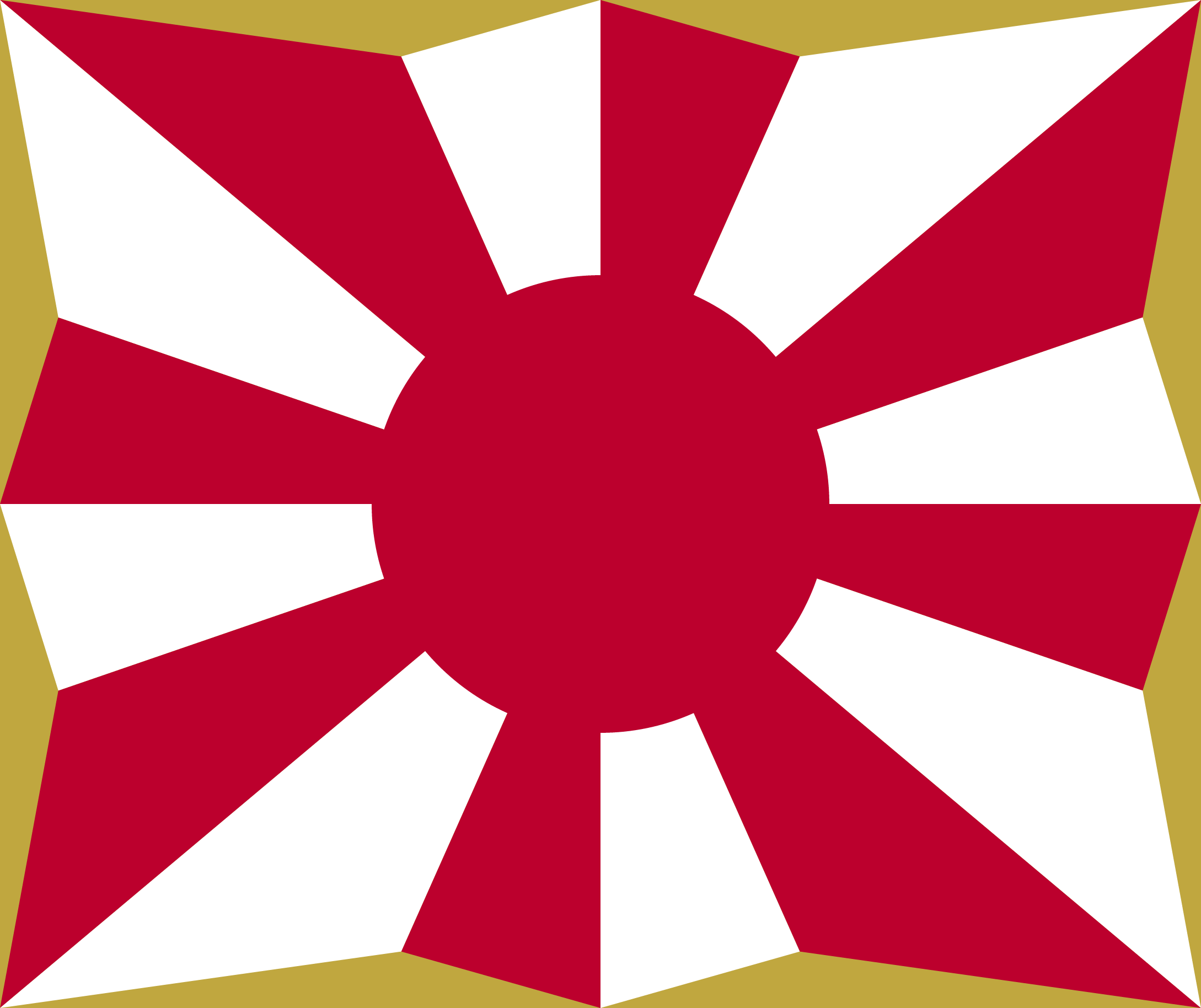
Used today by the Japan Ground Self-Defense Force, featuring a gold-edged border and eight red rays extending outward, called Hachijō-Kyokujitsuki.
While the national flag is used for official civilian purposes, the Rising Sun version was historically associated with the military and is still used in different forms by the Japan Maritime Self-Defense Force and the Japan Ground Self-Defense Force.
Variations of the Rising Sun design may also be used during certain seasonal festivities and celebrations.
History of Japan’s Flag
The sun motif has been associated with Japan for centuries, and the earliest recorded use of a sun flag dates back to 701, during the reign of Emperor Monmu. An ancient version of the flag preserved at Unpō-ji Temple is believed to date from before the 16th century.
The modern design became widely used during the Meiji Era, when government proclamations in 1870 established a sun-disc flag for merchant ships and naval use.
Over time, it became Japan’s de facto national flag as the country modernized and expanded international trade.
A separate design, the “Rising Sun” war flag, was used by the Imperial Japanese military and is distinct from the modern national flag.
Because both symbols were widely used during Japan’s imperial era, the national flag and anthem remain sensitive topics for some people, particularly in education debates, while the Rising Sun flag remains controversial due to its wartime associations.
The Hinomaru was officially recognized as Japan’s legal national flag in 1999 under the Act on National Flag and National Anthem.

Caitriona Maria is an education writer and owner of The Facts Institute. With seven years of teaching experience and a background in educational content, she specialises in creating clear reference resources about countries, geography and global topics.