A brief overview of the meaning, history, and key facts about the national flag of El Salvador.

Flag of El Salvador
Adopted in 1916, El Salvador’s flag consists of blue–white–blue horizontal stripes with the national coat of arms and the motto “God, Union, Liberty” in the center. The top and bottom blue stripes represent the Pacific and Atlantic Oceans that border Central America, while white symbolizes peace. The coat of arms features five volcanoes rising between two seas beneath a red Phrygian cap symbolizing liberty. The design is enclosed within an equilateral triangle and framed by laurel branches. The triangle represents Liberty, Equality, and Fraternity.
Printable El Salvador Flag (PNG Download)
Interesting facts about the El Salvador flag
1. El Salvador’s official state version of the flag is known as Bandera Magna, which means “Great Flag” in Spanish.
2. From 1865 to 1912, El Salvador used a flag modeled after the United States flag, featuring blue and white stripes and a red canton with stars representing the country’s departments.
3. The US-inspired design was replaced in 1912, partly because its resemblance to the American flag became controversial during a period of growing concern over US political influence in Central America.
4. Although El Salvador only borders the Pacific Ocean, the two blue stripes symbolize both the Pacific and Atlantic Oceans, representing Central America as a whole.
5. The national coat of arms includes fourteen groups of laurel branches, representing the country’s fourteen departments.
6. The five volcanoes in the coat of arms represent the five member states of the former Federal Republic of Central America: Costa Rica, Guatemala, Honduras, Nicaragua, and El Salvador.
7. El Salvador has multiple official versions of its flag. While the Bandera Magna displays the national coat of arms, another official version used on public buildings features the motto “Dios, Unión, Libertad” in gold letters.
Explore more about El Salvador:
Evolution of the El Salvador flag
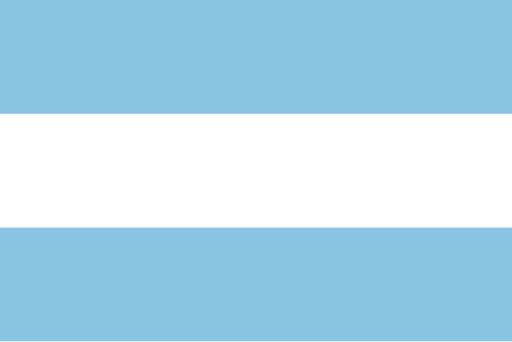
Blue–white–blue triband (early Independence flag)
Introduced by General Manuel José Arce in 1822, this blue–white–blue triband was inspired by the flag of Argentina and later became the basis of the Federal Republic of Central America.
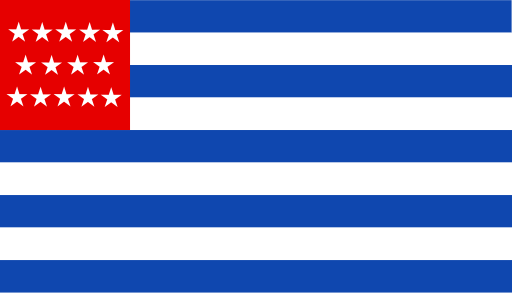
US-style flag (1865–1912)
This design featured alternating blue and white stripes with a red canton containing white stars representing El Salvador’s departments. The number of stars increased as new departments were added.
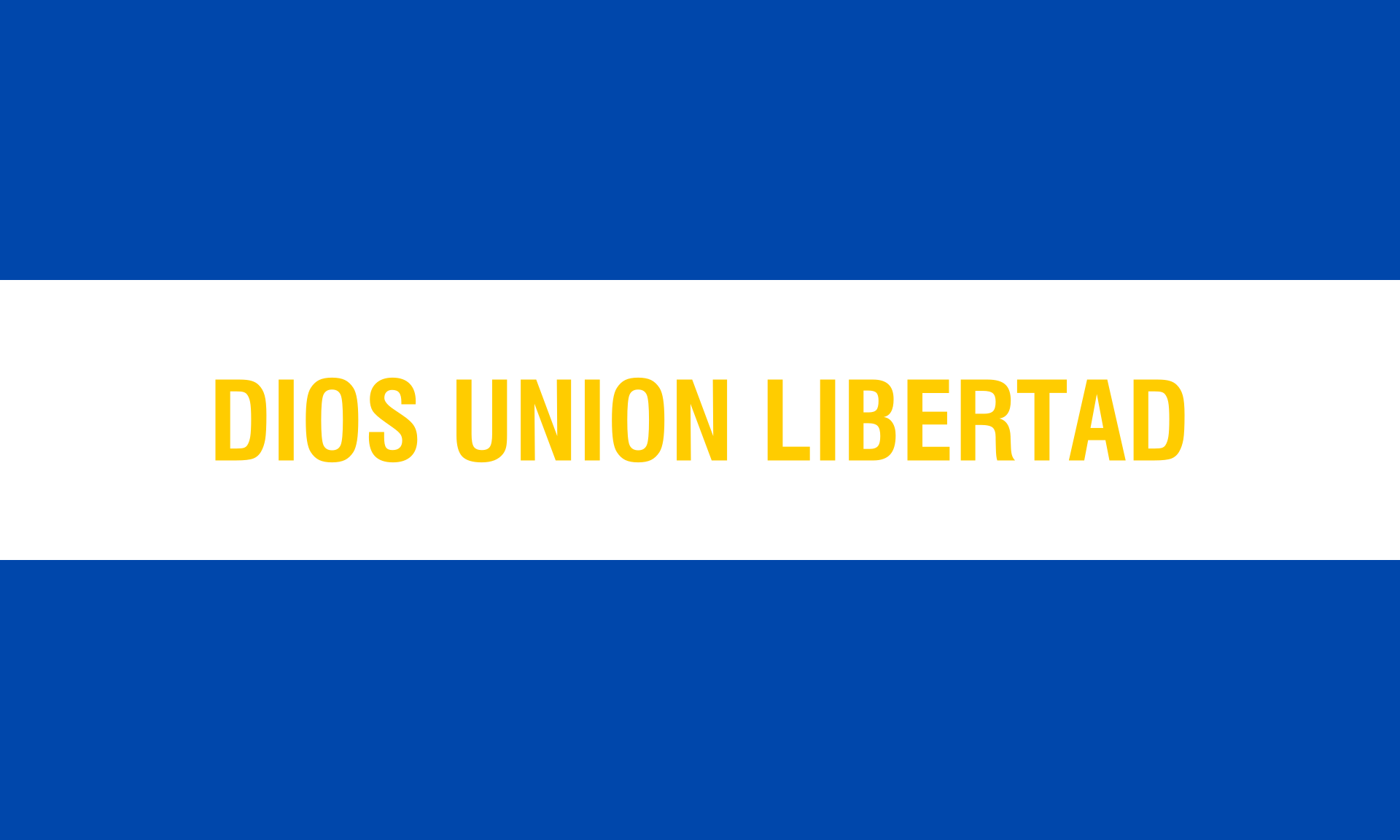
Flag with motto “Dios, Unión, Libertad” (1912–present)
This official version of El Salvador’s flag features the national motto “Dios, Unión, Libertad” (God, Union, Liberty) displayed in gold across the central white stripe. It is used on public buildings and government offices.
History of the El Salvador flag
Origins in the Central American Federation (1822–1823)
The blue–white–blue design used today traces its origins to 1822, when General Manuel José Arce introduced a triband inspired by the flag of Argentina.
The colors were reportedly chosen in admiration of Argentine independence leaders José de San Martín and Manuel Belgrano. According to tradition, Arce’s wife and sister sewed the first version of the flag from white and light blue silk.
In 1823, the National Assembly of the newly formed Federal Republic of Central America officially adopted the blue–white–blue flag. El Salvador used this design during its early years within the federation.
The “Conservative Flag” period (1865–1912)
In 1865, El Salvador replaced the federation-inspired triband with a new design resembling the flag of the United States. It featured alternating blue and white stripes with a red canton containing white stars representing the country’s departments.
As new departments were created, additional stars were added. By 1875, the flag displayed fourteen stars. This design remained in use until 1912 and became known as the “Conservative Flag,” as it was adopted under President Francisco Dueñas.
Return to the blue–white–blue triband (1912)
On May 17, 1912, the Legislative Assembly restored the blue–white–blue horizontal triband as the national flag. The decision was partly influenced by dissatisfaction with the US-inspired design and a renewed emphasis on Central American identity.
The flag was first officially hoisted on September 15, 1912, in San Salvador. Its design drew inspiration from the former Federal Republic of Central America, reaffirming historical ties to the region.
Modern regulation and official versions
The current design was formally established by law in 1916, with detailed specifications later codified in the Law of National Symbols in 1972.
El Salvador recognizes three official versions: the Bandera Magna with the national coat of arms; a version displaying the motto “Dios, Unión, Libertad”; and a ceremonial parade version.
Today’s flag preserves the historic blue–white–blue pattern that has symbolized Central American unity since the early 19th century.

Caitriona Maria is an education writer and owner of The Facts Institute. With seven years of teaching experience and a background in educational content, she specialises in creating clear reference resources about countries, geography and global topics.