The most interesting facts about Canada, from a cocktail made with a frozen human toe to holding less gravity than the rest of the world.

Fast facts
Official name: Canada
Population: 38.79 million (2024 est.)
Area: 9,984,670 sq km
Capital city: Ottawa
Major languages: English, French, Chinese, Spanish
Major religions: Christianity, Muslim
Time zone: UTC-5 (Eastern Standard Time)
Interesting facts about Canada
1. Canada is a country located in North America bordering the USA.
2. Canada is one of the few countries whose contiguous territory borders three oceans: the Atlantic Ocean in the east, the Pacific Ocean in the west and the Arctic Ocean in the north.
3. Canada is the world’s second-largest country by area after Russia.

4. The world’s northernmost continuous (year-round) permanent settlement is in Canada. The military facility of Alert on Ellesmere Island is located at 82°28′ N – just 817km (508 miles) from the North Pole.
5. Prehistoric humans first arrived in Canada at least 12,000 years ago after crossing an ancient land bridge between present-day Siberia and Alaska.
6. The Canadian flag is vertically striped red and white with a central red maple leaf. Red and white are national colors, and the maple leaf has long been a Canadian national symbol.

See how Canada’s flag compares to other North American flags.
7. In the 11th century, Norse explorers became the first Europeans to reach North America, when they established a settlement on Newfoundland island in Canada.
8. Canadians eat more doughnuts per capita than any other country in the world. Canada consumes around one billion doughnuts annually – roughly 26 per person.
9. Canada’s air quality is among the cleanest globally. When measured by the number of deaths caused by air pollution per 100,000 people, Canada ranks 19th best at about 18.
10. For 49 years, Canada was at “war” with Denmark in what was known as the Whisky War. In the 1970s, Canada and Denmark began disputing the ownership of a tiny barren Arctic island. Since 1984, Canadian troops would leave behind a flag and bottles of Canadian whisky on the island, while Danes would replace the items with schnapps and a Danish flag.
11. In 2022, Canada and Denmark signed an agreement that formally split the island, with approximately 60% going to Denmark and the rest to Canada.
12. From the 16th century onwards, Canada was colonized by Britain and France, with Newfoundland becoming Britain’s first overseas colony in 1583.

13. Despite being an independent country, Canada still accepts the British monarch as its own, with King Charles III as their king. However, his role is effectively ceremonial.
14. At the Sourdough Saloon in Dawson City, customers can drink a cocktail made with a frozen human toe: AKA the Sourtoe Cocktail. Toes that have fallen off due to frostbite or other means are donated to the bar. Customers must not swallow the toe but must let their lips touch the toe to gain a certificate. Around 100,000 people have qualified.

15. Toronto and Vancouver are considered among the most important cities in the world, ranking 26th and 36th most influential, respectively, on the 2025 Global Power City Index (GPCI).
16. Toronto also ranks among the safest cities in the world, placing 2nd globally on the Safe Cities Index. It also ranks 3rd worldwide for infrastructure security, reflecting the city’s safe transport network, dependable services, and thoughtful urban planning.
17. Canada is home to the world’s highest tide. The Bay of Fundy in Nova Scotia experiences tidal flows reaching up to 53ft (16m).
18. Canada is home to around 60% of the world’s polar bears.
19. Churchill in Canada is known as the polar bear capital of the world. Residents leave house and vehicle doors unlocked in case they need to escape quickly in the event of a bear attack.

20. Canada actually has less gravity than the rest of the world, meaning things weigh less in certain places. In the Hudson Bay region, there is less gravity because it used to be covered by a vast glacier which has now melted. The relief of less ice is causing the ground below to spring back slowly creating less gravity.
21. Canada’s name originates from the Iroquoian word “kanata” meaning village or settlement.
22. The island of Manitoulin in Ontario is the world’s largest freshwater island (lake island), with an area of 2,766 sq km.
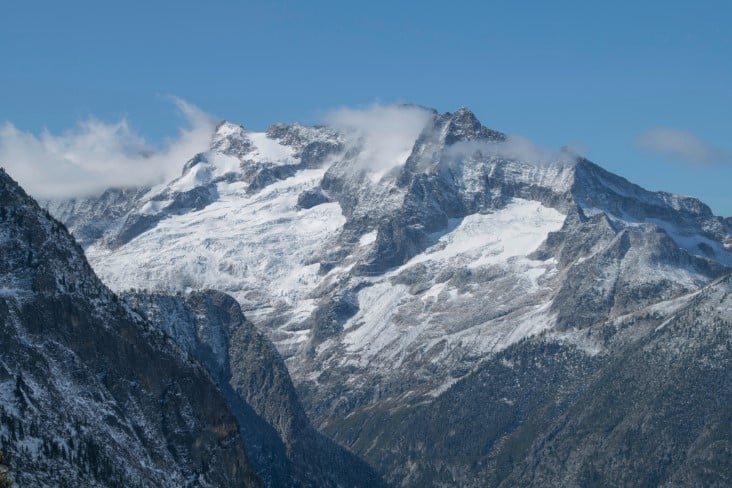
23. At 5,959m (19,551ft), Mount Logan is Canada’s highest mountain and the second highest in North America after Denali in Alaska, USA. It is also the largest mountain on the planet by circumference.
24. Founded in the 17th century, UNESCO-listed Old Québec is the only walled city north of Mexico (in the Americas).
25. Canada ranks among the world’s least corrupt nations, placing 16th globally on the 2025 Corruption Perceptions Index (CPI).
26. Canada’s national animal is the beaver. It was given official status as an emblem of Canada when “An Act to provide for the recognition of the Beaver (Castor canadensis) as a symbol of the sovereignty of Canada” received royal assent in 1975.
27. Canada has two national sports. Ice hockey is the national winter sport and lacrosse is the national summer sport.

28. Canada is one of the coldest places in the world. In 1947, the small village of Snag in the Yukon recorded temperatures as low as -62.8°C (81.04°F).
29. Canada’s minimum wage stands at $13 per hour, or about $27,967 per year, when adjusted for purchasing power parity (PPP). PPP shows how far a person’s wage really goes in their country by adjusting for how expensive things are.
30. Canada has 48 national parks. Established in 1885, Banff National Park is the country’s oldest and most visited.
31. Canada has more fresh water than any other country, with almost 9% of Canadian territory being water.
32. Canada has at least 2 million, possibly over 3 million, lakes – more than all other countries combined.
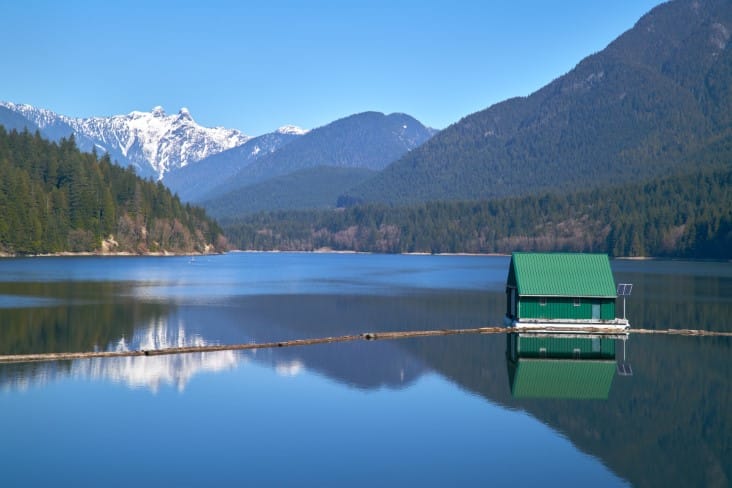
33. Canada has the world’s longest freshwater beach. Wasaga Beach in Ontario is over 14km (8.7 miles) long.
34. Canada shares the world’s longest undefended border with the USA. it stretches nearly 9,000km (5,592 miles).
35. Canada continues to attract high levels of immigration, recording a net migration rate of 11 migrants per 1,000 population in 2023, the highest in North America.
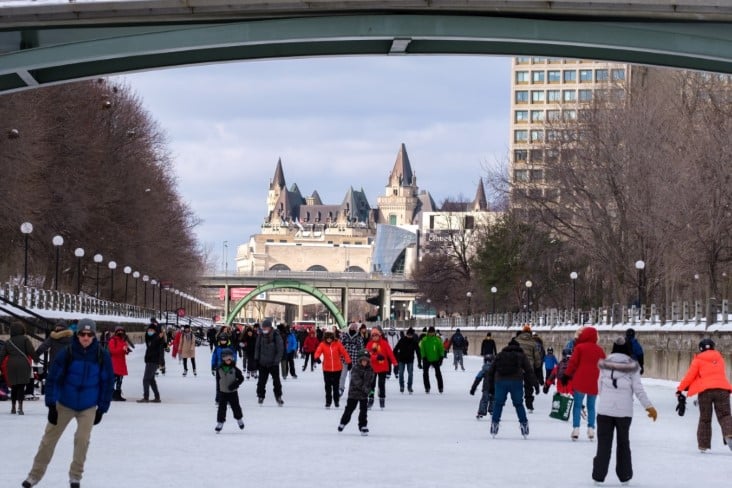
36. Canada has the longest skating rink in the world. The Rideau Canal Skateway in Ottawa is 7.8km (4.8 miles) long.
37. Canada is the world’s ninth least-densely populated sovereign state (10th if you include Greenland), with just four people per square km of land area.
38. Canada spends around $6,813 per person each year on healthcare (PPP), ranking just behind France in global per-capita health spending.
39. The oldest known rock on Earth was found in Canada. Bedrock along the northeast coast of Hudson Bay is 4.28 billion years old.
40. At 243,042 km (151,019 miles), Canada has the world’s longest coastline.
Explore more from North America
We strive to verify all facts using authoritative and primary sources where possible. However, if you find an error or have any questions, please contact us.

Caitriona Maria is an education writer and owner of The Facts Institute. With seven years of teaching experience and a background in educational content, she specialises in creating clear reference resources about countries, geography and global topics.