From the home of the Dalmatian dog breed to the world’s longest line of strudels, these are the most interesting facts about Croatia.

Fast facts
Official name: Republic of Croatia
Population: 4.1 million
Area: 56,594 sq km
Capital city: Zagreb
Major languages:
Major religions: Christianity
Time zone: UTC+1 (Central European Time)
Fun facts about Croatia
1. Croatia is a country in southeastern Europe that borders Bosnia and Herzegovina, Hungary, Montenegro, Serbia and Slovenia.
2. Croatia was part of the former country of Yugoslavia until June 1991, when it declared independence.

3. Croatia’s name comes from the Croats, a Slavic tribe who migrated to the Balkans in the 7th century CE.
4. Croatia is home to the world’s smallest town. With a population of just 30, Hum has just two streets but it is still classed as a town despite it being similar in size to a village. It measures just 100m (328ft) long and 30m (98ft) wide.
5. Croatia’s flag is made up of three horizontal strips of red, white and blue – the Pan-Slav colors that were inspired by the 19th-century Russian flag. There is also a central coat of arms.
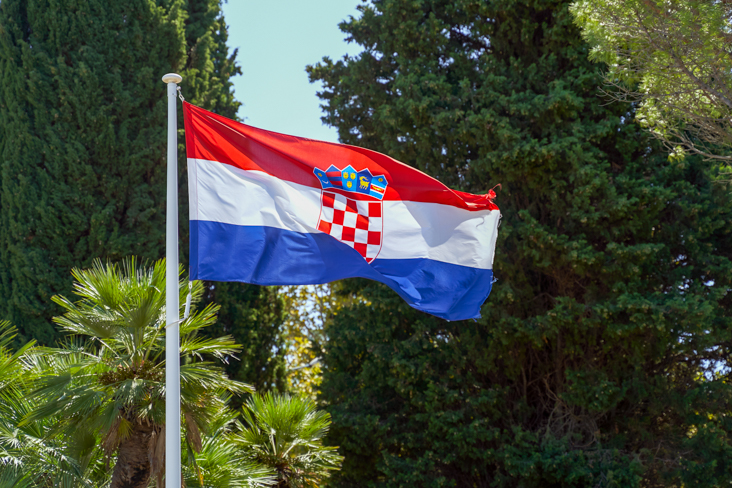
6. The coat of arms is made up of a shield featuring a checkerboard of 13 red and 12 white squares with five smaller shields forming a crown above. The five small shields represent the five historic regions of Croatia: Dubrovnik, Dalmatia, Istria, and Slavonia.
7. The Pula Roman Amphitheatre in Croatia is the sixth-largest of its kind. The 133m long, 105m wide and 32m high amphitheatre was built in the 1st century CE and could hold up to 20,000 people.
8. The Dalmatian dog breed is named after the coastal region of Dalmatia in present-day Croatia.

9. In 2011, the largest box of popcorn was created in Croatia. With a volume of 52.59m³ (1857ft³), the box took 1 hour and 57 minutes to fill.
10. Diocletian’s Palace in Split, Croatia, has an Egyptian sphinx dating from the 15th century BCE. It was one of 12 looted from Egypt when the palace was constructed in the 4th century CE.
11. Croatia has 1,244 islands, of which only 49 are permanently inhabited.

12. The longest moonwalk, over one hour, took place in Zagreb, Croatia. In 2009, Krunoslav Budiselic moonwalked 5.7km (3.54 miles), breaking his previous record of a total of 5.255km (3.265 miles).
13. The necktie was created in Croatia around the 17th century and is celebrated on Cravat Day on 18th October every year.
14. Croatia has a total of 10 properties inscribed on the UNESCO World Heritage List.
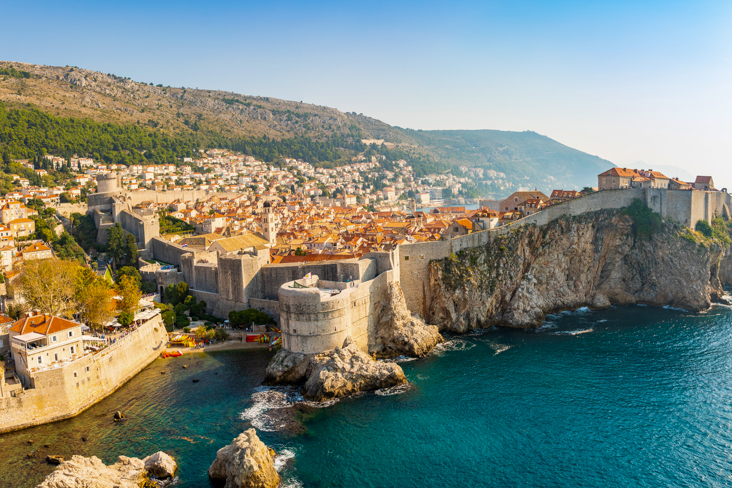
15. The most famous of which is the Old City of Dubrovnik, known as the ‘Pearl of the Adriatic’, which has been an important Mediterranean sea power since the 13th century.
16. Dubrovnik is also famous as several scenes from the TV series Game of Thrones were filmed there, including the famous King’s Landing. The filming locations have become popular tourist attractions.
17. In Zagreb, Croatia’s capital, there is a Museum of Broken Relationships which displays mementos left over from former relationships. Exhibits include a toaster stolen so an ex could never make toast again to a suicide note from somebody’s mother.
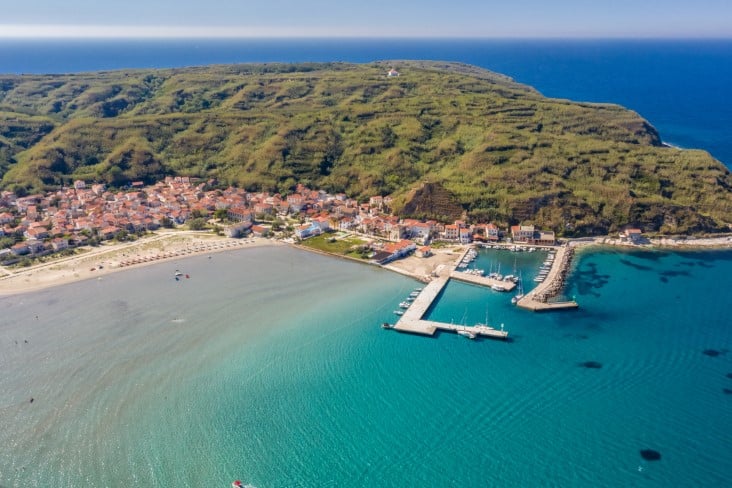
18. On the island of Susak, women wear a traditional skirt called the kamizot, which is believed to be the shortest folk costume in Europe, preceding the mini skirt for over 100 years.
19. Croatia has 21 elements on the UNESCO List of Intangible Cultural Heritage, and only six countries – China, France, Japan, South Korea, Spain, and Turkey – have more. Elements include lacemaking, gingerbread craft and falconry.
20. Before Croatia joined the Euro in 2023, its former currency kuna was named after a rodent. Kuna is the Croatian word for marten – a valuable pelt that was used for trade in the Middle Ages.
21. Croatia has one of Europe’s highest smoking rates, with more than one-third of adults smoking daily.
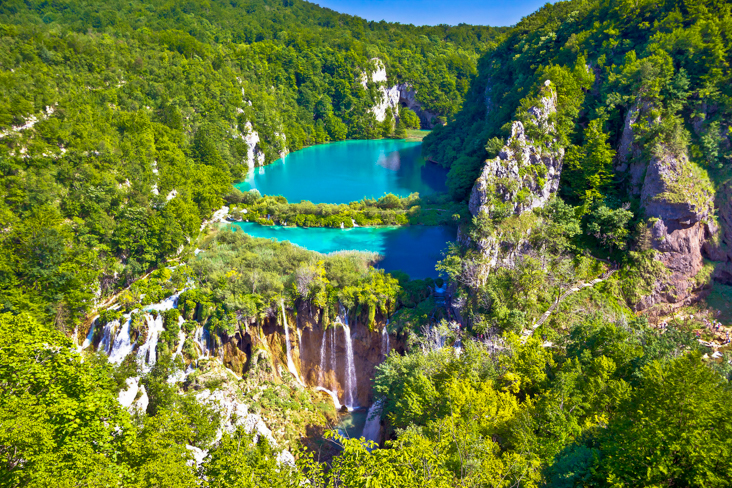
22. Plitvice Lakes National Park is Croatia’s most popular single natural attraction. The mineral-rich waters appear bright turquoise along an 8km (5 miles) series of 16 lakes and waterfalls surrounded by dense forests and hills.
23. Croatia’s capital, Zagreb, means “beyond the trench (or ditch)”. Archaeologists believe the city’s original settlement was established beyond a water-filled hole known as a graba. In Slavic, za means “beyond”.
24. Croatia holds the world record for the longest line of strudels, consisting of 5,874 strudels. The line measured 1,762.45 m (5782.31 ft). It was achieved in the city of Sisak in 2019.
25. Croatia has had two Nobel laureates. Leopold Ružička was the joint winner of the 1939 Nobel Prize in Chemistry, and Vladimir Prelog won the 1975 Nobel Prize in Chemistry.
26. Acclaimed inventor Nikola Tesla was born in modern-day Croatia, even though he is often described as Serbian. Among other inventions, Tesla discovered and patented the rotating magnetic field, the principle behind alternating-current machines.
Explore more from Europe
We strive to verify all facts using authoritative and primary sources where possible. However, if you find an error or have any questions, please contact us.

Caitriona Maria is an education writer and owner of The Facts Institute. With seven years of teaching experience and a background in educational content, she specialises in creating clear reference resources about countries, geography and global topics.