A brief overview of the meaning, history, and key facts about the national flag of Peru.
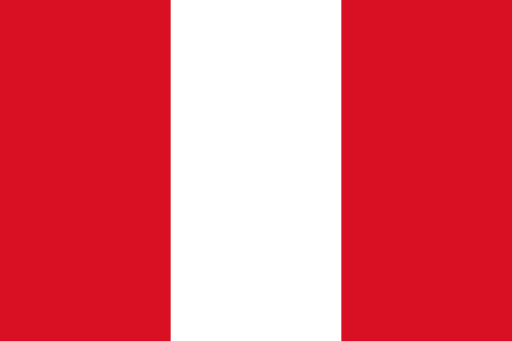
Flag of Peru
First adopted in 1825, the flag of Peru consists of three vertical stripes of red, white and red, with the red representing the blood of the fighters’ sacrifice for freedom and the white symbolizing peace.
Printable Peru Flag (PNG Download)
Interesting facts about Peru’s flag
1. The national flag of Peru is often called The Bicolor, or la Bicolor, but its official name is Bandera Nacional.
2. The colors of the flag are also linked to a red-and-white flamingo known as the parihuana, which served as inspiration to General San Martín for the flag colors during the revolution.
3. Peru celebrates Flag Day, Día de la Bandera, every year on June 7, commemorating the Battle of Arica (1880) during the War of the Pacific.
4. Unlike many national flags, Peru’s civil version does not include any emblem, making it simple and easily recognizable.
5. Peru’s State flag features the same triband with the National Coat of Arms centered on the white stripe. The coat of arms depicts a vicuña (a relative of the llama), a cinchona tree and a cornucopia with coins.
6. Peru’s flag went through many modifications throughout the 19th century before it settled on the current layout.
Explore more about Peru:
Evolution of Peru’s flag
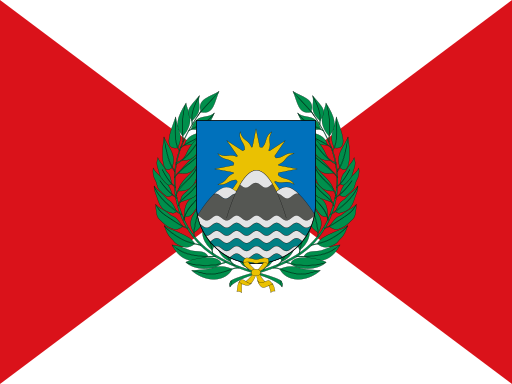
First official flag of Peru (1820)
José de San Martín’s design was diagonally quartered in red and white and featured a central emblem with a rising sun behind mountains by the sea.
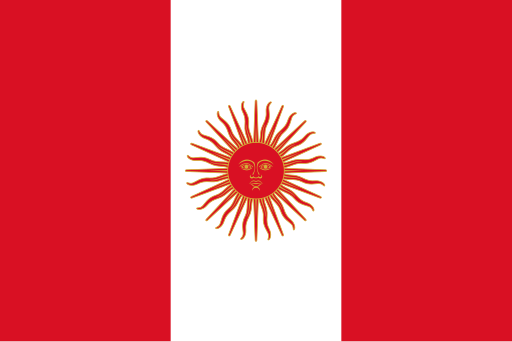
Transitional red and white design (1822)
In 1822, under José Bernardo de Tagle, the flag was redesigned to simplify production and improve visibility in battle.
Huhsunqu, CC BY-SA 2.5, via Wikimedia Commons
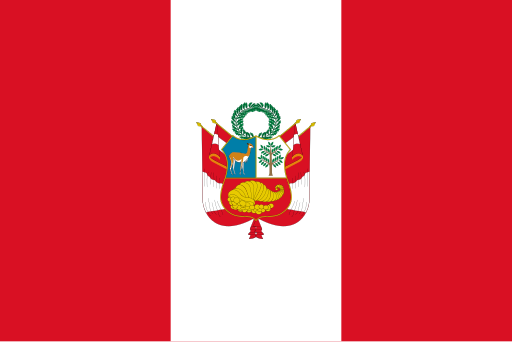
Establishment of the modern national flag (1825)
The golden sun emblem was replaced with the newly created national coat of arms, establishing one of the core designs still used today.
History of Peru’s flag
The Peruvian flag emerged during the independence struggle against Spanish rule and was first officially decreed in 1820 under José de San Martín.
That early design was soon revised for practicality, leading to redesigned versions in 1822 under José Bernardo de Tagle.
On 25 February 1825, during Simón Bolívar’s administration, Peru’s Constituent Congress established the core design in use today. They retained the red-white-red pattern and introduced the national coat of arms for official versions.
In 1950, Peru clarified the modern set of variants under President Manuel A. Odría: the plain triband for civilian use and the coat-of-arms version for state use, alongside military and naval variants.

Caitriona Maria is an education writer and owner of The Facts Institute. With seven years of teaching experience and a background in educational content, she specialises in creating clear reference resources about countries, geography and global topics.