10 fun facts about Gabon
1. The name Gabon comes from a Portuguese word meaning “cloak,” because early explorers thought the Komo River estuary looked like a cloak.
2. Gabon is one of the few countries in the world crossed by the Equator.
3. Libreville, Gabon’s capital, was founded by freed slaves in 1849. Its name means “free town” in French.
4. More than 88% of Gabon is covered in rainforest, making it one of the most forested countries in Africa.
5. Gabon has one of the highest Human Development Index scores in Africa, based on measures such as life expectancy, education and income.
6. Loango National Park is sometimes called “Africa’s Last Eden”. It is known for wildlife watching, where you can spot animals such as elephants, gorillas, crocodiles and sitatunga antelopes.
7. Gabon has around 1,800 known petroglyphs, or rock carvings, showing traces of human activity going back thousands of years.
8. Gabon is an important nesting place for leatherback turtles, the world’s largest species of sea turtle. Leatherbacks can grow up to 2.1 m (7 ft).
9. Gabon is home to Indigenous forest peoples sometimes called Pygmy peoples, a term used for groups whose adult male average under 150 cm (4 ft 11 in) tall.
10. Over one-tenth of Gabon’s land is protected as national parkland.
Read more: Facts about Gabon
At a glance
Capital city: Libreville
Population: 2.6 million
Area: 267,667 sq km
Major languages: French and Bantu languages
Major religions: Christianity, Islam
Time zone: UTC+1 (West Africa Time)
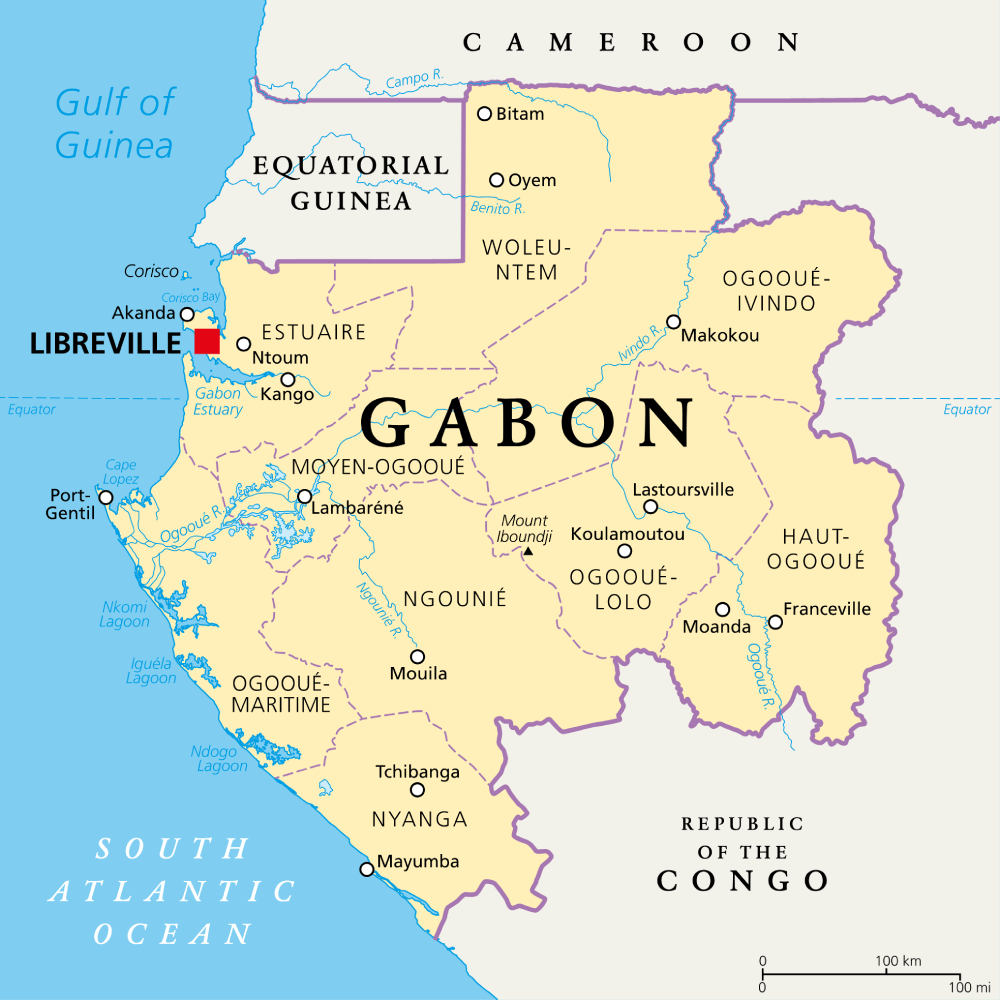
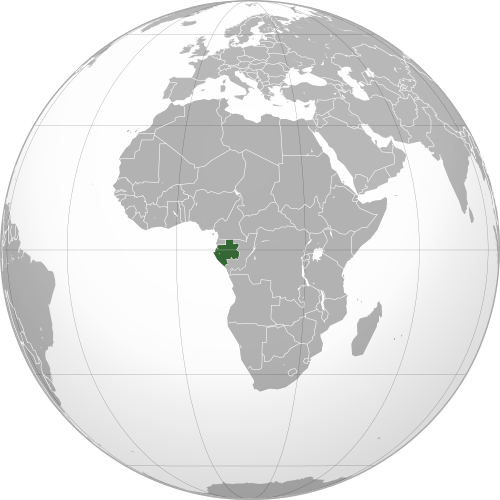
Where is Gabon?
Continent: Africa
Region: Central Africa
Neighboring countries: Equatorial Guinea, Cameroon and the Republic of the Congo
Highest point: Mont Bengoué (1,070 m / 3,510 ft)
Geography of Gabon
Gabon is one of the most heavily forested African countries and lies on the Atlantic coast of Central Africa.
Much of its landscape is covered by tropical rainforest, while the Ogooué River basin dominates the country’s interior.
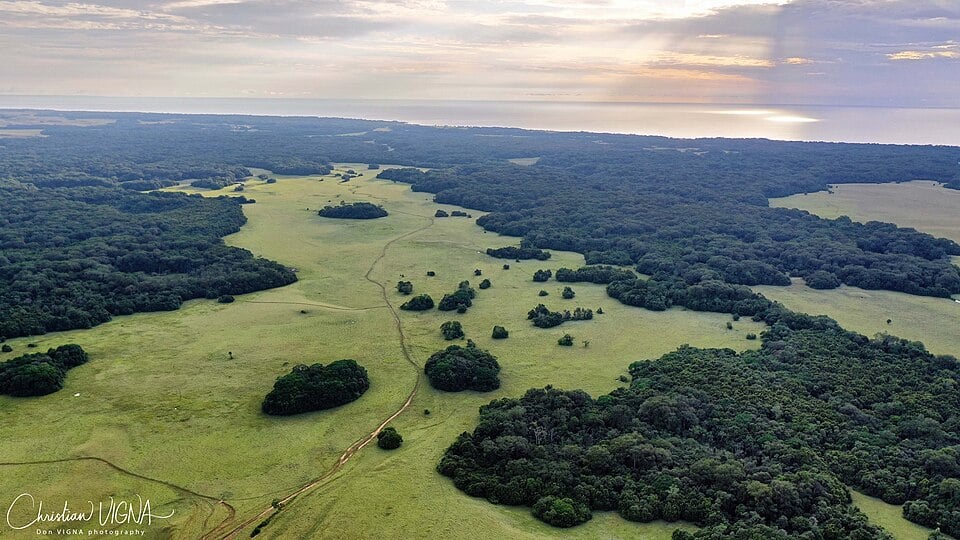
Congo Basin Rainforest
Gabon is one of Africa’s most forested countries, with tropical rainforest covering most of its land. These forests form part of the wider Congo Basin, one of the world’s largest rainforest regions.
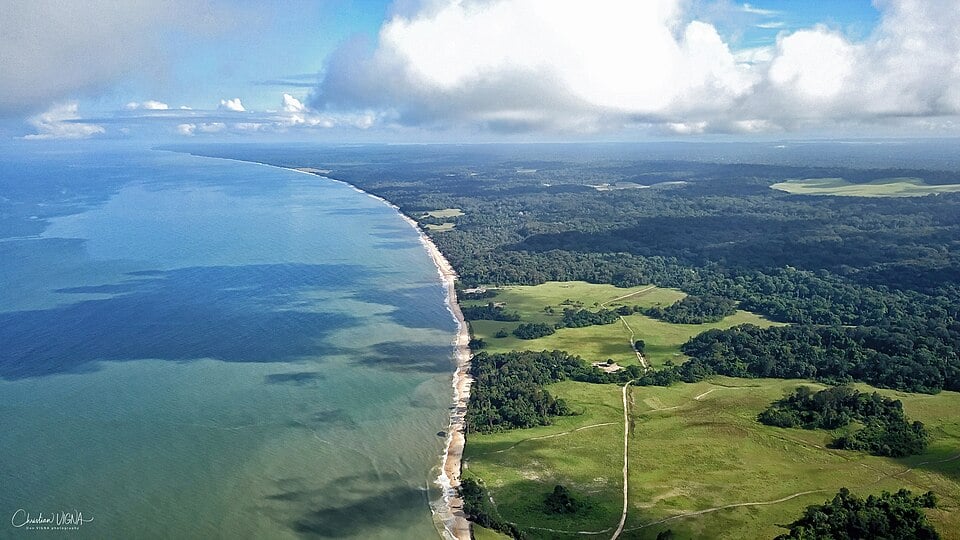
Atlantic Coast
Gabon has a long coastline on the Atlantic Ocean and the Gulf of Guinea. Its 885 km (550 mi) coast includes sandy beaches, lagoons, mangroves and coastal forests.
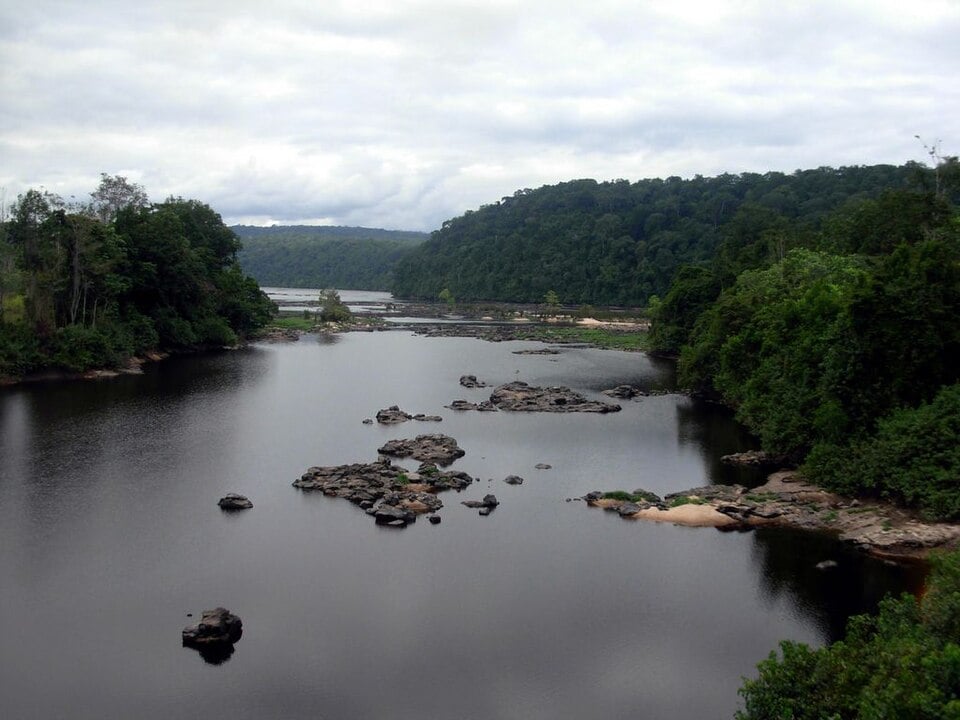
Ogooué River
The Ogooué River is Gabon’s main river and drains most of the country. It rises in the Republic of Congo and flows west across Gabon before emptying into the Atlantic Ocean.
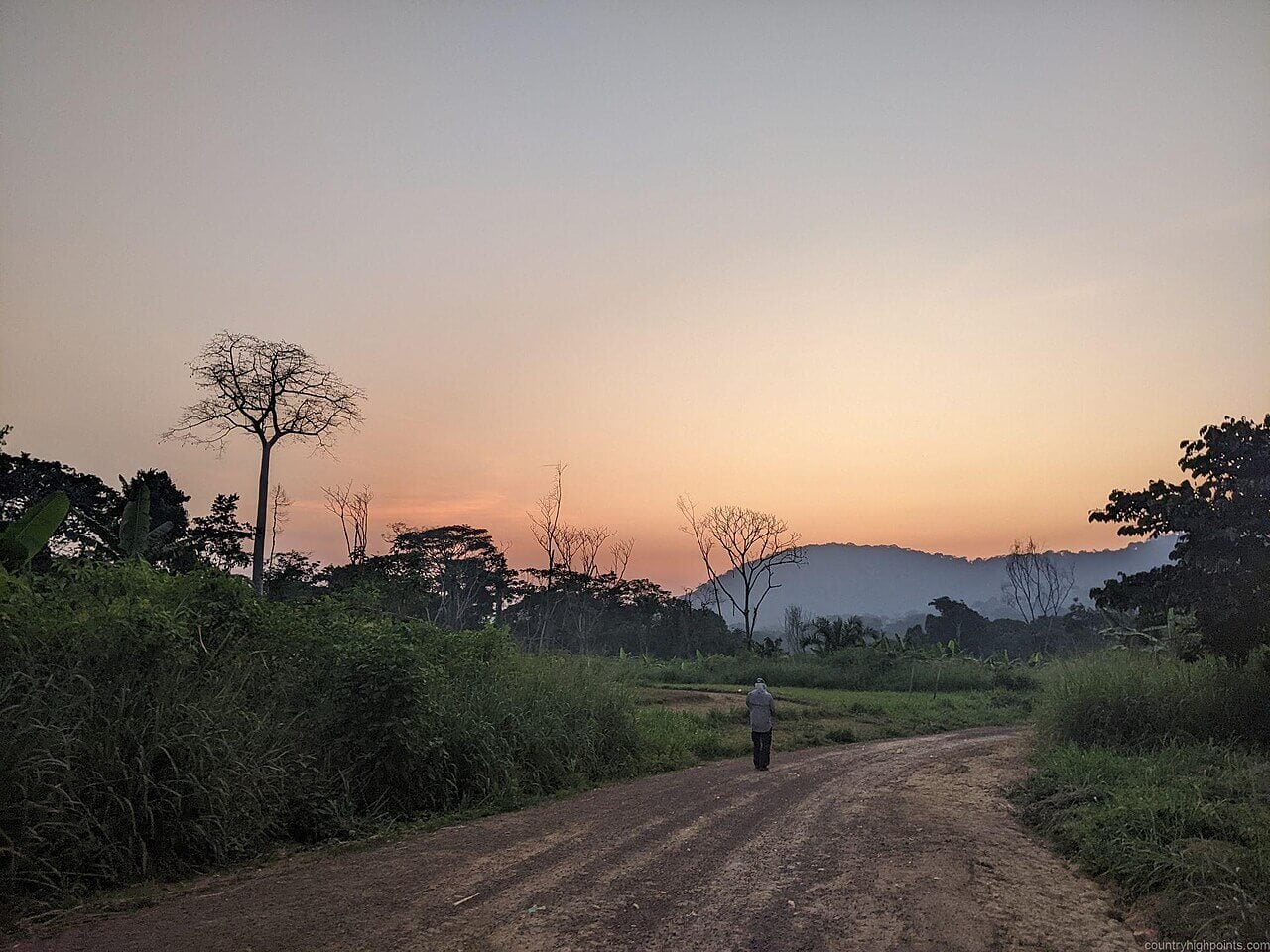
Interior Highlands
Away from the coast, Gabon has hilly interior landscapes, including the Cristal Mountains and the Chaillu Massif. These upland areas rise above the surrounding rainforest.
See article: Flag of Gabon
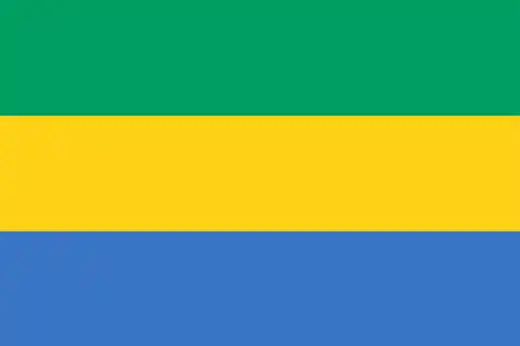
Gabon flag
The flag of Gabon dates from the final years of French colonial rule. During this period, Gabon was part of French Equatorial Africa and used the French tricolor rather than a separate colonial flag.
Gabon adopted its own green, yellow and blue flag in 1959, shortly before independence. The design was modified in 1960, when the French tricolor was removed from the canton and the yellow band was widened. The flag has remained unchanged since Gabon became independent.
Image credits:
La plaine a Blanco savane et forêt gabonaise: VIGNA christian, via Wikimedia Commons, licensed under CC BY-SA 4.0. Cropped.
Baie de Nyonié au Gabon (coast): VIGNA christian, via Wikimedia Commons, licensed under CC BY-SA 4.0. Cropped.
Ogooué river, Guinea: Susi4, via Wikimedia Commons, licensed under CC BY-SA 3.0. Cropped.
Mont Bengoué in 2022: Eric Gilbertson, via Wikimedia Commons, licensed under CC BY-SA 4.0. Cropped.

Caitriona Maria is an education writer and owner of The Facts Institute. With seven years of teaching experience and a background in educational content, she specialises in creating clear reference resources about countries, geography and global topics.