Asia’s population is estimated at approximately 4.84 billion people, making it the most populous continent in the world.
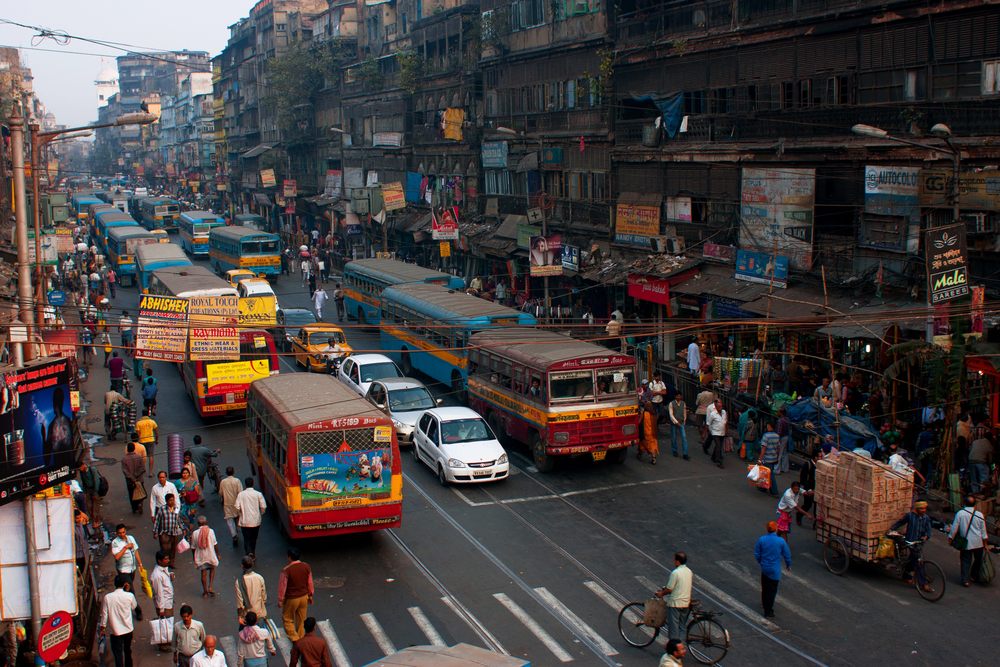
With a global population of about 8.23 billion, Asia accounts for roughly 59% of the world’s population and remains the central driver of global demographic trends.
Total population of Asia
- Estimated population: ~4,835,320,000 (2025 estimate)
- Share of world population: ~59%
- Population density: ~156 people per square kilometer
- Growth rate: ~0.6% per annum
During the second half of the 20th century, Asia experienced rapid population growth driven by high fertility rates and declining mortality.
Since the early 21st century, population growth in Asia has slowed considerably as many countries have undergone demographic transitions, including falling birth rates and aging populations, particularly in East Asia.
Most populous countries in Asia
A small number of countries account for a dominant share of Asia’s total population.
- India is the most populous country in Asia and the world, having surpassed China in 2023.
- China ranks second and remains the largest population concentration in East Asia, despite entering a period of population decline.
- Indonesia ranks third and is the most populous country in Southeast Asia.
- Pakistan and Bangladesh round out the top five, both experiencing continued population growth driven by relatively young populations.
Together, these five countries have a combined population of about 3.6 billion people, accounting for around 74% of Asia’s total population.
Least populous countries in Asia
At the opposite end of the scale are several small island nations and city-states.
- Brunei is Asia’s least populous sovereign country.
- The Maldives, Bhutan, and Cyprus also have relatively small populations.
- Macau is the only special administrative region in Asia with a population under one million.
Asia population by country
The table below ranks Asian countries and selected territories by total population, from largest to smallest.
This includes transcontinental countries that are commonly classified as part of Asia in international demographic datasets.
Population figures are based on the most consistent international estimates from the World Urbanization Prospects 2025 report and may vary slightly between sources.
| Asia ranking | Country | Population (Thousands) | World ranking |
|---|---|---|---|
| 1 | India | 1,463,866 | 1 |
| 2 | China | 1,416,096 | 2 |
| 3 | Indonesia | 285,721 | 4 |
| 4 | Pakistan | 255,220 | 5 |
| 5 | Bangladesh | 175,687 | 8 |
| 6 | Russian Federation | 143,997 | 9 |
| 7 | Japan | 123,103 | 12 |
| 8 | Philippines | 116,787 | 14 |
| 9 | Vietnam | 101,599 | 16 |
| 10 | Iran | 92,418 | 17 |
| 11 | Türkiye (Turkey ) | 87,685 | 18 |
| 12 | Thailand | 71,620 | 20 |
| 13 | Myanmar | 54,851 | 27 |
| 14 | Korea, Republic of | 51,667 | 29 |
| 15 | Iraq | 47,021 | 34 |
| 16 | Afghanistan | 43,844 | 36 |
| 17 | Yemen | 41,774 | 37 |
| 18 | Uzbekistan | 37,053 | 43 |
| 19 | Malaysia | 35,978 | 44 |
| 20 | Saudi Arabia | 34,566 | 48 |
| 21 | Nepal | 29,618 | 52 |
| 22 | Korea, Dem. People’s Republic of | 26,571 | 56 |
| 23 | Syrian Arab Republic | 25,620 | 57 |
| 24 | Sri Lanka | 23,229 | 60 |
| 25 | Taiwan | 23,113 | 61 |
| 26 | Kazakhstan | 20,844 | 65 |
| 27 | Cambodia | 17,848 | 73 |
| 28 | Jordan | 11,521 | 84 |
| 29 | United Arab Emirates | 11,346 | 86 |
| 30 | Tajikistan | 10,787 | 89 |
| 31 | Azerbaijan | 10,398 | 94 |
| 32 | Israel | 9,517 | 98 |
| 33 | Laos | 7,873 | 103 |
| 34 | Turkmenistan | 7,619 | 104 |
| 35 | Hong Kong | 7,396 | 106 |
| 36 | Kyrgyzstan | 7,295 | 107 |
| 37 | Singapore | 5,871 | 115 |
| 38 | Lebanon | 5,849 | 116 |
| 39 | Palestine, State of | 5,590 | 120 |
| 40 | Oman | 5,495 | 122 |
| 41 | Kuwait | 5,026 | 128 |
| 42 | Georgia | 3,807 | 131 |
| 43 | Mongolia | 3,517 | 133 |
| 44 | Qatar | 3,116 | 137 |
| 45 | Armenia | 2,952 | 140 |
| 46 | Bahrain | 1,643 | 154 |
| 47 | Timor-Leste | 1,419 | 156 |
| 48 | Cyprus | 1,371 | 157 |
| 49 | Bhutan | 797 | 167 |
| 50 | Macau | 722 | 168 |
| 51 | Maldives | 530 | 174 |
| 52 | Brunei | 466 | 176 |
Population growth in Asia
Asia’s population growth rate is lower than that of Africa but remains higher than Europe and comparable to parts of the Americas.
Key factors contributing to Asia’s slowing population growth:
- Declining fertility rates in East Asia, particularly in countries such as China, Japan, and South Korea
- Aging populations in several high-income Asian economies
- Continued population growth in South Asia and parts of Southeast Asia, driven by younger age structures
- Urbanization and economic development, which have contributed to smaller family sizes across much of the continent
According to Pew Research, Pakistan is one of six countries projected to drive global population growth this century, alongside five African countries: Nigeria, the Democratic Republic of the Congo, Tanzania, Ethiopia, and Angola.
While Asia’s growth rate has slowed significantly since the late 20th century, the continent’s large base population means it continues to contribute substantially to global population change.
Population density across Asia
Despite its vast population, Asia’s population density varies widely.
- Very high densities in countries such as Bangladesh (around 1,350 people per square kilometer) and city-states like Singapore (over 8,200 people per square kilometer)
- Very low densities in countries such as Mongolia (around 2 people per square kilometer) and Kazakhstan (around 8 people per square kilometer)
Overall, Asia’s average population density reflects both extreme urban concentration and vast sparsely populated regions.
Regions of Asia by population
Asia is commonly divided into several major regions, each with distinct population patterns:
- South Asia – Rapid population growth and very high population density
- East Asia – Highly urbanized with aging and in some cases declining populations
- Southeast Asia – Moderate growth with broadly consistent demographic trends across countries
- Western Asia – Population change is strongly influenced by migration, particularly large inflows to Gulf states and out-migration from conflict-affected countries
- Central Asia – Sparse populations with continued population growth, though growth rates are gradually slowing.
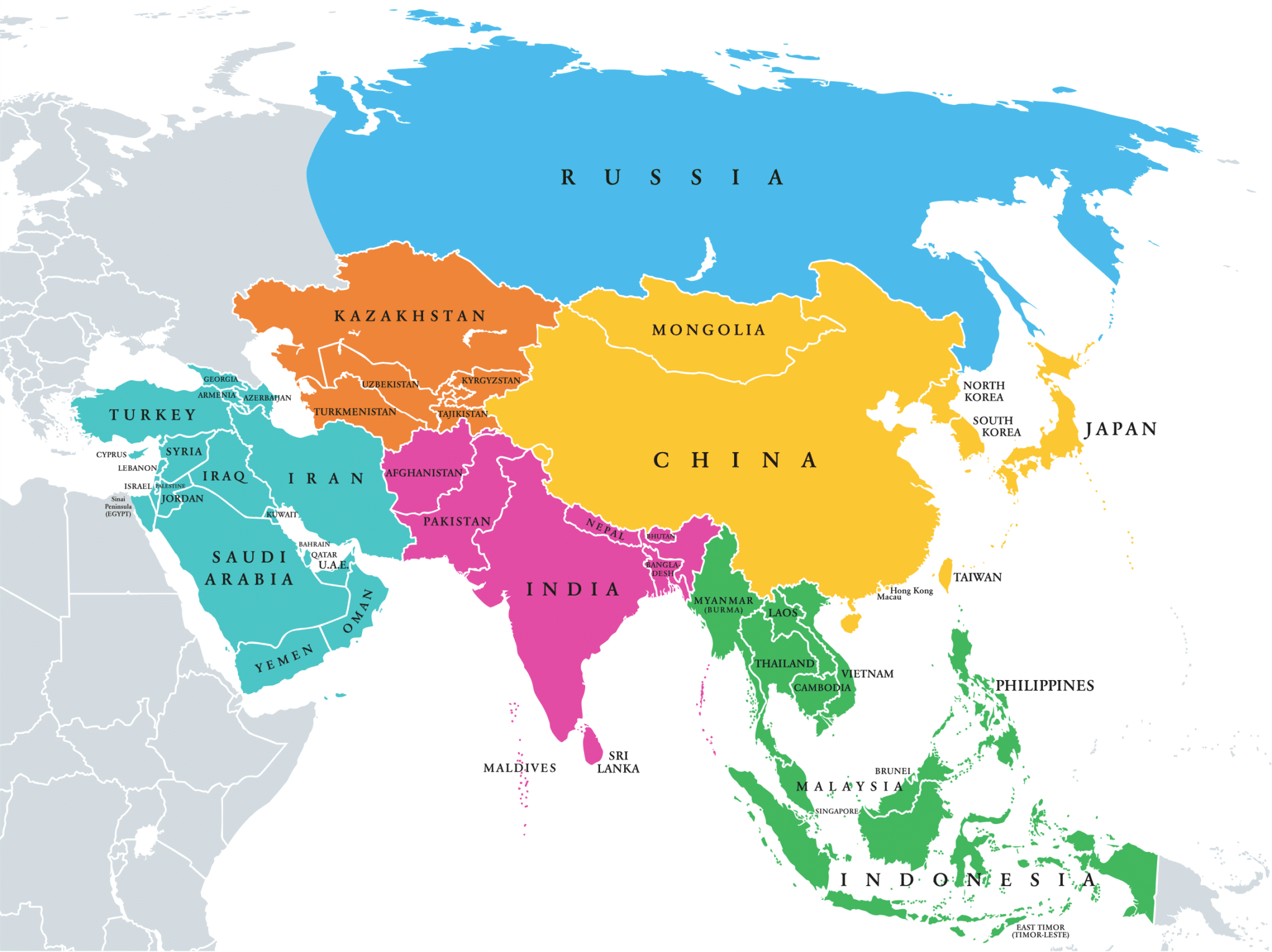
| Region | Population (millions) |
|---|---|
| Central Asia (orange) | 83.6 |
| Eastern Asia (yellow) | 1,652.2 |
| Southern Asia (pink) | 2,085.2 |
| Southeast Asia (green) | 700.0 |
| Western Asia (teal) | 314.3 |
Note: Although Russia is a transcontinental country spanning both Europe and Asia, the United Nations typically classifies Russia as part of Eastern Europe for demographic and statistical purposes.
For this reason, Russia is shown in the table and map for geographic context but excluded from the Asian regional population totals above.
Asia in global population context
Asia remains the demographic center of the world, accounting for more than half of the global population.
While population growth is slowing, Asia’s population size continues to shape global economic, environmental, and geopolitical outcomes.
For a broader perspective, see:

Caitriona Maria is an education writer and owner of The Facts Institute. With seven years of teaching experience and a background in educational content, she specialises in creating clear reference resources about countries, geography and global topics.