The most interesting facts about Sierra Leone, from a history intertwined with slavery to a giant cotton tree in its capital city.

Fast facts
Official name: Republic of Sierra Leone
Population: 8.8 million
Area: 71,740 sq km
Capital city: Freetown
Major languages: English, Mende, Temne, Krio
Major religions: Muslim 78.6%, Christian 20.8%
Time zone: UTC 0 (Greenwich Mean Time)
Interesting facts about Sierra Leone
1. Sierra Leone is located in West Africa on the Atlantic coast and bordered by Guinea and Liberia.
2. The country takes its name from the Portuguese explorer Pedro de Sintra who named the country “Serra Leoa” (Lion Mountains) due to the impressive hills he saw while sailing along the West African coast in 1462.
3. Sierra Leone is one of the least developed countries in the world according to the UN’s Human Development Index (HDI) in 2025.

4. Bunce Island, located in the Sierra Leone River, was a significant hub for the transatlantic slave trade in the 18th century.
5. Established in 1670, Bunce Island, an uninhabited island located around 20 miles up the Sierra Leone River from Freetown, was one of more than sixty slave-trading forts on the West African coast. Bunce Island remains an important African monument to the North American slave trade.
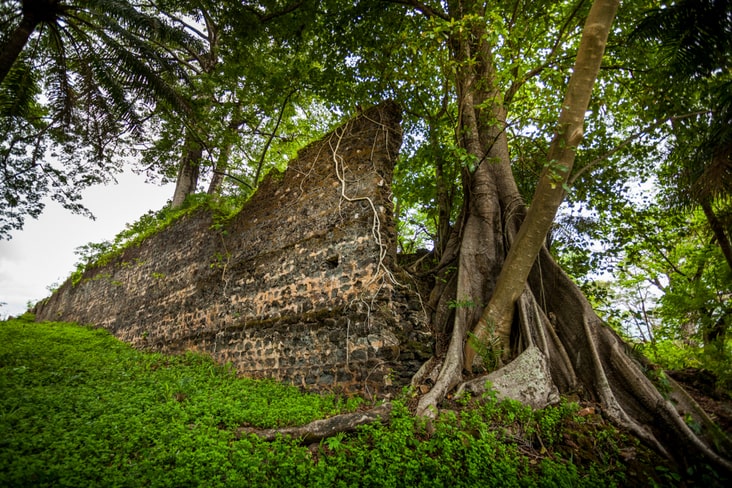
6. Sierra Leone’s capital city, Freetown, was founded as a home for repatriated and rescued former slaves in 1787.
7. In 1808, the British intensified their efforts to abolish the slave trade by establishing a naval unit off the coast of Sierra Leone and a court in Freetown to prosecute the crews of captured slave ships. These actions led to the liberation of approximately 84,000 slaves, who moved to the hills of the Western Area Peninsula National Park.
8. Within the Western Area Peninsula National Park is the Tacugama Chimpanzee Sanctuary. Founded in 1995 by a Sri Lankan native, the sanctuary rescues and rehabilitates endangered primates.

9. During the decades following independence from Britian in 1961, Sierra Leone suffered from multiple coups (once there were three in a single year), as well as economic turmoil and state corruption.
10. About 65% of Sierra Leone’s population live in rural areas, with the vast majority of the labor force working in agriculture.
11. Sierra Leone has a simple horizontally striped green, white and blue flag. The white stripe represents unity and justice, which also reflects the country’s national motto: Unity, Freedom, Justice.
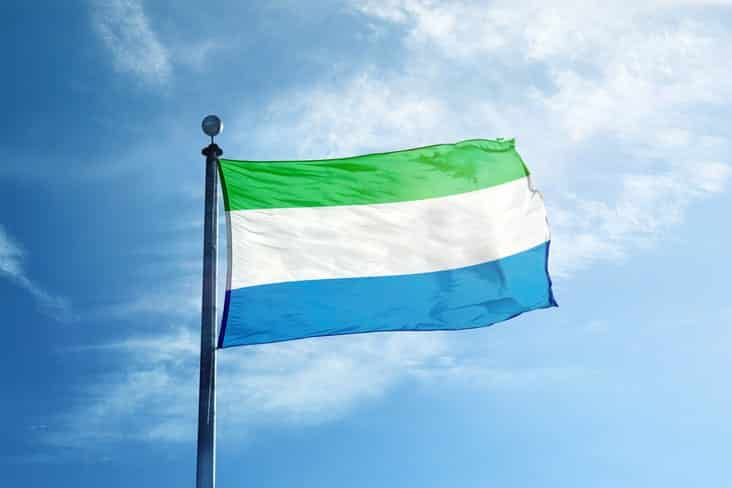
See how Sierra Leone’s flag compares to other African flags.
12. In 1991, Sierra Leone slipped into a decade-long civil war that left more than 50,000 people dead and witnessed many atrocities such as murder, rape, mutilation and the recruitment of child soldiers. The war also caused the displacement of more than 2 million people – around one-third of Sierra Leone’s population at the time.
13. Sierra Leone’s “blood diamonds” helped fuel atrocities during the war. Blood diamonds, also known as conflict diamonds, were used to fund certain conflicts in Africa. In 2000, the Kimberley Process was set up to reduce the flow of conflict diamonds.
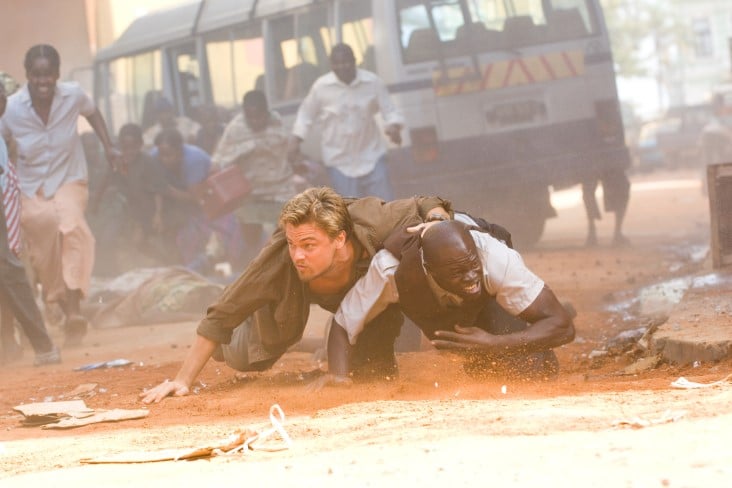
14. The political thriller Blood Diamond starring Leonardo DiCaprio, Djimon Hounsou and Jennifer Connelly was set in Sierra Leone. The film depicts events from the civil war as well as the historic meeting in Kimberley, South Africa, that led to the Kimberley Process.
15. The Outamba-Kilimi National Park, a tract of savannah and jungle in Sierra Leone, is home to highly diverse wildlife including primates such as chimpanzees, colobus monkeys and sooty mangabeys as well as hippos, bongo antelopes, buffalo, forest elephants and over 150 species of bird.
16. Tiwai Island in Sierra Leone is one of the few remaining tracts of ancient rainforest in West Africa. The name means ‘Big Island’ and the entire island is a nature reserve known as Tiwai Island Wildlife Sanctuary.
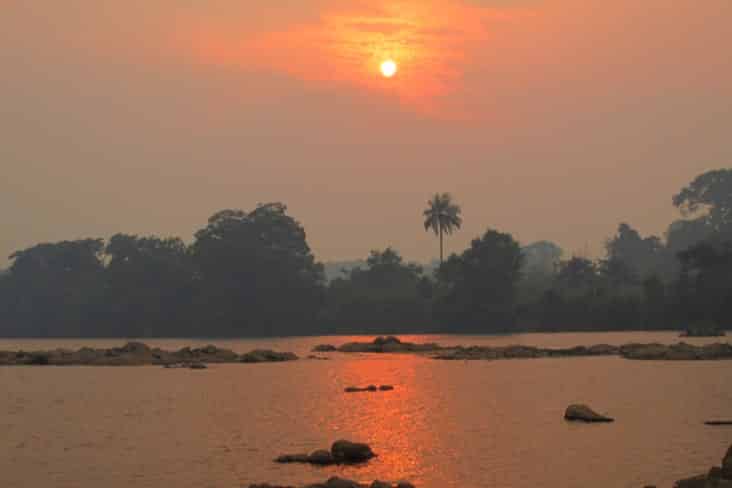
17. The island is home to around 9,000 vascular plant species, 785 bird species, 320 mammal species, 425 herptiles and 510 freshwater fish.
18. From 2013 to 2016, there was a deadly outbreak of the Ebola virus in Sierra Leone, Liberia and Guinea. Around 11,300 people died, with 3,956 deaths in Sierra Leone.
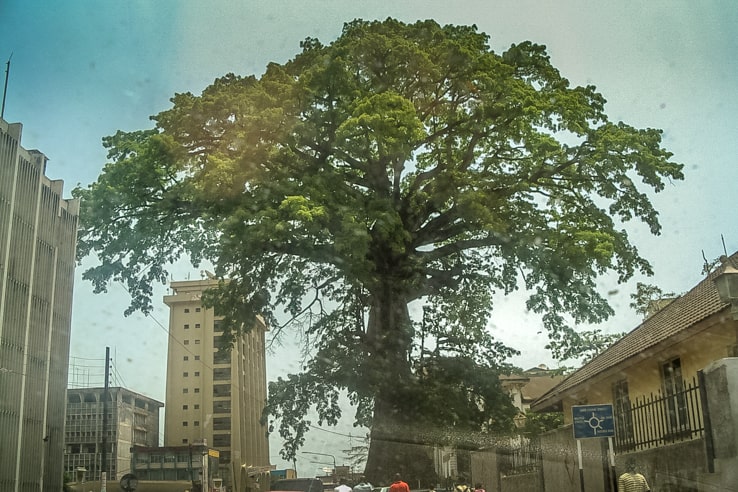
19. Freetown’s most famous landmark is an enormous Cotton Tree located in the centre of the city. Believed to be hundreds of years old, it is said to have played a vital role in the city’s history, when impoverished black settlers rested in its shade after landing in Freetown in 1787.
20. Sierra Leone has one of the world’s lowest life expectancies. As of 2023, they have a life expectancy of just 62 years.
21. Sierra Leone is also among the world’s hungriest countries, considered to be suffering from serious levels of hunger.
22. The 1987 Bounty chocolate bar “Taste of Paradise” commercial was shot in Sierra Leone.
23. Sierra Leone has some of the world’s lowest CO₂ emissions per capita, at around 0.15 metric tons annually, a result of its small-scale economy and limited fossil fuel use.
24. Freetown was home to the first institution of higher learning in modern sub-Saharan Africa after the collapse of the university at Timbuktu. Fourah Bay College opened in 1827 and at the time was the only alternative to Europe and America for British colony West Africans who wanted a university degree.
25. Sierra Leone’s currency, the leone, was first introduced in 1964, replacing the British West African pound. In 2022, the country introduced a new leone worth 1,000 of the old leones, effectively removing three zeros from the currency.
Explore more: Test your knowledge with our Africa map quiz.
We strive to verify all facts using authoritative and primary sources where possible. However, if you find an error or have any questions, please contact us.

Caitriona Maria is an education writer and owner of The Facts Institute. With seven years of teaching experience and a background in educational content, she specialises in creating clear reference resources about countries, geography and global topics.