The most interesting facts about Singapore, from the world’s tallest indoor waterfall to the founding of World Toilet Day.

Fast facts
Official name: Republic of Singapore
Population: 6 million people
Area: 719 sq km
Capital city: Singapore
Major languages: English, Mandarin, other Chinese dialects
Major religions: Buddhist 31.1%, Christian 18.9%, Muslim 15.6%, Taoist 8.8%, Hindu 5%
Time zone: UTC+8 (Singapore Standard Time)
Interesting facts about Singapore
1. Singapore is an island nation and city-state located in Southeast Asia and is widely regarded as a key hub within the Asia-Pacific region.
2. Singapore is connected to Peninsular Malaysia on the Asian continent’s mainland by two causeways spanning the Johore Strait: the Johor Causeway and the Malaysia–Singapore Second Link.
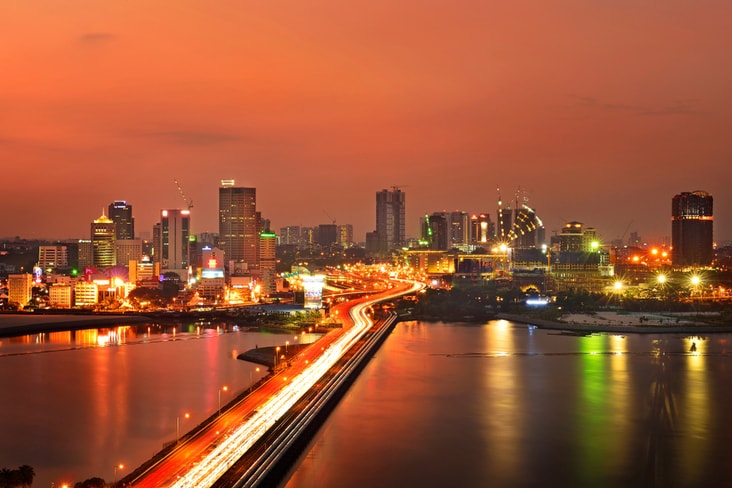
3. Singapore was briefly part of Malaysia when it, along with other former British colonies, joined the Federation of Malaya to form Malaysia in 1963. However, in 1965 Singapore declared independence from the Federation of Malaysia.
4. The Singapore flag is red and white, horizontally striped with a white crescent and five stars in the upper left corner. The original flag proposal was entirely red. However, the design was changed because red was widely associated with communism at the time.
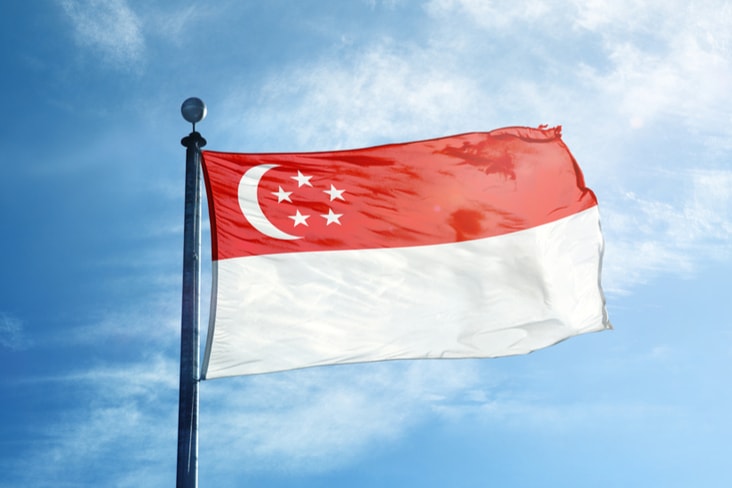
See how Singapore’s flag compares to other Asian flags.
5. From 1819, Singapore was a British colony known as the “Gibraltar of the East” due to its strategic importance as a British stronghold similar to Gibraltar on the Iberian Peninsula.
6. Singapore’s Changi Airport has repeatedly won the world’s best airport award. In fact, the airport has won the award 14 times since 2000.
7. Among Asian nations, Singapore ranks among the least affected by terrorism, with no incidents reported in recent years.
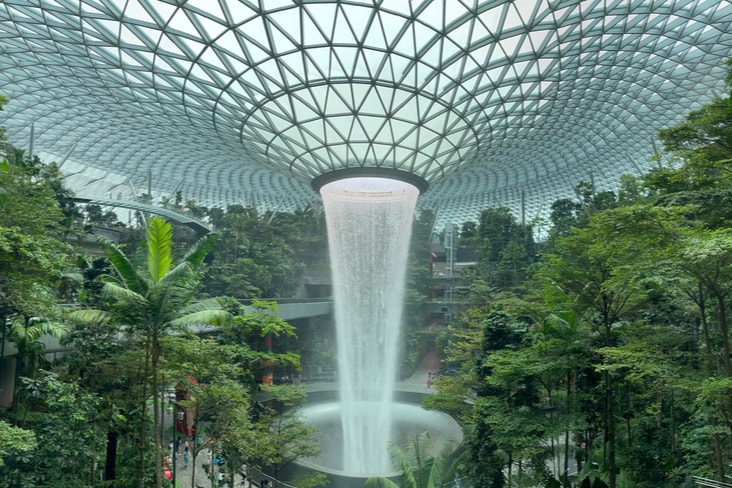
8. The world’s tallest indoor waterfall is located in Singapore. The Rain Vortex is 40m (131ft) high and pumps 500,000 liters of rainwater through the roof of the Jewel building at Changi Airport.
9. Singapore is the most densely populated country in Asia and the second-most densely populated country in the world.
10. Singapore hosted the first-ever Formula One night race. In 2008, the Marina Bay Street Circuit hosted F1’s inaugural nighttime race, with the circuit illuminated by floodlights.
11. Singapore is home to the world’s first nocturnal zoo. The Singapore Night Safari opened in 1994 and is the world’s first zoo that opens exclusively at night.
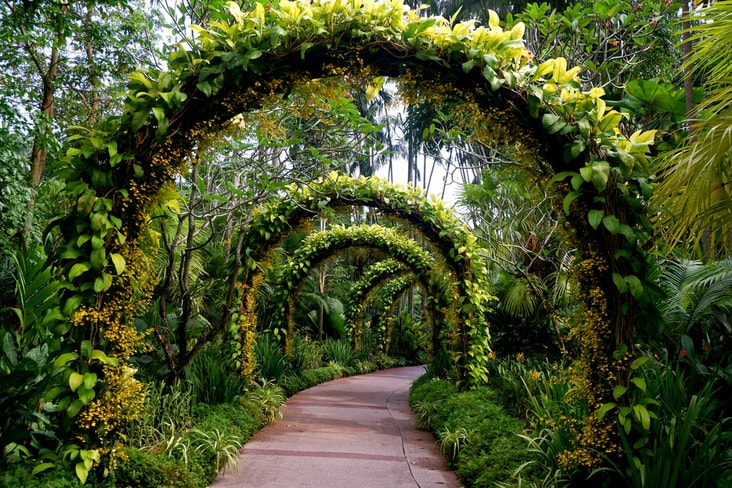
12. Singapore is home to the UNESCO-listed Singapore Botanic Gardens: “Situated at the heart of the city of Singapore, the site demonstrates the evolution of a British tropical colonial botanic garden that has become a modern world-class scientific institution used for both conservation and education.”
13. In 2017, Singapore’s first female president, Halimah Yacob, was sworn in. As a member of the Muslim Malay minority, she is also the country’s first Malay leader in 47 years.
14. In addition to the main island, Singapore also has 64 offshore islands.
15. Singapore allocates about $6,658 per person each year to healthcare (PPP), making it the highest per-capita health spender in Asia.
16. Singapore reports the lowest estimated depression prevalence in the world at just 2.02%.
17. In 2020, Singapore’s street food was inscribed on the UNESCO list of Intangible Cultural Heritage of Humanity. The inscription represents the community of vendors who cook and sell meals in the 114 hawker centers across the city-state.

18. In 1942, Japan invaded Singapore and occupied the island during the Second World War. It was liberated and returned to British rule in 1946.
19. Singapore has expanded its surface area by more than a fifth (22%) since its independence in 1965 from 581 sq km to 719 sq km. It has done this by reclaiming land from the sea and by controversially importing large quantities of sand from countries such as Cambodia.
20. In 2013, Singapore founded World Toilet Day when it tabled a UN resolution, Sanitation for All, to raise awareness of the global challenge of sanitation and toilets. World Toilet Day is celebrated annually on 19th November.
21. Singapore has been named the third safest city in the world according to the latest Safe Cities Index report.

22. Singapore is the most developed independent country in Asia, with a Human Development Index (HDI) score of 0.946. Only the Hong Kong region ranks higher on the continent.
23. Singapore is one of the least corrupt countries in the world. In 2025, it was ranked as the world’s third and Asia’s least corrupt country, according to the Transparency International Corruption Perceptions Index.
24. The national symbol of Singapore is the lion or merlion – a mythical half-lion-half-fish creature.
25. The name Singapore comes from the Sanskrit words “simha” (lion) and “pura” (city) which describe the country’s lionlike symbols.

26. Singapore has one of the five lowest murder rates in the world, with 0.1 intentional homicides per 100,000 people.
27. Ranked 5th in the 2025 Global Power City Index (GPCI), the city of Singapore is regarded as one of the most important global cities and is also known as Asia’s smartest city.
28. Singapore’s Bukit Timah Nature Reserve supposedly holds more tree species than the entire North American continent.

29. Singapore calls itself the Garden City and has stated its intention to become the “world’s greenest city” through a number of initiatives which include expanding its green spaces and insisting that developments must include plant life such as green roofs, vertical gardens and verdant walls.
30. Singapore has the world’s second-lowest fertility rate among sovereign countries, with roughly one birth per woman on average.
31. Singapore has the world’s joint-most powerful passport. Along with the Japanese, the Singaporean passport can easily access 192 destinations.
Explore more from Asia
We strive to verify all facts using authoritative and primary sources where possible. However, if you find an error or have any questions, please contact us.

Caitriona Maria is an education writer and owner of The Facts Institute. With seven years of teaching experience and a background in educational content, she specialises in creating clear reference resources about countries, geography and global topics.