The most interesting facts about Guinea, from Africa’s first million-selling single to chimpanzees who use tools to chop fruit.

Fast facts
Official name: Republic of Guinea
Population: 15.1 million
Area: 245,857 sq km
Capital city: Conakry
Major languages: French, Pular, Maninka, Susu
Major religions: Islam, Christianity
Time zone: UTC +0 (Greenwich Mean Time)
Interesting facts about Guinea
1. Guinea is a country located in West Africa bordering Cote d’Ivoire, Guinea-Bissau, Liberia, Mali, Senegal and Sierra Leone.
3. Parts of modern Guinea were once within the Mali Empire, which covered a large area of western Africa between the 13th and 15th centuries.
3. There are four countries in the world with the word Guinea in their name: Guinea, Equatorial Guinea, and Guinea-Bissau in Africa and Papua New Guinea in Oceania.

4. Despite the name’s prevalence, it is unclear where the name originates. Some trace it to a word in Tuareg, aginaw. Others think it once referred to Djenné, a trading city in Mali. In the 15th century, Portuguese sailors used “Guiné” to describe what is now Senegal, and by the 18th century, Europeans used “Guinea” to refer to much of West Africa.
5. Europeans began arriving in Guinea during the 15th century (first the Portuguese, then the British and French) where they developed a slave trade that would continue to affect Guinea until the mid-19th century.
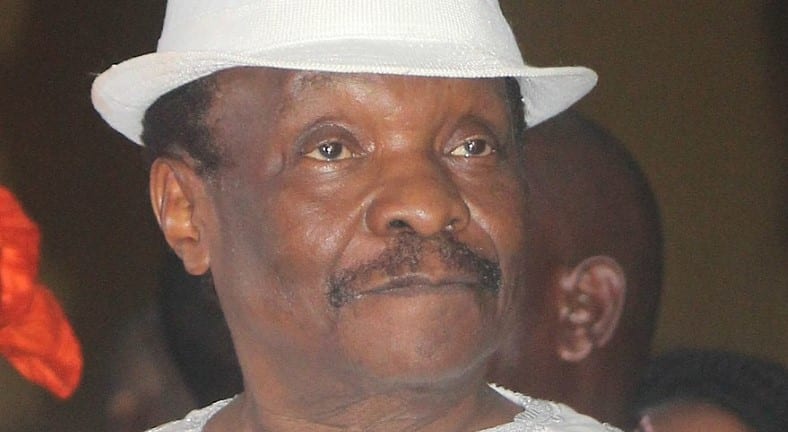
6. Singer-songwriter Mory Kanté is from Guinea. Kanté is best known for Yéké Yéké, which was recorded in 1987 and became the first African single to sell over a million copies.
7. In West Africa, French Guinea would become Guinea, Portuguese Guinea became Guinea-Bissau and Spanish Guinea became Equatorial Guinea.
8. 3. The British gold coin known as the guinea got its name from the Guinea region of West Africa, where some of the gold used to make the coins was sourced.
9. The Guinean flag is vertically striped red, yellow and green. Guinea’s flag is sometimes confused with the flag of Mali, which uses the same colors in the reverse order (green, yellow, red).

See how Guinea’s flag compares to other African flags.
10. Since independence, Guinea has suffered from sustained instability caused by a 20-year experiment with socialism known as ‘communocracy’, military coups, ethnic tensions and electoral fraud.
11. Guinea’s highlands form the headwaters of several major West African rivers, including the Niger, Gambia and Sénégal river systems.
12. Despite possessing a wealth of natural resources including a substantial portion of the world’s bauxite reserves, significant amounts of iron, gold, and diamonds, Guinea is one of the least-developed countries in the world.
13. Guinea suffers from air pollution. Its PM₂.₅ average in 2023 was almost three times the WHO air quality value guideline.

14. From 2013 to 2016, there was a deadly outbreak of the Ebola virus in West Africa with Guinea one of the worst affected countries with over 2,500 deaths.
15. The Center d’Art Acrobatique Keita Fodeba in Conakry is famed for training some of Africa’s greatest acrobats and contortionists who go on to perform all around the world.
16. Guinea has just one UNESCO World Heritage Site, the Mount Nimba Strict Nature Reserve, which it shares with Côte d’Ivoire (Ivory Coast). The reserve is rich in flora and fauna.
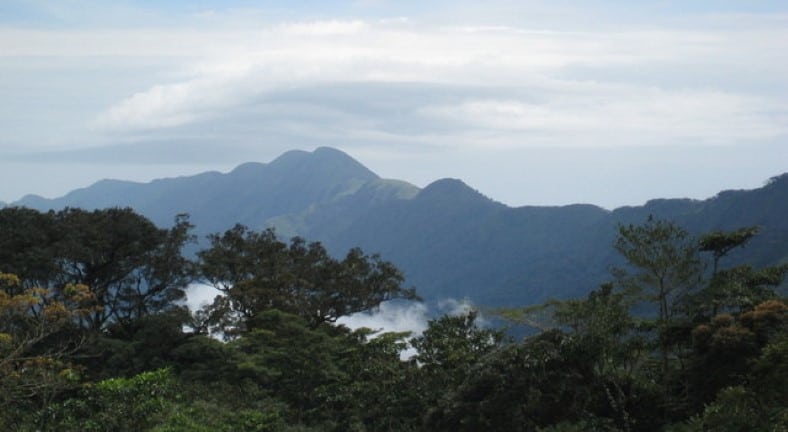
17. The reserve is home to the Nimba Range, a chain of mountains that culminate at Mount Nimba. At 1,752m (5,748ft) it is the highest mountain in both Guinea and Côte d’Ivoire.
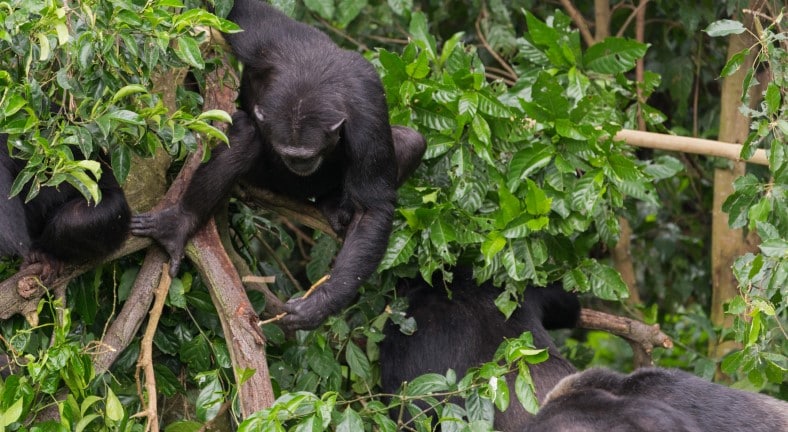
18. Near Guinea’s Mount Nimba, chimpanzees have been observed using stone hammers and anvils to crack open nuts. In 2009, they were seen using both stone and wooden cleavers, as well as stone anvils, to process Treculia fruits. Some evidence suggests this behaviour may have been copied from local humans through observational learning, possibly under pressure from habitat deterioration.
19. In 2017, a new species of tree called Talbotiella cheekii was discovered in Guinea. Incredibly for an undiscovered species, the tree can grow up to 24m high and has fruit in “exploding pods”.
20. Guinea is one of just four countries in the world that doesn’t have any telephone fixed lines. The others are Guinea-Bissau, South Sudan and DR Congo.
21. Traditional healers are popular in Guinea when it comes to treating illness. Traditional healers were believed to be the first port of call for around 80% of sick Guineans, according to 2016 data.
Explore more: Test your knowledge with our Africa map quiz.
We strive to verify all facts using authoritative and primary sources where possible. However, if you find an error or have any questions, please contact us.

Caitriona Maria is an education writer and owner of The Facts Institute. With seven years of teaching experience and a background in educational content, she specialises in creating clear reference resources about countries, geography and global topics.