10 fun facts about Guinea
1. Guinea is one of four countries in the world with “Guinea” in its name, along with Guinea-Bissau, Equatorial Guinea and Papua New Guinea.
2. The origin of the name “Guinea” is uncertain. By the 18th century, Europeans were using it to refer to much of West Africa.
3. The British gold coin known as the guinea got its name from the Guinea region of West Africa, where some of the gold used to make the coins was sourced.
4. Parts of modern Guinea were once within the Mali Empire, one of the most powerful empires in medieval West Africa.
5. Guinea’s highlands form the headwaters of several major West African rivers, including the Niger, Gambia and Sénégal river systems.
6. Singer Mory Kanté was from Guinea. His song Yéké Yéké became the first African single to sell more than one million copies.
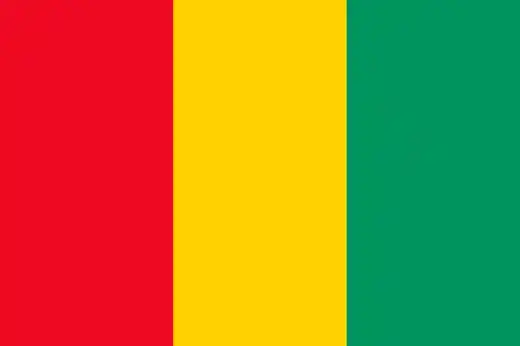
7. Guinea’s flag is red, yellow and green. It is sometimes confused with Mali’s flag, which uses the same colors in reverse order.
8. Guinea has just one UNESCO World Heritage Site: Mount Nimba Strict Nature Reserve, which it shares with Côte d’Ivoire.
9. Mount Nimba is the highest mountain in both Guinea and Côte d’Ivoire, rising to 1,752 m / 5,748 ft.
10. Near Guinea’s Mount Nimba, chimpanzees have been observed using stone hammers and anvils to crack open nuts. Some evidence suggests this behaviour may have been copied from observing the locals.
Read more: Facts about Guinea
At a glance
Capital city: Conakry
Population: 15.1 million
Area: 245,857 sq km
Major languages: French, Pular, Maninka, Susu
Major religions: Islam, Christianity
Time zone: UTC +0 (Greenwich Mean Time)
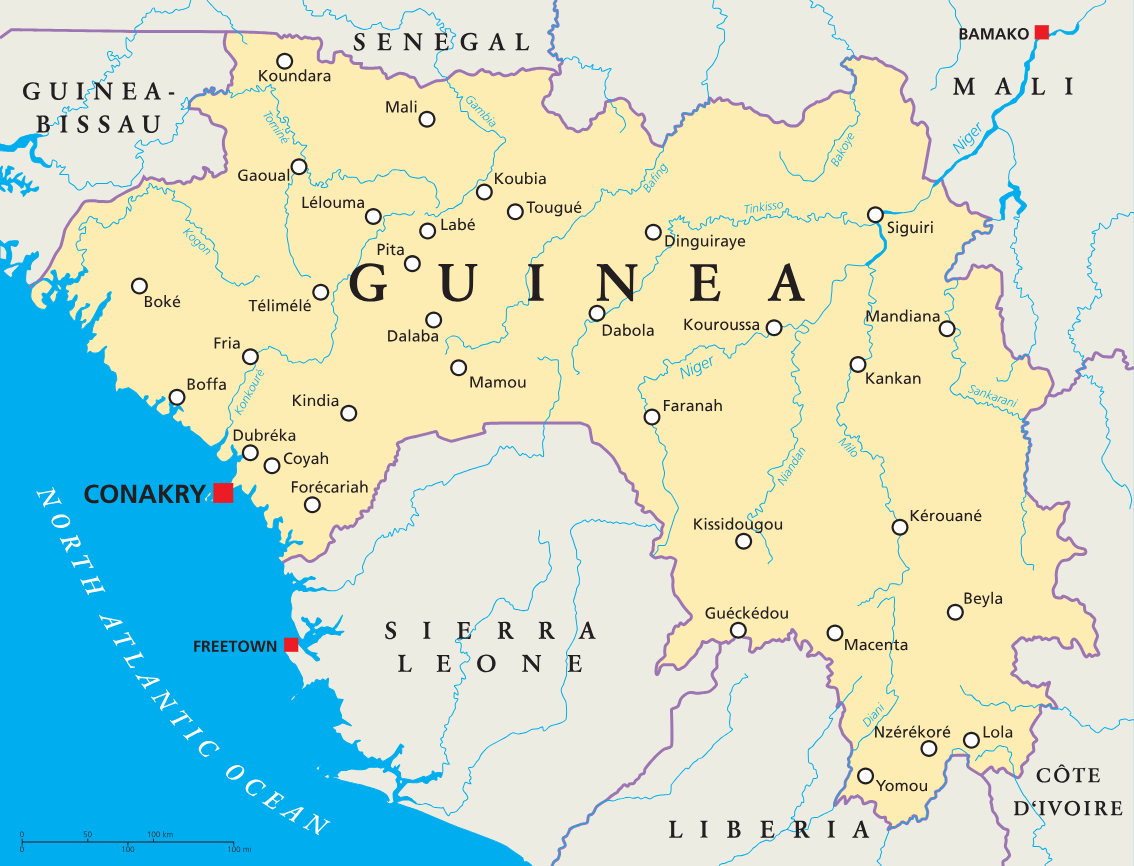
Where is Guinea?
Continent: Africa
Region: West Africa
Neighboring countries: Guinea-Bissau, Senegal, Mali, Côte d’Ivoire, Liberia and Sierra Leone
Highest point: Mount Nimba (1,752 m / 5,748 ft)
Geography of Guinea
Guinea is a coastal African country in Western Africa, stretching inland from the Atlantic Ocean.
Its landscapes range from coastal plains to highlands, savanna and forested mountains in the interior.
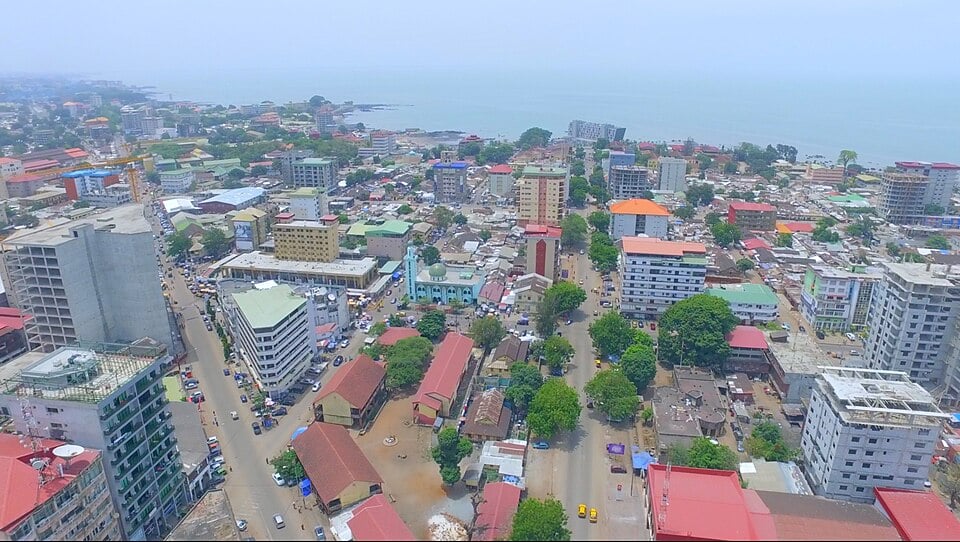
Atlantic Coast
Guinea has a short coastline on the Atlantic Ocean. The capital city, Conakry, lies on the coast, partly on the Kaloum Peninsula.
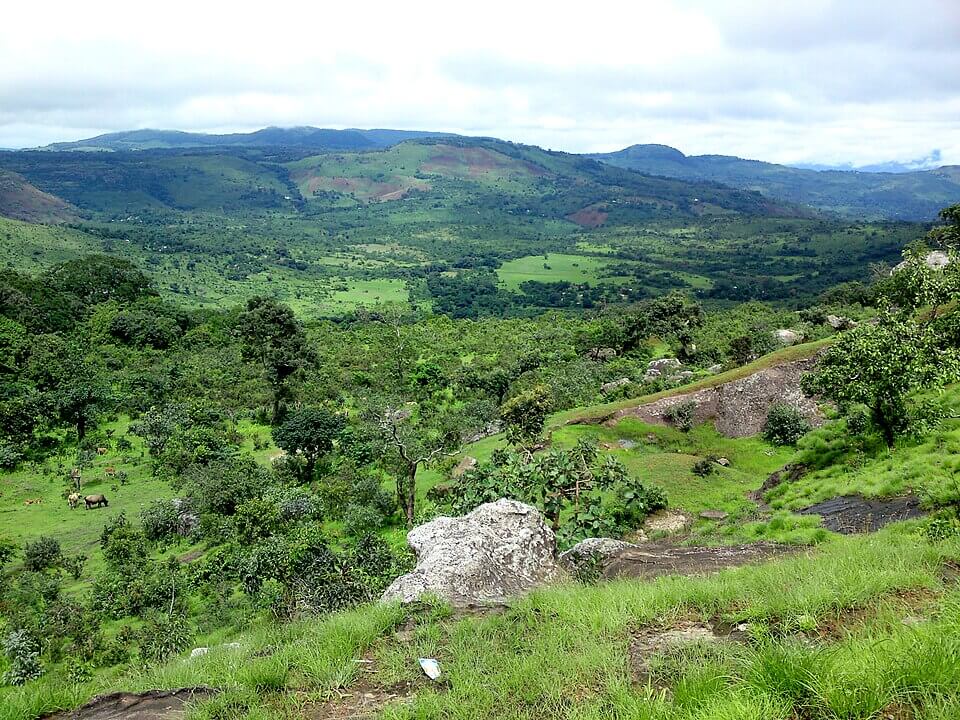
Fouta Djallon Highlands
The Fouta Djallon Highlands cover much of central Guinea. This upland region is sometimes called the “watertower of West Africa” because of the rainfall, and several major rivers begin there.
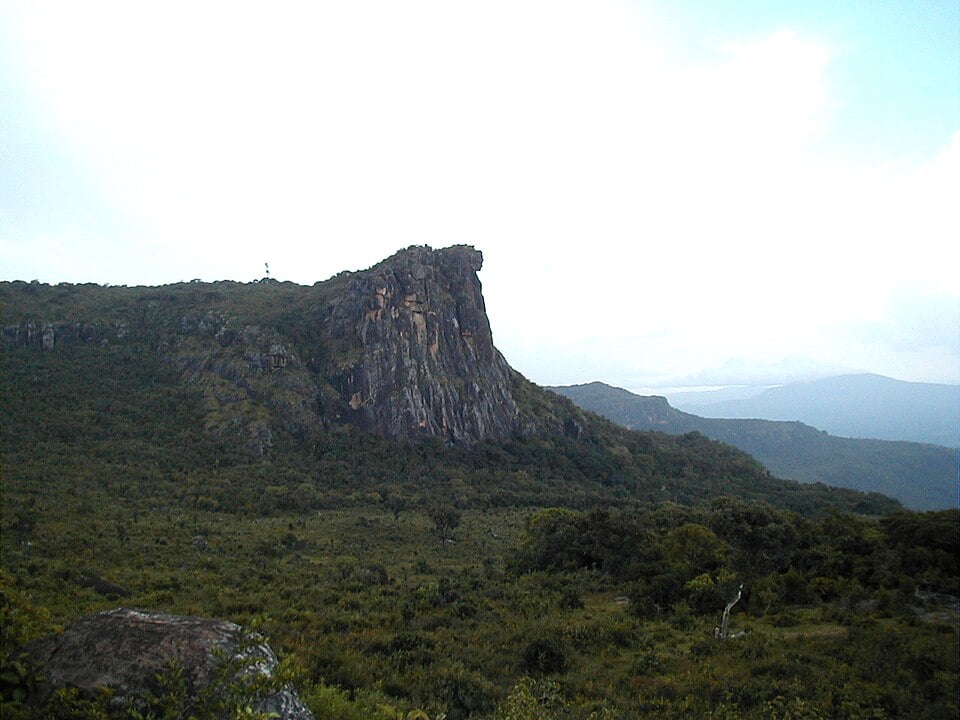
West African Rivers
Guinea is the source of several important West African rivers, including the Niger, Sénégal and Gambia rivers. These rivers flow from Guinea’s highlands into neighboring countries.
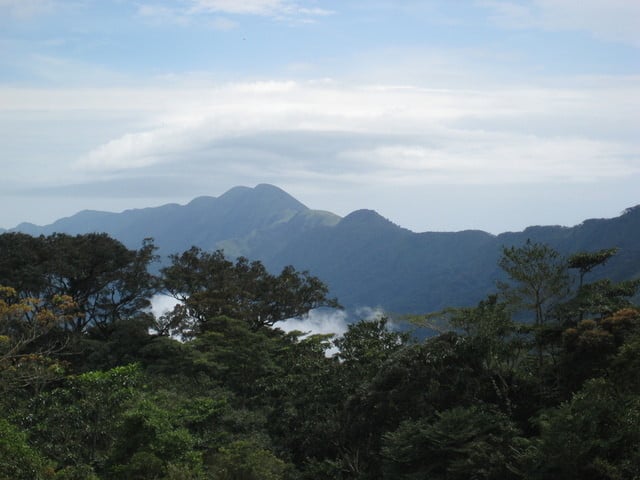
Mount Nimba and Forest Region
Southeastern Guinea is home to forested mountains, including Mount Nimba, the country’s highest point. It lies near Guinea’s borders with Liberia and Côte d’Ivoire, and is especially rich in flora and fauna.
See article: Flag of Guinea
Guinea flag
The flag of Guinea dates from the country’s independence from France. Guinea became independent in 1958 after voting to reject continued membership of the French Community.
The new national flag was adopted shortly afterwards, on 10 November 1958. Its red, yellow and green vertical stripes follow a layout similar to the French tricolor, but use Pan-African colors instead.
Image credits:
City of Conakry: Boubacar Bila Diao Balde, via Wikimedia Commons, licensed under CC BY-SA 4.0.
Fouta Djallon Highlands: Maarten van der Bent, via Wikimedia Commons, licensed under CC BY-SA 2.0. Cropped.
Dame de Maali, Mount Loura: The original uploader was Hcaudill at English Wikipedia., via Wikimedia Commons, licensed under CC BY 2.5. Cropped.
Nimba Range: Yakoo1986, via Wikimedia Commons, licensed under CC BY-SA 4.0. Cropped.

Caitriona Maria is an education writer and owner of The Facts Institute. With seven years of teaching experience and a background in educational content, she specialises in creating clear reference resources about countries, geography and global topics.