The most interesting facts about Palau, from millions of harmless jellyfish to stone monoliths known as the ‘Easter Island of Micronesia’.

Fast facts
Official name: Republic of Palau
Capital city: Ngerulmud
Population: 21,864
Area: 459 sq km
Major languages: Palauan, English
Time zone: UTC+9 (Palau Time)
Interesting facts about Palau
1. Palau is an island nation in Oceania consisting of six island groups totaling over 300 islands altogether.
2. By population, Palau is the world’s third-smallest sovereign country after Tuvalu and Nauru. Technically, the Vatican City is also smaller, but it is not a UN member state.
3. It is thought the first inhabitants of Palau arrived from present-day Indonesia around 2500 BC. The early Palauans established sophisticated social structures and engaged in fishing and agricultural activities.
4. In 1783, English captain Henry Wilson was shipwrecked on a reef on one of Palau’s islands, becoming the first European to visit.
5. For over 200 years, Palau was controlled by foreign influences, including Spain, Britain, Germany, Japan, and the US.
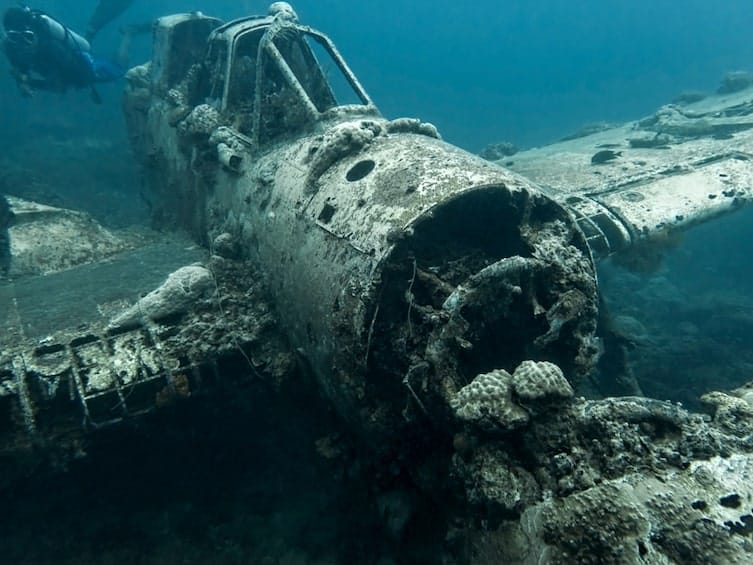
6. Japan occupied parts of Palau during World War II, but US forces liberated the islands in 1944 during the Battle of Peleliu, the deadliest amphibious assault in US military history.
7. In 1994, Palau gained complete independence and joined the United Nations the same year. It would receive financial aid from the US, and in return, the US could continue to operate military bases in Palau.
8. In 2017, Palau became the world’s first country to require tourists to sign the “Palau Pledge.” This pledge, which visitors must sign upon arrival, is a commitment to respect Palau’s ecological and cultural heritage during their stay.
9. Additionally, there is a compulsory in-flight video that instructs all incoming visitors about how to behave environmentally responsibly during their stay. There is also a checklist of dos and don’ts that is issued upon arrival.
10. In 2020, Palau also banned ‘reef-toxic’ sunscreens. Believed to be another world-first, the environmental initiative is aimed at stopping chemical pollution damaging corals and marine life.
11. Palau is home to Jellyfish Lake, a land-locked marine lake filled with 5 million non-stinging transparent jellyfish that swim en masse to follow the path of the sun.

12. Palau is known as ‘the underwater Serengeti’ for its incredible scuba diving. Sights include beautiful seascapes, shipwrecks and diverse marine life.
13. Palau, like many Pacific island nations, has one of the fattest populations in the world. The World Obesity Index ranked Palau among the most obese nations. Nutrition reports reveal that 90% of adults are considered overweight or obese.
14. The world’s first shark sanctuary was created in Palau in 2009. The country banned all commercial shark fishing in its waters to combat the growth of shark fishing.
15. One of Palau’s most famous landmarks, and the country’s only UNESCO World Heritage Site, is the Rock Islands. The site is made up of hundreds of uninhabited limestone islands amidst turquoise lagoons surrounded by coral reefs. Many of the islands display unique mushroom-like shapes.

16. Palau has a simple flag composed of a blue background with an off-center golden disk. The disk represents the moon, which has special meaning in Palauan culture. In Palauan tradition, the full moon signifies optimal conditions for fishing, planting, and various other activities.
See how Palau’s flag compares to other Oceania flags.
17. The Milky Way, a cove located in the Rock Islands, is famous for the white mud found on its seabed. The mud is said to have healing and anti-aging properties and can be used in natural spa treatments.
18. Palau is one of just 21 countries not to have an army. As a former US-administered territory, Palau did not form an army after gaining independence. Instead, the USA is responsible for its defence. Palau signed a state partnership with the U.S. Territory of Guam on May 2, 2024 to strengthen strategic alliance with the USA.
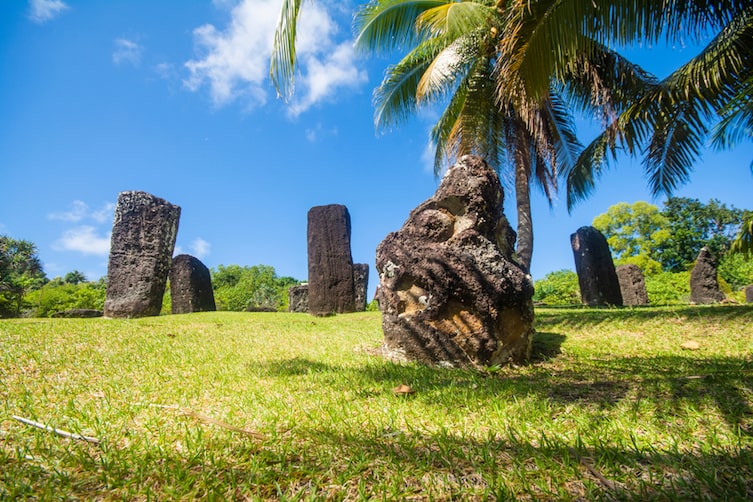
19. Known as the ‘Easter Island of Micronesia‘, the Badrulchau Stone Monoliths in Palau are a collection of 52 basalt megaliths lined up in two rows, 28 of which had human features. The stones are dated to around 161 AD. Their purpose and origin are unexplained, but legends suggest gods placed them to support a bai (men’s meeting house).
20. Saltwater crocodiles are native to Palau. Saltwater crocodiles have been called “the animal most likely to eat a human”, but attacks on people are rare in Palau.
21. Palau’s only prison also functions as a gift shop. Inmates who exhibit good behavior are allowed to create and sell storyboards, which are carved wooden panels depicting Palauan legends.
22. As Palau is a low-lying country (the highest point is just 242m), it is under threat from rising sea levels caused by climate change.
Explore more from Oceania
We strive to verify all facts using authoritative and primary sources where possible. However, if you find an error or have any questions, please contact us.

Caitriona Maria is an education writer and owner of The Facts Institute. With seven years of teaching experience and a background in educational content, she specialises in creating clear reference resources about countries, geography and global topics.